What's inside
As an Amazon Associate I earn from qualifying purchases. This post may contain affiliate links at no extra cost to you.
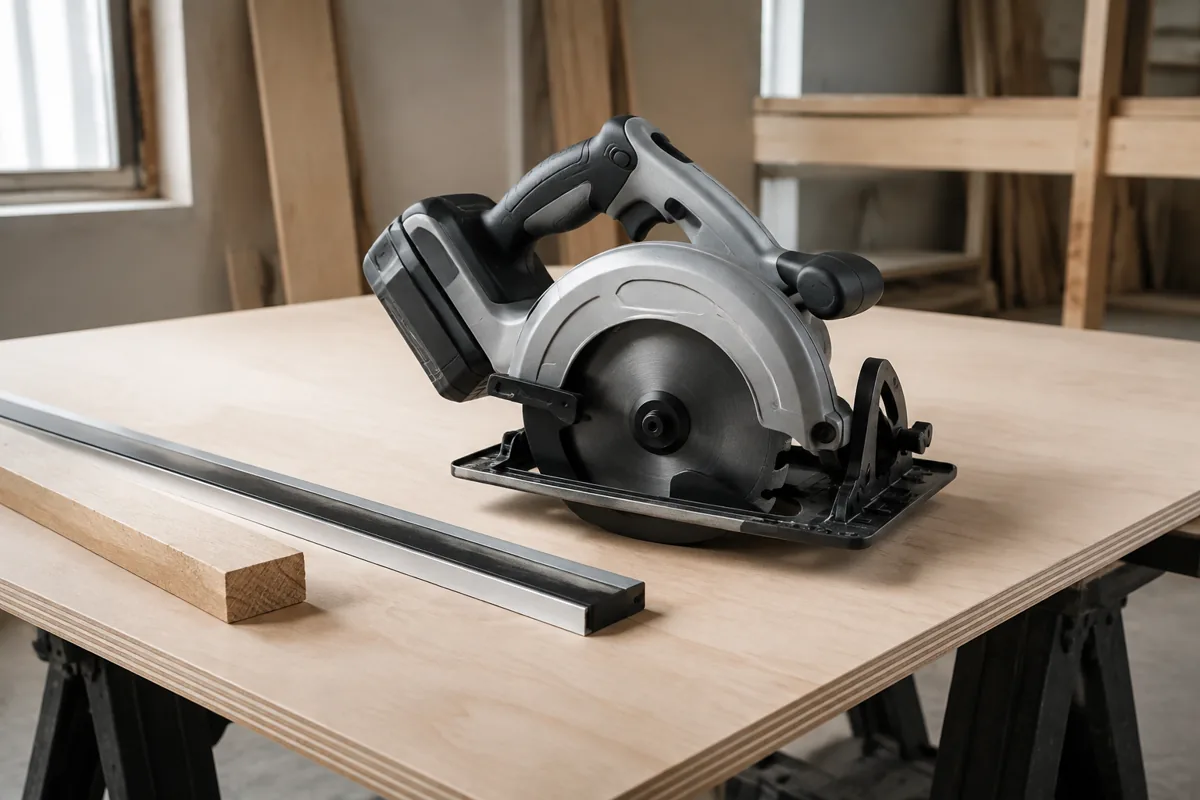
Fiber-cement siding is harder on a circular saw than plywood, but the biggest problem is not cutting power. It is the fine silica dust produced by the blade. The right saw should give you controlled cuts without bogging down, dragging a cord across the work area, or turning the job into a dust cloud.
For occasional repairs or a small siding project, a cordless circular saw is usually the more convenient choice. For a large installation, repeated rip cuts, or work where the saw will run for hours, a corded saw remains the better value. Both can work well if you use the correct blade and dust controls.
As an Amazon Associate we earn from qualifying purchases at no extra cost to you.


Our Top Picks
 DEWALT 20V MAX XR Brushless Cordless 7-1/4 in.STANDARD15.35 x 9.4 x 9.6 inches9.88 poundsCheck on Amazon
 DEWALT FLEXVOLT 60V MAX* Circular Saw with BrakeOne Size15.35 x 8.23 x 9.65 inches8.2 poundsCheck on Amazon


Cordless vs. corded at a glance
| Factor | Cordless circular saw | Corded circular saw |
|---|---|---|
| Best use | Repairs, trim work, scattered cuts, ladders and exterior work | Large siding installations and long cutting sessions |
| Cutting performance | Strong with a modern brushless saw and a charged 5.0-Ah or larger battery | Consistent output as long as the circuit and extension cord are adequate |
| Runtime | Limited by battery capacity; cold batteries perform worse | Unlimited for practical purposes |
| Convenience | No cord to snag or drag across siding | Requires an outdoor-rated extension cord and nearby power |
| Typical cost | Higher if you need the tool, battery, and charger | Usually cheaper as a complete tool |
| Dust collection | Often easier to use with a compact vacuum on newer saws | Can provide strong, steady suction, but the cord adds clutter |
When a cordless saw is the better choice
Cordless wins when mobility matters more than maximum runtime. Siding work often involves moving around scaffolding, sawhorses, a trailer, and partially finished walls. A cord can catch on corners, rub against fresh siding, or fall into the cut line. A battery saw avoids those problems and is easier to use for one-handed repositioning between cuts, although you should never make a cut while holding the workpiece in your hand.
A current brushless 18V or 20V-class saw has enough power for fiber-cement siding when fitted with a siding blade. Use a high-capacity battery, generally 5.0 Ah or more, if you expect a full day of cutting. A small 2.0-Ah battery may work for a handful of pieces, but it can run down quickly and may deliver less consistent performance under load.
Choose a brushless cordless circular saw with a 5.0-Ah battery if you already own batteries in that platform. Buying into a new battery system just for a small repair can cost more than the siding project itself.
The main cordless failure mode is a low or overheated battery. The saw may slow down, stop partway through a cut, or trigger its overload protection. Keep a second charged battery available, and let a hot pack cool rather than forcing it through repeated cuts.
When a corded saw makes more sense
A corded saw is the practical choice for hundreds of cuts. It delivers steady speed without battery changes and normally costs less than a cordless kit. That matters when you are installing a whole house rather than replacing a damaged board.
Power is not unlimited, however. A long, undersized extension cord can cause voltage drop, making the motor run hot and reducing cutting speed. Use a heavy-duty outdoor-rated cord; for a typical 15-amp saw, a 12-gauge cord is a safer choice for longer runs than a lightweight household extension cord. Keep the cord behind you and inspect it before use.
Choose a corded circular saw with a dust port when you have reliable power and a vacuum nearby. The lower purchase price is especially attractive if you do not already own a compatible cordless battery platform.
The blade matters more than the saw
Do not use a standard 24-tooth wood-framing blade for fiber-cement siding. It can cut, but it removes too much material, creates more dust, and wears quickly. Use a fiber-cement or cement-board blade with carbide or polycrystalline diamond teeth. Blades with four to eight teeth are common for this work, depending on the manufacturer.
A low-tooth-count blade cuts faster and usually produces less fine dust than a dense wood blade. It also leaves a rougher edge, which is normally acceptable when the cut end will be covered by trim or flashing. For visible crosscuts, support the siding well and make a controlled pass rather than trying to force a fine finish from a rough-cut blade.
Keep a spare blade available. A dull blade creates heat, slows the saw, and encourages the operator to push harder. That increases chipping and can make the saw wander from the layout line. If the blade begins smoking, burning the edge, or requiring noticeably more pressure, replace it.
Dust control is not optional
Fiber-cement dust can contain respirable crystalline silica. Wear a properly fitted N95 respirator at minimum; a reusable half-mask respirator with P100 filters is a better choice for repeated cutting. Use eye protection, and keep other people away from the cutting area.
Whenever possible, cut outdoors with the work positioned so wind carries dust away from you and occupied areas. Connect the saw to a HEPA-rated dust extractor if the saw supports one. A shop vacuum without suitable filtration can simply exhaust the finest particles back into the air. Do not dry sweep the residue or use compressed air. Use a HEPA vacuum or damp cleanup method allowed by the siding manufacturer and local rules.
A HEPA dust extractor for power tools is a worthwhile purchase if you are cutting indoors or installing large quantities. For a few outdoor cuts, outdoor positioning and proper respiratory protection may be sufficient, but they do not eliminate the dust hazard.
Cutting technique and common mistakes
Support the sheet or plank close to the cut so it cannot vibrate. Mark the line on the face, set the blade just deep enough to clear the material, and let the saw reach full speed before entering the cut. Feed steadily without forcing it. Fiber-cement siding is often around 5/16 inch thick, so excessive cutting depth only exposes more blade and dust without improving the cut.
Do not use the saw’s electric brake as a substitute for safe handling, and do not reach beneath the workpiece while the blade is spinning. Check for hidden nails, screws, and wiring before cutting installed siding. For short notches, a pair of fiber-cement siding snips may produce less dust than a circular saw, though they are slower and can distort a cut if used aggressively.
Which one should you buy?
Buy cordless if you value easy setup, work outdoors or on ladders, already own batteries, and expect mostly repair or trim cuts. Buy corded if you need to cut siding all day, want the lowest tool cost, or do not want to manage battery charging. The saw type is secondary to the blade, dust control, and work support.
For most homeowners, a quality cordless saw is the easier tool to live with, and the extra cost is justified when a battery platform is already in the garage. If you are facing a full siding installation, the cheaper corded option is entirely adequate—and often the more sensible purchase.