What's inside
As an Amazon Associate I earn from qualifying purchases. This post may contain affiliate links at no extra cost to you.
Our Top Picks
 Makita XPH10Z 18V LXT Lithium-Ion Cordless 1/2" Hammer1/2" (Pack of 1)3.62 x 8.54 x 8.9 inches3 poundsCheck on Amazon


Milwaukee 2904-20 vs. Makita XPH16: The Short Version
The Milwaukee 2904-20 and Makita XPH16 are heavy-duty 18-volt hammer drills built for large fasteners, masonry drilling, and demanding construction work. Both use brushless motors, two-speed gearboxes, 1/2-inch metal chucks, and auxiliary handles. Neither is a lightweight DIY drill.
The Milwaukee has the edge in torque, compactness, and electronic kickback protection. The Makita is slightly less expensive as a bare tool in many packages and remains a strong choice for general framing, remodeling, and maintenance work. Your existing battery platform should carry more weight than small differences in published torque.
As an Amazon Associate we earn from qualifying purchases at no extra cost to you.

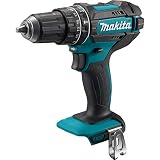

For buyers starting from scratch, compare the available Milwaukee M18 hammer drill kits and Makita 18V hammer drill kits, since a battery and charger can cost as much as the tool.
Key Specifications Compared
| Feature | Milwaukee 2904-20 | Makita XPH16 |
|---|---|---|
| Battery platform | M18, 18V | LXT, 18V |
| Maximum torque | 1,400 in-lbs | 1,250 in-lbs |
| No-load speed | 0–550 / 0–2,100 rpm | 0–550 / 0–2,100 rpm |
| Hammer rate | 0–33,000 bpm | 0–31,500 bpm |
| Chuck | 1/2-inch all-metal | 1/2-inch all-metal |
| Length | About 6.9 inches | About 7.8 inches |
| Tool weight | About 4.3 lb bare | About 4.2 lb bare |
| Kickback control | AUTOSTOP control mode | Electronic protection controls |
Published torque figures are not directly comparable across brands. They indicate maximum output under test conditions, not how many holes you will drill or how long a battery will last. The Milwaukee’s 1,400 in-lbs rating gives it a numerical advantage, but both drills have enough power for large wood bits, long structural screws, and routine masonry anchors.
Power, Drilling, and Driving
In low gear, both drills can handle large bits and slow, controlled driving. In high gear, they are suited to smaller holes and faster screw work. The Milwaukee’s higher hammer rate gives it a modest advantage in brick and block, especially with 3/8- to 1/2-inch masonry bits. Neither replaces an SDS-plus rotary hammer for repeated work in concrete.
For wood, the difference is less dramatic. A sharp 1-inch spade bit or self-feed bit will run well in either drill, but large bits quickly expose the limits of any handheld hammer drill. Expect the clutch to be bypassed in drill mode, and use the side handle. If the bit catches in a knot or embedded fastener, the drill can twist violently before the protection system reacts.
The Makita XPH16 is not a weak alternative. It has the same top speed as the Milwaukee and plenty of output for deck construction, cabinet installation, electrical work, and most residential framing. If you already own LXT batteries, buying the Makita is usually more sensible than switching platforms for a claimed 150 in-lbs of extra torque.
Handling, Size, and Safety
The Milwaukee is the more compact tool. Its shorter head is useful between studs, inside cabinets, and when drilling overhead. The Makita’s extra length is noticeable in tight spaces, although its balance is good and its bare-tool weight is nearly the same.
Both drills include a side handle, and it should stay installed for heavy work. A 1/2-inch bit can jam suddenly in a joist. Without the handle, your wrist or shoulder takes the reaction torque. Keep the handle collar tight, use two hands, and avoid leaning your full body weight into a bit that may bind.
Milwaukee’s AUTOSTOP feature is the clearer safety advantage. In a severe bind, the drill can shut down rather than continuing to rotate around the bit. It is useful protection, not a substitute for technique. It can also interrupt work unexpectedly when drilling through tough material or when the tool detects a sharp change in resistance.
The Makita has electronic protections for overload and overheating, but its response is less specifically centered on rotational kickback. If you regularly use large auger bits, hole saws, or long structural screws, Milwaukee’s system is worth paying for. For ordinary driving and drilling, careful grip and the side handle remain more important.
Batteries, Runtime, and Heat
Both drills can run on compact batteries, but heavy work benefits from a higher-capacity pack. A compact 2.0Ah battery keeps the tool lighter for short jobs; a 5.0Ah or larger pack provides longer runtime and usually better sustained output. Large bits, repeated masonry holes, and long screws generate heat quickly, so keep a second battery charging rather than forcing one pack until it shuts down.
Runtime depends more on the task than the drill. Driving hundreds of small screws is relatively easy. Drilling large holes through wet lumber or concrete-like masonry consumes batteries rapidly. If that is your normal work, consider buying a high-capacity M18 battery or high-capacity Makita LXT battery rather than expecting a second compact pack to match its performance.
Which Hammer Drill Should You Buy?
Choose the Milwaukee 2904-20 if you want the shortest body, the highest published torque, slightly faster hammer action, and stronger kickback mitigation. It is the better fit for users who routinely drill large holes or drive long fasteners and want the most aggressive tool in this comparison.
Choose the Makita XPH16 if you already own LXT batteries, find it at a meaningful discount, or want a powerful general-purpose drill without paying for Milwaukee’s extra safety electronics. The cheaper option is entirely fine for most homeowners, remodelers, and tradespeople doing normal wood, metal, and brick work.
Neither model is ideal for sustained concrete drilling. For multiple 1/2-inch holes in concrete, buy or rent an SDS-plus rotary hammer. It will drill faster, transmit less twisting force to your hands, and suffer less heat buildup than either hammer drill.