What's inside
As an Amazon Associate I earn from qualifying purchases. This post may contain affiliate links at no extra cost to you.
Our Top Picks

What you are actually comparing
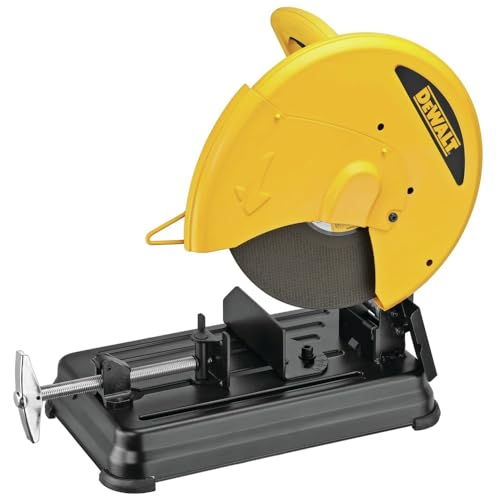
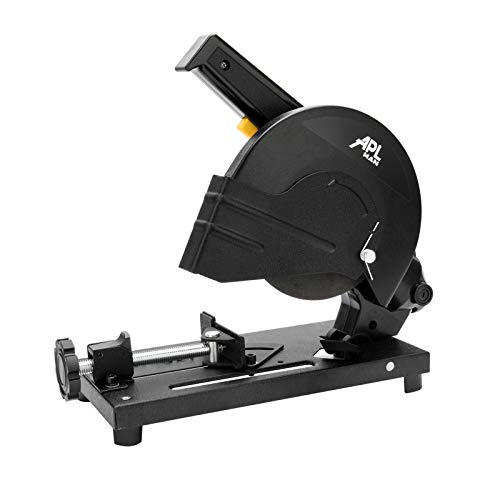
For cutting steel angle, a chop saw and an abrasive cutoff saw use the same basic method: a thin abrasive wheel grinds through the steel instead of removing chips like a toothed saw. The important difference is how the tool holds and feeds that wheel.
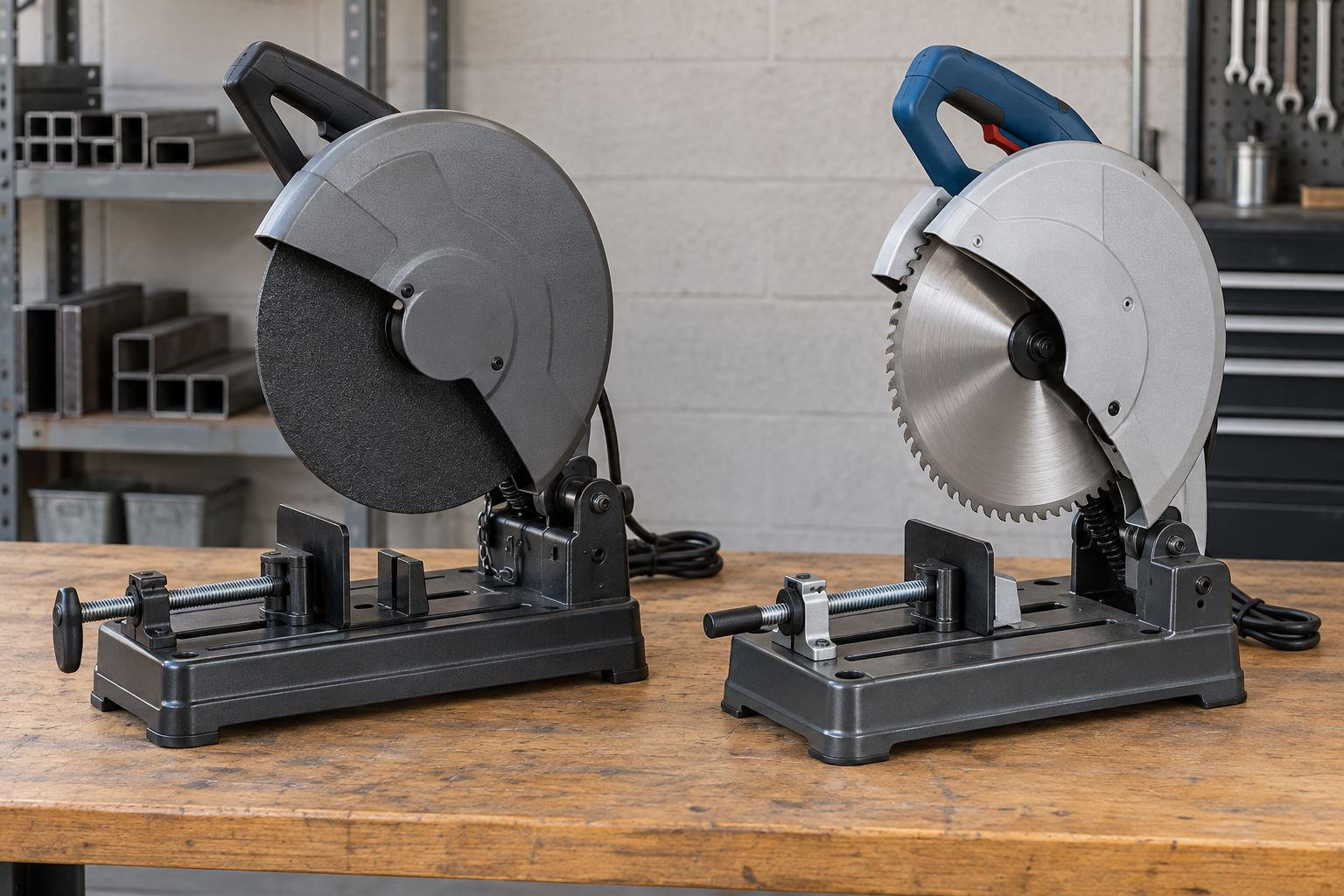
A chop saw is a benchtop or stand-mounted machine, usually with a 12- or 14-inch wheel, a fixed fence, and a vise. An abrasive cutoff saw is handheld, commonly with a 4-1/2-, 5-, 6-, or 9-inch wheel. The chop saw is faster and more repeatable for a pile of identical parts. The handheld saw is cheaper, easier to carry, and more useful when the angle is already installed or too large to fit in a vise.
As an Amazon Associate we earn from qualifying purchases at no extra cost to you.
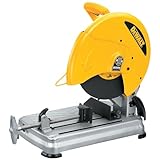
For occasional cuts on small angle iron, the lower price of a 4-1/2-inch angle grinder and cutoff wheels can be entirely reasonable. It becomes a poor substitute when you need square ends, repeated lengths, or dozens of cuts.
Chop saw vs cutoff saw for steel angle
| Factor | Abrasive chop saw | Handheld abrasive cutoff saw |
|---|---|---|
| Typical wheel size | 12 or 14 inches | 4-1/2 to 9 inches |
| Best use | Repeated cuts and stock preparation | Repair work, demolition, and awkward locations |
| Cut accuracy | Good with a rigid fence and vise | Depends heavily on operator control |
| Typical cut capacity | Large angle and bundled stock | Small to medium angle, usually one leg at a time |
| Mess and noise | Heavy sparks and abrasive dust in one area | Sparks and dust spread around the work |
| Portability | Low unless mounted on a stand | High |
| Learning curve | Short, but setup matters | Simple to start, harder to cut consistently square |
When a chop saw is the better choice
Choose a chop saw when you are cutting several pieces of the same angle. Its vise holds the work while the pivoting head keeps the wheel’s path consistent. With a stop block clamped to the fence, you can cut parts to nearly identical lengths without measuring every piece.
A 14-inch machine generally handles common 2- by 2-inch and 3- by 3-inch angle more comfortably than a handheld tool. Capacity varies, so check the manufacturer’s specifications rather than assuming the wheel diameter tells the whole story. A 14-inch wheel may cut a 4-inch-wide piece in one pass, but the actual capacity changes with the angle of the cut and the shape of the vise opening.
The vise is the main advantage, not just the larger motor. Steel angle tends to twist or roll when the wheel reaches the inside corner. A rigid clamp reduces that movement and leaves a more predictable end. For a 90-degree cut, place the angle with both legs supported by the vise as much as possible. If one leg hangs in the air, the cutoff wheel can grab it as the cut breaks through.
A chop saw still has limitations. The wheel wears smaller during use, which reduces cutting capacity. The fence can move after repeated impacts, and a worn or bent abrasive wheel can make the cut wander. Check the first piece with a square before producing a batch. If the end is out of square, correct the setup before cutting the rest.
When a handheld cutoff saw is the better choice
A handheld tool wins when the steel cannot be brought to the saw. It is practical for trimming angle on a trailer, cutting brackets already bolted to a frame, or making a single relief cut during installation. It also takes up little storage space and costs less if you already own a compatible grinder.
The trade-off is control. A handheld wheel can enter the first leg cleanly and then pull sideways when it reaches the second leg. That leaves a beveled or uneven end, especially on 1/8-inch angle. For better results, mark all four edges of the cut, clamp the work firmly, and make a shallow starter groove before cutting through. Do not force the wheel; let it grind at its own rate.
For small angle, a 4-1/2-inch grinder is convenient, but it normally will not cut through both legs in one straight pass. You may need to rotate the work or finish the inside corner from the opposite side. A larger 6-inch metal cutoff tool gives more depth while remaining portable. It is still less controlled than a vise-mounted chop saw.
Cut quality, speed, and cost
Abrasive cutting is fast enough for construction steel but slower and messier than a cold-cut metal saw. A 14-inch chop saw may cut 1/8-inch angle in roughly 5 to 15 seconds, depending on the motor, wheel condition, and operator pressure. A handheld tool may take a similar time for the first leg but require repositioning for the second. Thick 1/4-inch angle can take substantially longer and produces more heat.
The cut will be hot, rough, and covered with burrs. Allow the piece to cool before handling it, then deburr it with a flap disc for metal deburring or a file. Do not use a cutting wheel as a grinding wheel. Side-loading a thin wheel can fracture it, while grinding with the edge can cause the wheel to break.
Consumable cost also matters. Thin wheels usually cut faster and waste less steel, but they are easier to damage through twisting or side pressure. A thicker wheel can tolerate rougher handling but removes more material and may cut slower. Replace a wheel that is cracked, warped, wet, or past its marked expiration date.
Safety and setup that prevent failures
Wear a full face shield over safety glasses, hearing protection, gloves suited to the work, nonflammable clothing, and sturdy footwear. Abrasive wheels throw sparks and can eject fragments. Keep fuel, sawdust, cardboard, and solvent containers well away from the spark stream. Check the opposite side of the work for wiring, hoses, and finished surfaces.
Use only a wheel rated for the tool’s maximum speed and intended for cutting steel. Keep the guard installed and positioned between you and the wheel. Clamp the angle so the cutoff does not close the kerf and pinch the wheel. Pinching is a common cause of kickback, particularly when the cut is nearly complete.
Which one should you buy?
Buy a chop saw if you need ten or more repeatable cuts, work mostly at a bench, or are fabricating shelves, gates, frames, or brackets from raw angle. Add a solid stand or bolt the saw to a stable surface; a lightweight folding stand can flex enough to spoil accuracy.
Buy a handheld cutoff saw if you make occasional cuts, work on installed steel, or value portability more than repeatability. If you need both capabilities, a modest grinder plus a good vise often covers more situations than a chop saw alone. The cheaper handheld option is fine for one-off work, provided you clamp the material and accept that the cut may need fitting and cleanup.