What's inside
- Quick comparison: the Sony primes worth shortlisting
- Best overall: Sony FE 35mm f/1.4 GM
- Best for portraits: Sony FE 85mm f/1.4 GM II
- Best for low light: Sony FE 50mm f/1.2 GM
- Best for video: Sony FE 24mm f/1.4 GM
- Best budget picks: FE 50mm f/1.8 and FE 85mm f/1.8
- Best for detail work: FE 90mm f/2.8 Macro G OSS
- How to choose: focal length, aperture and autofocus by the numbers
- Decision matrix: match the lens to your situation
- Ownership realities: what wears and what to watch
- Frequently Asked Questions
As an Amazon Associate I earn from qualifying purchases. This post may contain affiliate links at no extra cost to you.
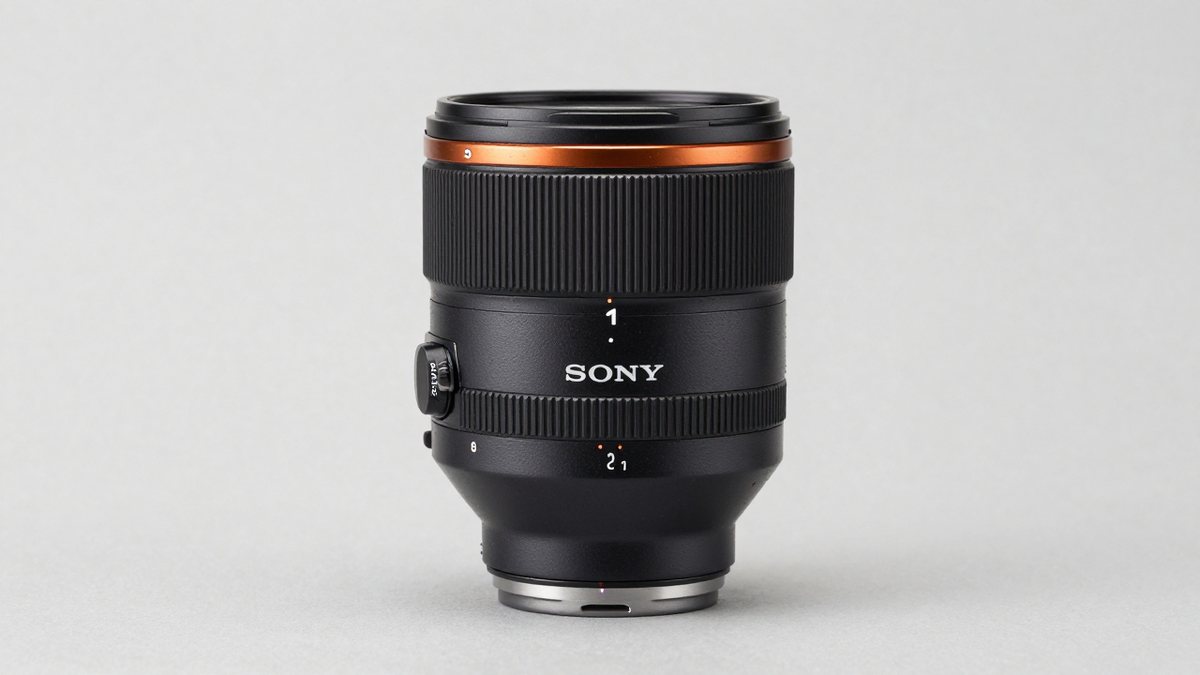
The best Sony prime lens for most photo and video shooters is the FE 35mm f/1.4 GM: it covers environmental portraits, events and handheld video at a genuinely fast f/1.4, and per the manufacturer’s spec sheet it weighs about 524 g with a 67 mm filter thread, a de-clickable aperture ring and two XD linear focus motors. If portraits are your main output, the FE 85mm f/1.4 GM II is the better spend; if you shoot in seriously dark venues, the FE 50mm f/1.2 GM buys roughly 1.2 stops more light than any f/1.8 prime in the system.
As an Amazon Associate we earn from qualifying purchases at no extra cost to you.

Our Top Picks
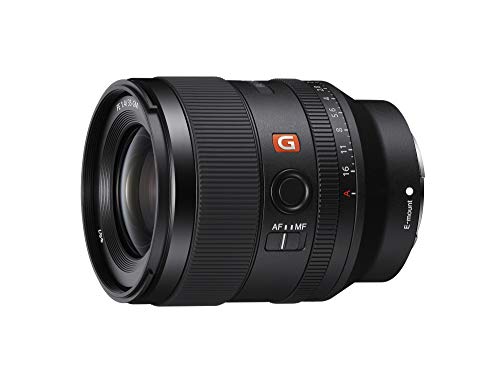 Sony FE 35mm f/1.4 GM Full-Frame Large-Aperture Wide35 mm6.77 x 5 x 5.51 Inches1.2 poundsCheck on Amazon
 Sony SEL85F18 85mm F/1.8-22 Medium-Telephoto Fixed Prime Camera4.49 x 3.82 x 4.49 inches0.65 poundsCheck on Amazon
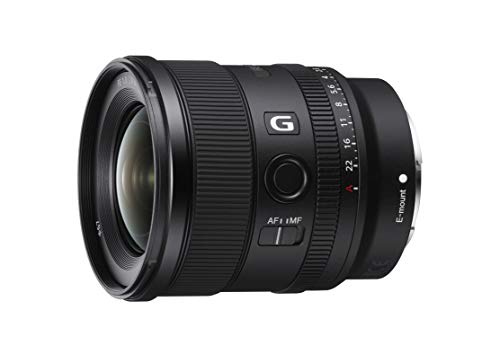 Sony FE 20mm F1.8 G Full-Frame Ultra-Wide Prime4.257.75 x 4.5 x 4.25 inches0.8 poundsCheck on Amazon
Quick comparison: the Sony primes worth shortlisting
| Pick | Best for | Key specs (per manufacturer) | Typical price range (USD) |
|---|---|---|---|
| Sony FE 35mm f/1.4 GM | Best overall | f/1.4, ~524 g, 67 mm filter, 11-blade aperture, de-clickable ring, two XD linear motors | ~$1,400–1,600 |
| Sony FE 85mm f/1.4 GM II | Portraits | f/1.4, ~640 g, 77 mm filter, 11-blade aperture, de-clickable ring, XD linear motors | ~$1,700–1,900 |
| Sony FE 50mm f/1.2 GM | Low light | f/1.2, ~778 g, 72 mm filter, 11-blade aperture, XD linear motors, 0.4 m minimum focus | ~$1,800–2,000 |
| Sony FE 24mm f/1.4 GM | Video and wide work | f/1.4, ~445 g, 67 mm filter, 11-blade aperture, 0.24 m minimum focus, de-clickable ring | ~$1,300–1,500 |
| Sony FE 50mm f/1.8 | Budget starter | f/1.8, ~186 g, 49 mm filter, 7-blade aperture, DC focus motor | ~$200–300 |
| Sony FE 85mm f/1.8 | Budget portrait | f/1.8, ~371 g, 67 mm filter, 9-blade aperture, 0.8 m minimum focus | ~$550–650 |
| Sony FE 90mm f/2.8 Macro G OSS | Detail and product | f/2.8, ~602 g, 62 mm filter, 1:1 magnification, optical stabilisation | ~$950–1,100 |
Best overall: Sony FE 35mm f/1.4 GM
The 35mm field of view is the widest that still keeps faces undistorted at conversational distance, which is why it works for weddings, documentary and handheld video as well as street photography. This lens gives you f/1.4 for indoor work, an 11-blade aperture for rounded out-of-focus highlights, and a de-clickable aperture ring so video shooters can change exposure silently. It suits anyone who wants one prime that does most jobs.
Main trade-off: it is neither the cheapest nor the lightest option, and 35mm is too wide for tight headshots — you will still want something in the 85–135 mm range for flattering portrait compression.
Best for portraits: Sony FE 85mm f/1.4 GM II
An 85mm prime at f/1.4 gives roughly the same subject framing at 2–3 m as a 50mm does at 1.5 m, but with flatter perspective and far stronger background separation. The second-generation GM adds a de-clickable aperture ring and trims weight to roughly 640 g — meaningful if you hand-hold a full day of sessions. It suits portrait, wedding and event photographers who want the shallowest usable depth of field.
Main trade-off: at 85mm you need working distance, so it is a poor choice for small rooms, and the 77 mm filter thread means polarisers and ND filters cost more than 67 mm equivalents.
Best for low light: Sony FE 50mm f/1.2 GM
A 50mm f/1.2 collects about 1.2 stops more light than an f/1.8 lens of the same focal length — roughly 2.3× the light — which is often the difference between ISO 6,400 and ISO 12,800 in a reception hall. That makes it the pick for dark venues, night documentary and indoor sport where flash is not allowed. Its XD linear motors track reliably, and the 11-blade aperture keeps highlights circular even stopped down a little.
Main trade-off: about 778 g and a 72 mm filter thread make it the heaviest everyday prime here, and depth of field at f/1.2 is thin enough that eye-level autofocus becomes essential rather than optional.
Best for video: Sony FE 24mm f/1.4 GM
Wide primes are easier to stabilise in the hand and easier to gimbal, and 24mm is the classic vlogging and interview focal length for a single operator. At about 445 g with a 0.24 m minimum focus distance, it can also go close for detail cutaways. The de-clickable aperture ring and 67 mm thread keep it practical on a rig.
Main trade-off: wide lenses stretch faces at close range, so it is a poor interview lens unless you frame wider than you would with a 35mm.
Best budget picks: FE 50mm f/1.8 and FE 85mm f/1.8
The 50mm f/1.8 is the cheapest way into full-frame primes at about 186 g and a 49 mm thread, and optically it is a solid starter. The catch is the DC focus motor: it is audible and slower to track than linear-motor lenses, which makes it the weakest of these options for video autofocus. The 85mm f/1.8 is the better-balanced budget choice — a 9-blade aperture, a 67 mm thread that matches many zooms, and focus that is quick enough for moving subjects. It suits beginners and second-body setups.
Best for detail work: FE 90mm f/2.8 Macro G OSS
For product shots, jewellery, textures and flat-lay work, 1:1 magnification matters more than aperture. The 90mm Macro reaches 1:1 with a working distance that leaves room for lighting, and its optical stabilisation helps at high magnification. It also doubles as a sharp, slightly long portrait lens.
Main trade-off: f/2.8 limits background blur compared with an f/1.4 prime, and macro autofocus hunts at close range — manual focus with focus peaking is usually faster.
How to choose: focal length, aperture and autofocus by the numbers
Focal length follows your working distance
Indoors, a 24–35 mm lens lets you work at 1–2 m; an 85 mm lens needs 2–3 m; a 135 mm needs 3 m or more. If your space is small, choose shorter. If you shoot in a studio with room to back up, longer focal lengths flatter faces and compress backgrounds more.
Aperture: what each stop actually buys
- f/1.2 to f/1.4: about 0.4 stops — a modest gain for a large price jump.
- f/1.2 to f/1.8: about 1.2 stops, or roughly 2.3× the light.
- f/1.4 to f/1.8: about 0.7 stops.
- f/1.8 to f/2.8: about 1.3 stops — the biggest drop here, which is why macro and compact primes feel darker indoors.
Each stop also halves depth of field at the same framing, so a faster lens is not automatically sharper where it matters.
Autofocus motors decide video usability
Linear-motor designs (the G Master primes and most G lenses) move glass directly, so they focus quietly and smoothly, which matters if you record audio on-camera. Geared DC motors, as in the 50mm f/1.8, are noisier and step more visibly. Sony’s Focus Breathing Compensation, available on many recent Alpha bodies, reduces the zoom-like shift some lenses show when focus pulls — but support is lens-specific, so check your body’s compatibility list before buying for video.
Weight, filters and gimbals
Budget roughly 1 kg of total camera-plus-lens weight before a gimbal needs rebalancing. A 49 mm filter costs noticeably less than a 77 mm or 82 mm one, and the 14mm f/1.8 GM has no front filter thread at all, using rear gel filters instead — a real consideration if you rely on ND for video.
Decision matrix: match the lens to your situation
| Your situation | Target focal length and aperture | Pick | Why |
|---|---|---|---|
| First prime, mixed photo and video | 35 mm, f/1.4–1.8 | FE 35mm f/1.4 GM (or 35mm f/1.8 on a budget) | One lens covers events, street and handheld video |
| Studio and outdoor portraits | 85 mm, f/1.4–1.8 | FE 85mm f/1.4 GM II | Flattering compression with strong subject separation |
| Dark receptions, no flash allowed | 50 mm, f/1.2 | FE 50mm f/1.2 GM | About 1.2 stops more light than f/1.8 |
| Solo video, vlogging, gimbal work | 20–24 mm, f/1.4–1.8 | FE 24mm f/1.4 GM or FE 20mm f/1.8 G | Light, wide, easy to stabilise and gimbal |
| Travel and everyday carry | 40–50 mm, f/1.8–2.5 | FE 50mm f/1.8 or a compact G-series prime | Under 300 g, small filter thread, low cost |
| Products, macro and textures | 90–100 mm, f/2.8 | FE 90mm f/2.8 Macro G OSS | True 1:1 magnification with stabilisation |
| Tight headshots from a distance | 135 mm, f/1.8 | FE 135mm f/1.8 GM | Maximum compression, but ~950 g and an 82 mm thread |
Ownership realities: what wears and what to watch
Prime lenses are mechanically simple, so the first things to show age are usually external rather than optical. The rubber focus and aperture rings are the common wear points, especially on lenses used with follow-focus rigs. The mount gasket — the rubber lip that seals the lens against the body — can harden or tear; it is cheap to replace at a service centre and worth checking before buying used. Zoom lenses get dust from pumping air; primes mostly get it from front-element changes, so a filter and a hood are the practical protection.
Cleaning mistakes cost more than dust. Wiping a dry front element with a cloth drags grit and can leave permanent micro-scratches; use a blower first, then a dampened microfibre or a pre-moistened lens tissue, working in a spiral from the centre. Never use compressed air on the aperture blades or the rear element, and never apply solvent to a lens with a printed focus scale.
Firmware matters more than most owners expect. Sony has shipped lens firmware updates that improve autofocus tracking and enable body-side features such as breathing compensation, so registering the lens and checking for updates once a year is worthwhile. Finally, G Master primes hold resale value better than budget primes, but the used market is flooded with first-generation models after each mark II release — if you buy new at full price, expect a step down in value when the next version lands.
Frequently Asked Questions
Is 35mm or 50mm the better first Sony prime?
Choose 35mm if you shoot events, street or video, because it works indoors and at arm’s length. Choose 50mm if your main subject is people at a short distance and you want slightly more background blur for the same aperture. Many shooters eventually own both, using 35mm for context and 50mm for tighter framing.
Do I really need f/1.2, or is f/1.8 enough?
An f/1.8 prime is about 1.2 stops darker than f/1.2, which is roughly the difference between ISO 6,400 and ISO 12,800 in the same light. If you regularly shoot dim venues, f/1.2 or f/1.4 pays off; if you mostly shoot outdoors or with flash, f/1.8 saves weight and money without much practical loss.
Are Sony prime lenses good for video autofocus?
The linear-motor lenses — the G Master primes and most G-series glass — focus quietly and smoothly enough to record audio on-camera. Geared DC motors, such as the one in the 50mm f/1.8, are audible and step more visibly. For manual-focus video work, a de-clickable aperture ring and a linear focus response matter more than raw speed.
Which filter size should I buy first?
67 mm is the most common thread across Sony primes and many zooms, covering the 24mm f/1.4 GM, 35mm f/1.4 GM and 85mm f/1.8, so it is the safest first investment. Step-up rings let a 67 mm filter work on 49 mm and 55 mm lenses, though not on the 14mm f/1.8 GM, which takes rear gel filters instead of a front thread.
How much does weight matter for gimbals and long days?
As a rule of thumb, keep the camera-plus-lens combination under about 1 kg for comfortable single-handed gimbal use and long handheld days. The 50mm f/1.2 GM and 135mm f/1.8 GM sit near or above that on their own, while the 24mm f/1.4 GM, 35mm f/1.8 and 50mm f/1.8 stay well below it.
Do Sony GM primes hold their value?
Generally better than budget primes, but values step down noticeably when a mark II version launches and the used market fills with the previous generation. Buying a current-generation lens used, or waiting a few months after a new release, is usually the cheapest route into G Master glass.