What's inside
- Top 3 Picks
- Quick Comparison
- How We Chose
- 1. BONOOTH Overspray Diversion Suction Device – Best for Source Capture in Compact Shops
- 2. Orionet Indoor Air Draft Suction Device – Best for Orionet Inflatable Booth Owners
- 3. Fenjidrop 16 Inch Paint Booth Exhaust Fan – Best Budget Whole-Booth Exhaust
- 4. GMSLuu 18″ Explosion-Proof Axial Fan – Best for Mid-Size Booths Needing a Larger Axial
- 5. Hon&Guan 12 Inch Utility Blower Fan – Best for Long Duct Runs and Portable Extraction
- 6. BZPFNDKVG 300W 16″ Explosion-Proof Axial Fan – Best for Ducted Tube-Axial Installations
- 7. Master Airbrush Portable Airbrush Spray Booth – Best for Bench-Top Hobby Airbrushing
- 8. Fenjidrop 10 Inch Paint Booth Exhaust Fan – Best for Small Booths and Cabinet Enclosures
As an Amazon Associate I earn from qualifying purchases. This post may contain affiliate links at no extra cost to you.
The best spray booth exhaust fan for most small and mid-size paint shops is the BONOOTH Overspray Diversion Suction Device paired with its 12-inch exhaust fan — it captures overspray-laden air at the source instead of waiting for it to cross the whole booth, which keeps a small shop cleaner and takes load off downstream filters. It suits anyone spraying panels, parts, wheels or bike-sized projects in an enclosure too small for a full crossdraft wall. If you are exhausting a whole booth and want the most airflow per dollar, the Fenjidrop 16-inch 5400 m³/h explosion-proof fan is the budget answer at roughly 3,180 CFM. If your fan has to push air through a long duct run or you need a portable unit you can move between jobs, the Hon&Guan 12-inch utility blower is the premium pick, combining a 550 W motor, a stated 3,243 CFM and a 33 ft duct hose.
Our Top Picks
 GMSLuu 18" Explosion-Proof Axial Fan-Paint Booth Exhaust Fan16in-370W CBF-400D10.87 x 17.87 x 17.87 inchesCheck on Amazon
 BZPFNDKVG 300W 16" Explosion-Proof Axial Fan High VelocityLarge12 x 12 x 18 Inches5.3 poundsCheck on Amazon


Top 3 Picks
Best overall: BONOOTH Overspray Diversion Suction Device with 12-inch exhaust fan. A source-capture design that pulls overspray away as it leaves the gun rather than after it has filled the room. Best for compact shops, single-gun operations and anyone fighting overspray settling on finished work and surrounding equipment.
Best budget: Fenjidrop 16-inch Paint Booth Exhaust Fan. The strongest headline airflow number in the budget tier at 5400 m³/h (about 3,180 CFM) from a 370 W explosion-proof motor. It is the sensible starting point for a small crossdraft booth or a DIY enclosure where you want wall-mounted exhaust without a premium price.
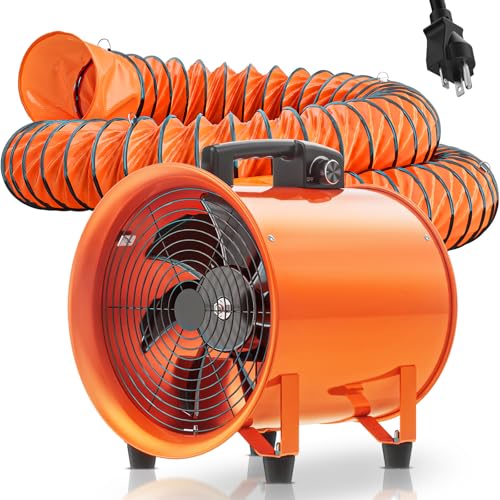
Best premium: Hon&Guan 12-inch Utility Blower Fan. A 550 W portable cylinder axial fan with a stated 3,243 CFM and a 33 ft duct hose included. It earns the premium tier on portability and duct reach rather than on mounting convenience — ideal for shops that move extraction between bays or vent out of a window or door.
Quick Comparison
| Product | Best for | Key specs | Price tier |
|---|---|---|---|
| BONOOTH Overspray Diversion Suction Device | Source capture in compact shops | 12 in exhaust fan, blue connector, directional suction/diversion head | Premium |
| Orionet Indoor Air Draft Suction Device | Orionet inflatable booth owners | Booth-specific draft/suction unit, designed to filter out overspray faster | Mid-range |
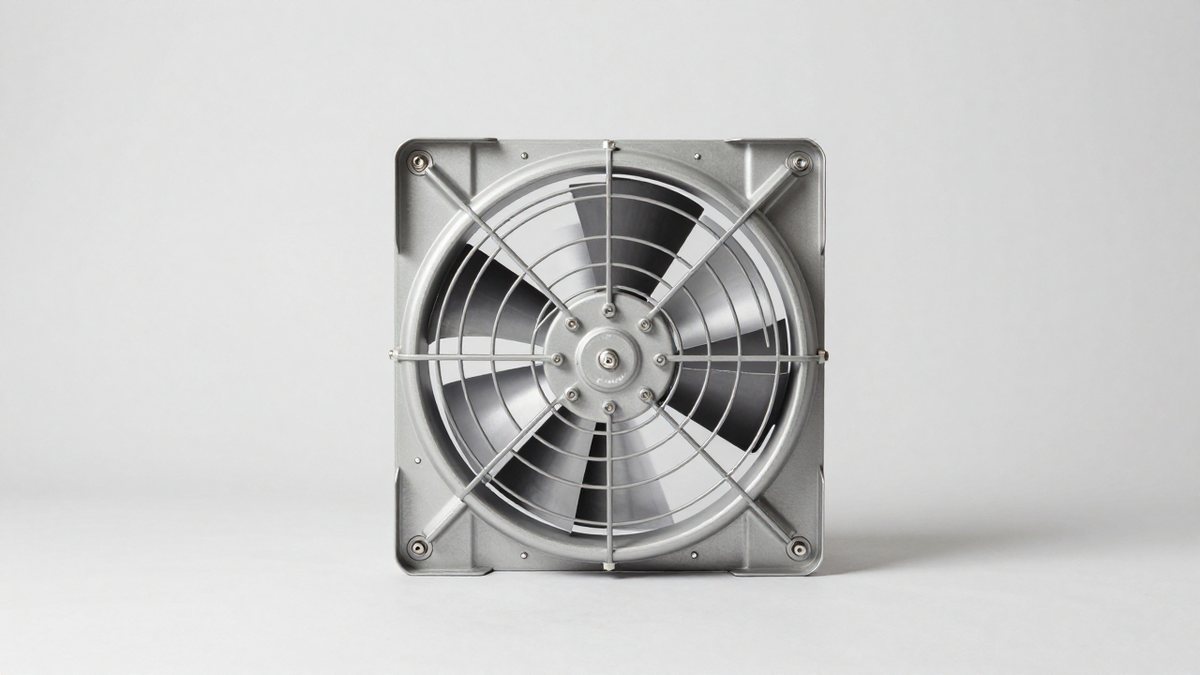
| Fenjidrop 16 in Paint Booth Exhaust Fan | Budget whole-booth exhaust | 16 in, 5400 m³/h (~3,180 CFM), 370 W, explosion-proof | Budget |
| GMSLuu 18 in Explosion-Proof Axial Fan | Mid-size booths needing a larger axial | 18 in axial, explosion-proof, high-velocity blade set | Mid-range |
| Hon&Guan 12 in Utility Blower Fan | Long duct runs and portable extraction | 12 in cylinder axial, 550 W, 3,243 CFM, 33 ft duct hose | Premium |
| BZPFNDKVG 300W 16 in Explosion-Proof Axial Fan | Ducted tube-axial installations | 16 in, 300 W (~0.4 hp), explosion-proof axial/duct fan | Mid-range |
| Master Airbrush Portable Airbrush Spray Booth | Bench-top hobby airbrushing | Portable booth, exhaust fan, LED light | Budget |
| Fenjidrop 10 in Paint Booth Exhaust Fan | Small booths and cabinet enclosures | 10 in, 5400 m³/h (~3,180 CFM) headline, 370 W, explosion-proof | Budget |
| GORILLASPRO Inflatable Paint Booth 30x16x11 ft | Turnkey portable booth system | 30 × 16 × 11 ft enclosure, air draft device, exhaust fan, two blowers | Premium |
| Mlonausz 12 in Explosion-proof Axial Fan | Budget 12-inch cylinder fan | 12 in cylinder/pipe axial, explosion-proof, paint fume duty | Budget |
| NIENIEE 250W Explosion Proof Fan Pipe | Compact ducted fume extraction | 250 W (~0.33 hp), explosion-proof pipe-mounted axial blower | Premium |
| VEVOR Airbrush Spray Booth | Model and craft airbrushing | Dual fans, 21.5 × 18.7 × 14.6 in, portable hobby kit | Mid-range |
How We Chose
The picks here are built from published specification data and category engineering, not from physical evaluation. Every unit was judged first on whether its stated airflow class actually matches the booth sizes it is sold for — a 3,000 CFM fan is a reasonable choice for a 30 sq ft crossdraft opening and an inadequate one for an 80 sq ft opening, and several products in this category are marketed without that distinction. From there, the criteria were motor enclosure class and how it maps to solvent-vapor environments, the aperture size and what duct or wall opening it implies, mounting method (wall, pipe, cylinder, bench, or freestanding), noise class for the fan type, and what consumables the owner will be replacing — filters, ducting, seals and bearings.
Category fit mattered as much as raw numbers. A hobby bench booth and a full crossdraft panel booth are different problems, and a product that wins one can be the wrong answer for the other. Finally, each pick was assessed on upgrade path: can it be ducted further, moved, expanded with a second unit, or does it lock the buyer into one booth size? Products with unclear or self-contradictory airflow claims were described by spec class rather than by a number, and the same standard was applied to every brand in the list.
1. BONOOTH Overspray Diversion Suction Device – Best for Source Capture in Compact Shops
As an Amazon Associate we earn from qualifying purchases at no extra cost to you.

The BONOOTH unit approaches spray booth ventilation from the opposite direction to a wall fan. Instead of exhausting the whole enclosure, it uses a suction and diversion head — the listing pairs it with a blue connector and a 12-inch exhaust fan — to pull overspray-laden air toward a capture point as it leaves the spray gun. That matters most in shops where the booth is small, where the sprayer works close to the panel, or where the enclosure has poor internal circulation and overspray lingers in the middle of the room before it ever reaches the exhaust wall.
Who it suits: single-gun operators, custom and restoration shops working on panels, sub-assemblies and motorcycle parts, and anyone spraying in a booth under roughly 6 ft × 5 ft at the face. It is also a good fit where you already have some exhaust and want to stop overspray from drifting across finished work or onto adjacent equipment.
Key specs
- 12-inch exhaust fan bundled with the diversion device
- Blue connector for joining the suction head to the fan/duct run
- Suction/diversion head designed to improve air circulation inside the booth
- Source-capture orientation rather than whole-booth exhaust
- Premium price tier
Strengths
Source capture is the single most effective way to reduce overspray travel in a small space. By intercepting airborne paint near the work, the device reduces how much material lands on the booth walls, on lighting lenses and on the exhaust filter. That has a direct ownership benefit: filters load more slowly, so replacement intervals stretch and the fan sees less static pressure buildup over time. The bundled 12-inch fan keeps the package self-consistent — you are not hunting for a fan that matches the capture head.
Because it is not trying to be a full crossdraft wall, it also tolerates imperfect booth geometry. A homemade enclosure with a door that does not seal perfectly, or a booth built into a corner of a larger shop, will still get useful capture at the head. That flexibility is why it wins the overall slot for the audience most likely to be reading this: the small or mid-size shop that needs a real answer, not a 12,000 CFM installation.
Pros
- Captures overspray at the source, before it spreads through the booth
- Slows filter loading compared with whole-booth exhaust alone
- Bundled 12-inch fan and connector mean fewer compatibility decisions
- Works in irregular or DIY enclosures where a wall panel is impractical
- Improves visibility at the work surface, which supports better finish quality
Cons
- Not a substitute for code-required booth ventilation on its own
- Premium tier pricing for a device that covers a limited area
- Requires the operator to position the head thoughtfully for each job
- Less effective on large flat panels sprayed at a distance from the head
How it compares
The nearest alternative in this list is the Fenjidrop 16-inch fan, which takes the whole-booth approach: mount it in a wall or panel, exhaust the enclosure, and accept that overspray crosses the room before it leaves. Fenjidrop gives you a much higher headline airflow number for a budget price, but it does nothing about overspray that never reaches the wall. The BONOOTH solves that problem and costs more for far less raw CFM. Shops with a proper crossdraft wall should buy the wall fan; shops working in a tight, oddly shaped or low-circulation space get more real improvement from source capture.
2. Orionet Indoor Air Draft Suction Device – Best for Orionet Inflatable Booth Owners

The Orionet Indoor Air Draft Suction Device is a purpose-built accessory rather than a universal fan. The listing is explicit that it suits Orionet inflatable paint booths, and it is described as a draft and suction device intended to filter out overspray faster — in other words, it works with the booth’s own airflow path to move contaminated air through the filter media more efficiently instead of letting overspray recirculate inside the inflated structure.
Who it suits: owners of an Orionet inflatable booth who want better clearing between coats and less overspray hanging in the enclosure. If you already run an Orionet booth, this is the matching upgrade and there is nothing to adapt or fabricate.
Key specs
- Indoor air draft / suction device for overspray control
- Compatible with Orionet inflatable paint booths specifically
- Positioned as a filter-out speed upgrade rather than a standalone exhaust fan
- Mid-range price tier
Strengths
Inflatable booths have a ventilation problem that rigid booths do not: the structure itself depends on a constant supply of air from a blower, and the exhaust side is often an afterthought. The result is a booth that stays inflated but clears slowly, so overspray hangs in the air between coats and settles on fresh paint. A device designed for that specific airflow path is more useful than a generic fan bolted to a frame, because it works with the booth’s pressure balance rather than fighting it.
The practical benefit is faster cycle time. When a booth clears quickly, you can move from one coat to the next without waiting, and you spend less time watching a haze drift across the panel. Faster clearing also reduces the amount of overspray that lands on the booth’s own interior surfaces, which keeps the filter media doing its job for longer between changes.
Pros
- Designed for the specific airflow behaviour of Orionet inflatable booths
- Improves clearing speed, which shortens time between coats
- Reduces overspray settling on freshly painted surfaces
- No fabrication, bracketry or duct adaptation required
- Mid-range pricing relative to full booth ventilation packages
Cons
- Compatibility is limited to Orionet inflatable booths — it is not a general-purpose fan
- Provides no benefit if your booth is a rigid enclosure of another make
- Depends on the booth’s own filter media being in good condition
- Does not replace the need for correct exhaust sizing on larger booths
How it compares
The obvious comparison is the GORILLASPRO Inflatable Paint Booth, which takes the opposite commercial approach: instead of an accessory for an existing booth, it is a complete 30 × 16 × 11 ft inflatable enclosure that arrives with an air draft device, an exhaust fan and two blowers. GORILLASPRO is the better answer if you are buying the booth and the ventilation together, or if you need a much larger spray volume than a typical Orionet booth provides. The Orionet device is the better answer if you already own an Orionet booth and simply want it to clear faster — buying a whole second booth to solve an airflow problem is an expensive way to fix it. Note that inflatable booth ventilation still needs to meet local code for the work you are doing, so confirm requirements with your authority having jurisdiction.
3. Fenjidrop 16 Inch Paint Booth Exhaust Fan – Best Budget Whole-Booth Exhaust

The Fenjidrop 16-inch is the value benchmark in this list. It pairs a 370 W (roughly 0.5 hp) explosion-proof motor with a stated 5400 m³/h airflow, which converts to approximately 3,180 CFM, and a 16-inch fan aperture. That combination — a genuine explosion-proof rating at a budget price with a four-figure CFM number — is why it takes the best-budget slot for anyone exhausting an entire booth rather than capturing at the source.
Who it suits: DIY booth builders, small crossdraft booths, cabinet-style spray enclosures, and shops that need wall-mounted exhaust without paying premium prices. It is the right starting point if your booth face is around 5 ft × 6 ft and you are running a single gun.
Key specs
- 16-inch fan aperture
- 370 W motor, approximately 0.5 hp
- 5400 m³/h stated airflow, roughly 3,180 CFM
- Explosion-proof motor design for paint fume duty
- Budget price tier
Strengths
Airflow per dollar is the headline. At roughly 3,180 CFM, a single 16-inch Fenjidrop can service a 5 ft × 6 ft crossdraft opening at close to the 100 feet per minute face velocity that many refinish guides reference, or comfortably serve the same opening at a lower 60–80 fpm target with headroom for filter loading. That headroom matters more than most buyers expect: as overspray filters load, resistance rises and delivered airflow falls, so a fan sized exactly at the target number will underperform after a few hours of spraying.
The explosion-proof motor class is the other reason this unit belongs near the top of the budget tier. Solvent-borne paints and thinners produce flammable vapours, and a spark from a standard motor, brush or switch is a genuine ignition risk in an enclosed booth. Buying an explosion-proof unit from the start avoids the awkward and expensive retrofit later. The 16-inch frame also sits in a useful middle ground: large enough to move meaningful air, small enough to fit a wall panel or a window frame without major carpentry.
Pros
- Strong airflow for the price — about 3,180 CFM from a 370 W motor
- Explosion-proof motor class appropriate to solvent vapour environments
- 16-inch aperture is practical for wall, panel and window mounting
- Straightforward single-speed operation with minimal controls to fail
- Leaves budget room for ducting, filters and a proper filter frame
Cons
- No duct hose or mounting hardware bundled at this tier
- Airflow figures are typically free-air; delivered CFM drops with duct length and filters
- Single-speed operation means no easy turn-down for delicate work
- Axial design loses effectiveness quickly against high static pressure
- Underpowered for full-size automotive booths with large face openings
How it compares
The nearest alternatives are the GMSLuu 18-inch and the BZPFNDKVG 300W 16-inch. GMSLuu gives you a larger aperture and therefore more swept area, which helps when your booth face is wider — but it sits a tier higher in price. BZPFNDKVG is a tube-axial design at the same 16-inch size with a 300 W motor, which makes it easier to integrate into a duct run than the Fenjidrop’s wall-panel orientation, though with less motor power on paper. Choose Fenjidrop if you are mounting in a wall or panel and want maximum airflow for the money; choose BZPFNDKVG if the fan needs to sit inline in ductwork; choose GMSLuu if you need the extra aperture.
4. GMSLuu 18″ Explosion-Proof Axial Fan – Best for Mid-Size Booths Needing a Larger Axial

The GMSLuu 18-inch axial fan occupies the size step above the 16-inch budget units. It is an explosion-proof axial design aimed at paint booth exhaust, and the extra two inches of aperture translate into noticeably more swept area — which is what actually determines how much air a fan can move at a given velocity. For a booth whose face is wider than about 6 ft, that extra area is often the difference between meeting your target face velocity and falling short of it.
Who it suits: shops with a mid-size crossdraft booth, a wider panel booth, or an enclosure where a 16-inch fan would need to run at its limit to keep up. It also suits buyers who want a size upgrade without jumping to a full booth ventilation package.
Key specs
- 18-inch axial fan aperture
- Explosion-proof motor class for solvent vapour duty
- High-velocity axial blade configuration for paint booth exhaust
- Mid-range price tier
- Wall or panel mounting orientation typical for this fan class
Strengths
Aperture is the quiet spec that decides whether a booth works. Two fans with identical motor power will not move the same air if one has a 16-inch opening and the other an 18-inch opening, because the larger fan sweeps more volume per revolution at the same blade speed. In practice this means an 18-inch axial can hold a target face velocity across a wider booth opening without being pushed to the edge of its operating range, and it tolerates filter loading with more reserve.
The explosion-proof classification puts it in the same safety category as the budget Fenjidrop, which is the important threshold for solvent work. Axial fans of this type are also simple machines: fewer controls, fewer electronics, and a predictable failure mode. For a small shop that wants the ventilation problem solved once and then forgotten, that simplicity is a genuine advantage over a variable-speed or electronically controlled unit.
Pros
- Larger 18-inch aperture suits wider booth faces
- Explosion-proof motor class appropriate to flammable vapour environments
- More reserve capacity against filter loading than a 16-inch unit
- Simple, robust axial construction with minimal electronics
- Mid-range pricing sits between budget 16-inch fans and premium portable blowers
Cons
- Requires a larger wall opening or mounting frame than a 16-inch fan
- No ducting or mounting accessories included at this tier
- Still an axial design, so it is sensitive to long duct runs and elbows
- Noise rises with blade speed on high-velocity axial units
- Overkill for bench-scale or cabinet booths
How it compares
Against the Fenjidrop 16-inch, the GMSLuu trades a slightly higher price for a bigger aperture and more airflow reserve. If your booth face is 5 ft × 6 ft or smaller, the Fenjidrop is the smarter buy — you will not use the extra area, and the money is better spent on filters and ducting. If your opening is wider than about 6 ft, or you spray large flat panels that need a wider sweep of moving air, the 18-inch unit earns its premium. Against the BZPFNDKVG 16-inch, the choice is orientation rather than size: GMSLuu is the wall-panel fan, BZPFNDKVG is the inline duct fan.
5. Hon&Guan 12 Inch Utility Blower Fan – Best for Long Duct Runs and Portable Extraction

The Hon&Guan 12-inch utility blower is a different animal from the wall-mounted axials above. It is a portable industrial cylinder axial fan with a 550 W (roughly 0.75 hp) motor, a stated 3,243 CFM, and a 33 ft duct hose included. The cylinder format means the fan sits on the floor or a bench and pushes air through hose rather than being built into a wall, which makes it the most flexible unit in this list and the reason it takes the premium slot.
Who it suits: shops that move extraction between bays, rent or share workshop space, or need to vent out of a window, door or temporary opening without cutting a permanent hole. It also suits anyone whose booth location changes with the job.
Key specs
- 12-inch cylinder axial fan, portable format
- 550 W motor, approximately 0.75 hp
- 3,243 CFM stated airflow
- 33 ft duct hose included
- Premium price tier
Strengths
Thirty-three feet of hose is a genuinely useful amount. It means the fan can sit outside the spray area — often the correct placement, since it keeps the motor away from the vapour source and puts the noise outside the workspace — while the hose intake reaches into the booth. That arrangement is closer to best practice than mounting a fan directly in a booth wall, where the motor sits in the contaminated airstream unless the unit is specifically designed otherwise.
Portability is the second advantage. A cylinder blower can be rolled or carried between a spray booth, a welding bay and a general ventilation job, which spreads its cost across more than one task in a small shop. The 550 W motor is the largest in this list, and combined with the 12-inch cylinder aperture it gives strong free-air movement for a portable unit.
Be realistic about the 3,243 CFM figure, though. That number is a free-air rating. Push it through 33 ft of hose with a couple of bends and the delivered airflow at the booth end will be materially lower — see the duct sizing discussion below. The practical lesson is to keep the hose run as short and as straight as the job allows, and to size the fan for the airflow you need after duct losses, not before.
Pros
- Portable cylinder format suits multiple bays and temporary setups
- 550 W motor is the most powerful in this comparison
- 33 ft duct hose included — enough to keep the fan outside the spray area
- Can be repositioned, stored and reused across different tasks
- Lets you vent through an existing window or door without structural work
Cons
- Premium tier pricing for a portable unit
- Delivered CFM falls sharply over long or bendy hose runs
- Hose takes up floor space and needs managing during spraying
- Not a fixed installation, so it does not replace a permanent booth exhaust
- Cylinder fans are typically louder at the operator position than wall-mounted units
How it compares
The closest alternative is the BZPFNDKVG 300W 16-inch explosion-proof axial fan, which is also duct-oriented but designed as an inline installation rather than a portable blower. BZPFNDKVG is the better choice for a permanent duct run where the fan can be mounted in the duct itself; Hon&Guan is the better choice when the fan has to move, or when you need the duct hose included in the box. The NIENIEE 250W fan pipe is the third ducted option here, smaller and lighter but with less motor power than the Hon&Guan. If portability is not a requirement, a fixed explosion-proof wall fan at a lower price will usually deliver more usable airflow for the same money.
6. BZPFNDKVG 300W 16″ Explosion-Proof Axial Fan – Best for Ducted Tube-Axial Installations

The BZPFNDKVG 16-inch unit is a tube-axial duct fan: a 300 W (roughly 0.4 hp) explosion-proof axial blower designed to sit inline in a pipe or duct run rather than in a wall panel. The listing describes it as a high-velocity axial blower, tube axial duct fan and pipe fan for spray booth use, which places it squarely in the category of fans you install where the duct goes, not where the booth ends.
Who it suits: shops running a ducted exhaust path from a booth to an outside wall, roof or window, and anyone who needs the fan motor positioned away from the spray area. It also suits retrofit jobs where the wall opening already exists but the fan needs to sit further along the run.
Key specs
- 16-inch tube-axial duct fan
- 300 W motor, approximately 0.4 hp
- Explosion-proof class for paint fume extraction
- Inline pipe/duct mounting orientation
- Mid-range price tier
Strengths
Inline mounting solves a specific problem that wall fans cannot: where the motor ends up. When a fan is bolted into a booth wall, the motor sits at the boundary of the contaminated zone. When the fan sits inline in a duct several feet downstream, the motor is further from the spray source, which is generally the preferred arrangement for solvent work. BZPFNDKVG is built for that configuration.
The tube-axial format is also easier to integrate into an existing exhaust path. If you already have a duct run terminating at a louvre or a wall vent, an inline fan can be inserted with flanges rather than requiring a new framed opening. That makes it a practical upgrade for someone whose booth ventilation exists but underperforms — you can add or replace the inline fan without rebuilding the wall.
The trade-off is static pressure. Axial fans of any kind, tube-axial included, lose airflow quickly as duct resistance rises, and inline mounting adds the resistance of the duct on both sides of the fan. Keep the run short, use the largest duct diameter you can accommodate, and avoid sharp 90-degree elbows where two 45-degree bends will do. A 300 W motor is adequate for a short, straight run serving a compact booth; it is not the right tool for a long, complex duct system.
Pros
- Inline mounting keeps the motor further from the spray source
- Explosion-proof class suits solvent vapour environments
- Fits existing duct runs with flange connections rather than new openings
- 16-inch aperture balances airflow against installation size
- Mid-range pricing for a ducted explosion-proof unit
Cons
- 300 W motor is modest for long or convoluted duct runs
- Axial design is sensitive to static pressure from filters and bends
- Requires a duct system to be useful — no standalone wall function
- No ducting, flanges or hardware included at this tier
- Delivered airflow is well below the free-air figure once installed
How it compares
Against the Fenjidrop 16-inch, the choice is mounting philosophy rather than size. Both are 16-inch explosion-proof axials, but Fenjidrop uses a 370 W motor and is oriented toward wall or panel mounting, while BZPFNDKVG uses 300 W and is designed to live inside the duct. If your booth has a wall you can cut, the Fenjidrop gives you more motor for less money. If the fan must sit inline — because the motor needs to be away from the spray zone, or because the duct path already exists — BZPFNDKVG is the correct form factor and worth the compromise on motor size. Against the Hon&Guan 12-inch, the BZPFNDKVG is fixed and slightly cheaper but lacks the portable flexibility and bundled hose.
7. Master Airbrush Portable Airbrush Spray Booth – Best for Bench-Top Hobby Airbrushing

The Master Airbrush portable spray booth is a fundamentally different product from the industrial fans above, and that is the point. It is a compact, benchtop-scale airbrush booth with an integrated exhaust fan and LED lighting, designed to sit on a workbench, capture overspray from an airbrush, and push it out through a hose to a window. The LED light is a practical addition: airbrush work is detail work, and a booth that lights the work surface removes one more reason to lean in close to the spray.
Who it suits: model builders, miniature painters, hobbyists spraying small parts, and anyone working with an airbrush rather than a full-size spray gun. It is a bench solution, not a room solution.
Key specs
- Portable bench-top airbrush spray booth
- Integrated exhaust fan
- LED light for the work surface
- Compact footprint suited to a workbench or desk
- Budget price tier
Strengths
Scale is the whole argument. A hobbyist spraying 1/24 scale car bodies or miniature figures does not need 3,000 CFM; that would be an expensive, noisy, oversized answer to a small problem. What they need is a booth that captures the fine mist an airbrush produces, keeps it off the surrounding desk, and moves it somewhere else. The Master Airbrush unit does exactly that in a footprint that fits on a bench and can be packed away.
The integrated LED light is a bigger deal than it sounds. Detail airbrushing depends on seeing the surface clearly, and most hobby benches are lit poorly. Having the light built into the booth means the work is illuminated from a consistent angle every session, which improves consistency between projects. Combined with the integrated fan and a compact form factor, it is a complete starter package rather than a component you have to build a system around.
It is also the lowest-commitment entry in this list. If you are not sure whether airbrushing is going to stick as a hobby, a bench booth is a sensible first purchase — you can spray safely indoors, learn the equipment, and upgrade to a larger enclosure later if the work grows.
Pros
- Compact and portable — fits a workbench, packs away when not in use
- Integrated exhaust fan and LED light in one unit
- Budget tier, making it a low-risk entry point into airbrushing
- Appropriate scale for models, miniatures and small parts
- Simple setup: place it, connect the hose to a window, spray
Cons
- Far too small for full-size spray guns or panel work
- Limited airflow compared with any of the industrial fans here
- Depends on a window or vent path for the exhaust hose
- Not a code-compliant solution for solvent-based production spraying
- Small filter area means frequent media changes under heavy use
How it compares
The direct alternative is the VEVOR Airbrush Spray Booth, which uses a dual-fan configuration in a 21.5 × 18.7 × 14.6 in enclosure. Two fans generally move more air than one at the same noise level, which gives the VEVOR an edge in clearing speed and in how much overspray it captures per session — a meaningful difference if you spray frequently or use heavier media. The Master Airbrush unit’s counter-argument is simplicity and price tier: fewer fans means fewer things to clean and a lower entry cost. Hobbyists spraying occasionally should take the cheaper single-fan booth; anyone spraying several times a week, or working with thicker acrylics and clear coats, will notice the difference the second fan makes.
8. Fenjidrop 10 Inch Paint Booth Exhaust Fan – Best for Small Booths and Cabinet Enclosures
The Fenjidrop 10-inch is the smaller sibling of the 16-inch budget pick, and the listing carries