What's inside
As an Amazon Associate I earn from qualifying purchases. This post may contain affiliate links at no extra cost to you.
Our Top Picks
 KAKURI Wood Marking Gauge Double Blade 3.5"1 Count (Pack of 1)4.8 x 3.9 x 2.8 inches0.3 PoundsCheck on Amazon

What a marking gauge does in hardwood
A marking gauge scores a line parallel to a reference edge. In joinery, that line sets a shoulder, locates a mortise, or marks the thickness of a tenon. The tool’s job is not just to measure a distance; it must hold that setting and cut a clear line without wandering across the grain.
Hardwood makes weaknesses easier to spot. A blunt pin can skate or crush fibers, while a loose fence can shift as you pull the gauge. For most work, a sharp cutter-style gauge leaves a cleaner line than a pointed pin, especially across figured or end grain. A pin-style gauge is still useful for rough layout and softer stock.
As an Amazon Associate we earn from qualifying purchases at no extra cost to you.


The main choices
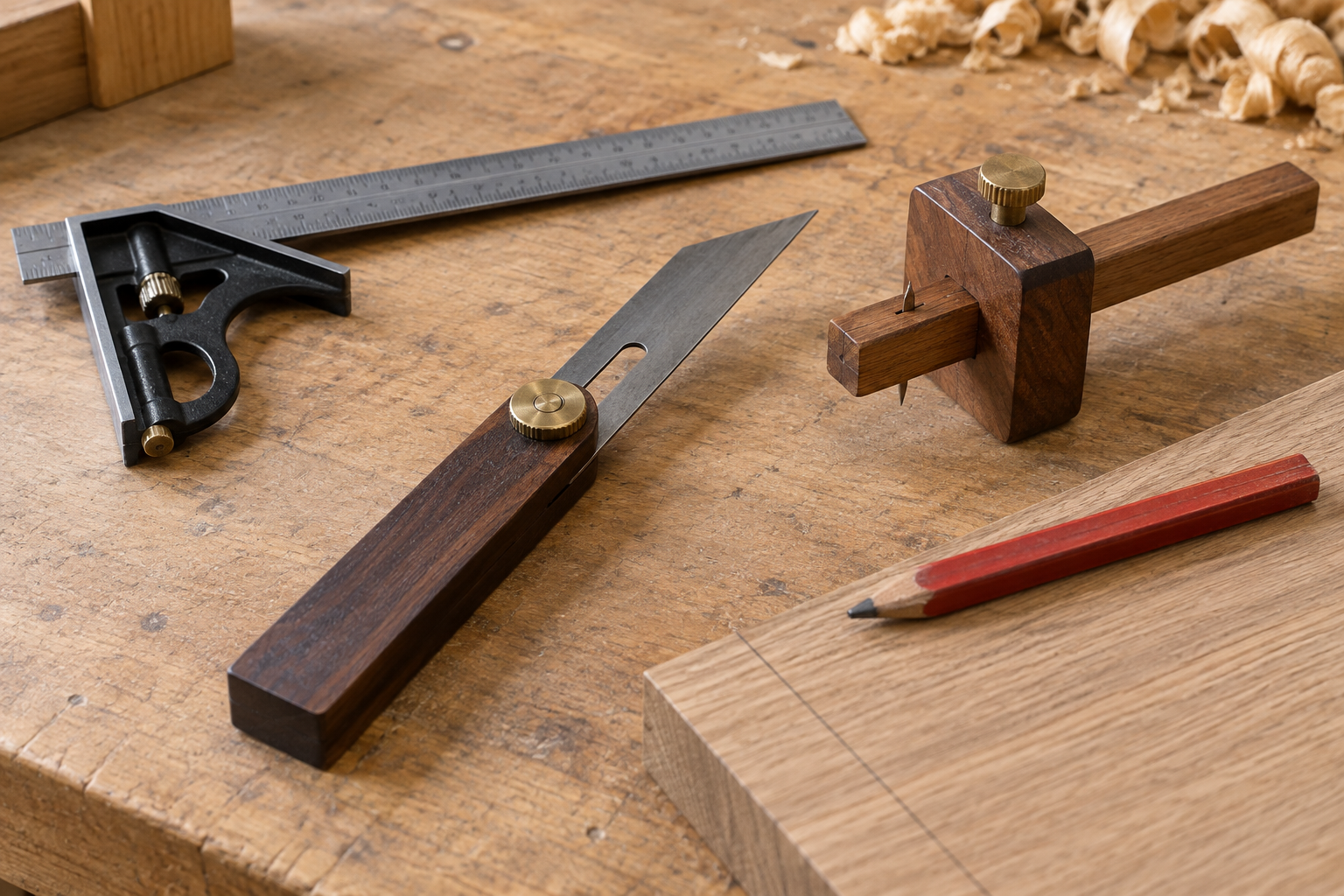
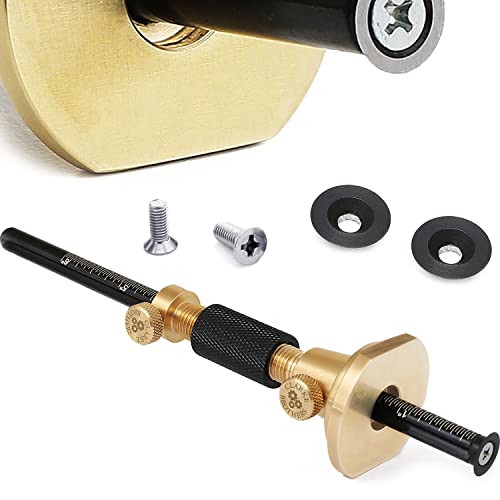
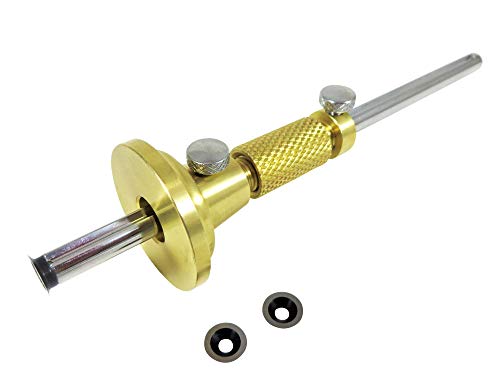
Traditional gauges have a beam, fence, and marking pin. You set the distance by sliding the beam through the fence, then lock it with a screw or wedge. Wheel gauges use a small circular blade instead of a pin. Cutting gauges often have a knife-like blade and are designed to make a more deliberate incision.
For repeatable joinery lines in hardwood, a wheel gauge is usually the best all-around choice. Its round cutter tends to follow the grain less aggressively than a pin and makes a narrow score that is easy to register a chisel or saw against. A good wheel marking gauge is a sensible first upgrade if your current gauge tears fibers or slips.
Comparison at a glance
| Type | Best use | Strength | Limitation |
|---|---|---|---|
| Pin gauge | Rough layout, softer wood, quick parallel lines | Simple and inexpensive | Can follow grain or bruise a crisp edge |
| Wheel gauge | Shoulders, tenons, and repeated hardwood layout | Clean, narrow score; easy to control | Blade can roll or clog with resin and dust |
| Cutting gauge | Deep, deliberate cuts and cross-grain marking | Very crisp line when properly sharpened | Needs more care and sharpening skill |
| Mortise gauge | Two parallel lines for mortise-and-tenon work | Sets both mortise boundaries together | Less versatile for single-line layout |
What to buy for the job
Look for a fence with a broad, flat bearing face and a beam that locks without rocking. A fence around 1 to 1½ inches tall is comfortable to hold against a board edge; a smaller fence can work, but is easier to tip. Check that the beam slides smoothly and that tightening the lock does not pull the setting noticeably off its mark.
For a general-purpose shop, choose a single-wheel gauge with a replaceable or sharpenable cutter and a locking mechanism you can operate with one hand. A wheel-cutter marking gauge does not need elaborate features to perform well. Spend extra for better fit and a stable fence, not decorative materials. A basic pin gauge remains a reasonable cheap option for framing, rough sizing, or work where the line will be planed away.
If you routinely cut mortises, a mortise gauge saves time because it marks two lines at once. Check its adjustment range against your chisels: many common mortise chisels are about ¼ to ½ inch wide, but sizes vary. A mortise gauge is a specialist purchase, not a replacement for a single-line gauge.
Set and use the gauge accurately
Start by choosing a reliable reference face and edge. Plane or joint the edge straight enough for the fence to sit flush; a gap under the fence transfers directly into a wandering line. Set the distance with a ruler or rule, then lock the beam and recheck the measurement after tightening. On repeated parts, test the setting on scrap before marking the workpieces.
Keep the fence pressed against the edge with your fingers close to the beam, not out at the far end where pressure can twist it. Make a light first pass, then deepen the score with one or two controlled passes. A deep first stroke takes more force and is more likely to drift. For a tenon shoulder, mark from the same reference face on every piece rather than flipping parts arbitrarily.
When marking across the grain, a wheel or knife may cut cleanly if you pull it toward the reference edge and maintain steady pressure. If the line crosses figured grain, try the cut on scrap first. A pin can veer with the grain; forcing it back onto the intended path often makes a wider, less accurate mark.
Common failures and fixes
Lines vary between parts: The lock may be slipping, or the fence may not be seated against the reference edge. Tighten the lock, check for beam play, and use the same face and edge as references throughout the layout.
The line is ragged: Inspect the cutter for resin, a nick, or a dull edge. Clean it and sharpen or replace it as appropriate. A pin should be sharp enough to score, not so blunt that it presses a furrow into the wood.
The gauge leaves a double line: The fence may have shifted during the stroke, or a wheel cutter may be loose. Confirm the cutter is secure and use a short, controlled pass on scrap to check for wobble before marking finished stock.
The measurement changes when locked: Some inexpensive gauges move slightly as the screw tightens. Set the beam a fraction beyond the target, lock it, then bring it back to the exact mark and check again. If the shift is large or inconsistent, a better-fitted gauge will save time and reduce layout errors.
Choose for accuracy, not features
For clean, repeatable lines in hardwood, buy a well-fitting wheel gauge with a stable fence. Choose a pin gauge if cost matters and the work is rough, or a mortise gauge if paired lines are a regular part of your joinery. Whichever type you use, a sound reference edge, a sharp cutter, and a light first pass matter more than extra adjustments or premium finishes.