What's inside
As an Amazon Associate I earn from qualifying purchases. This post may contain affiliate links at no extra cost to you.
Choosing between a traditional marking gauge and a wheel marking gauge comes down to how you lay out joinery, how much control you need in end grain, and whether one tool must cover several jobs. Both tools scratch a reference line parallel to an edge, but their cutters behave differently. That difference affects accuracy, tear-out, setup speed, and the kinds of joints they handle well.
As an Amazon Associate we earn from qualifying purchases at no extra cost to you.


Our Top Picks
 KAKURI Wood Marking Gauge Double Blade 3.5"1 Count (Pack of 1)4.8 x 3.9 x 2.8 inches0.3 PoundsCheck on Amazon
 Woodpeckers Wheel Marking Gauge With Micro Adjust1 Count (Pack of 1)8 x 4.5 x 2.3 inchesCheck on Amazon


How the Two Gauges Work
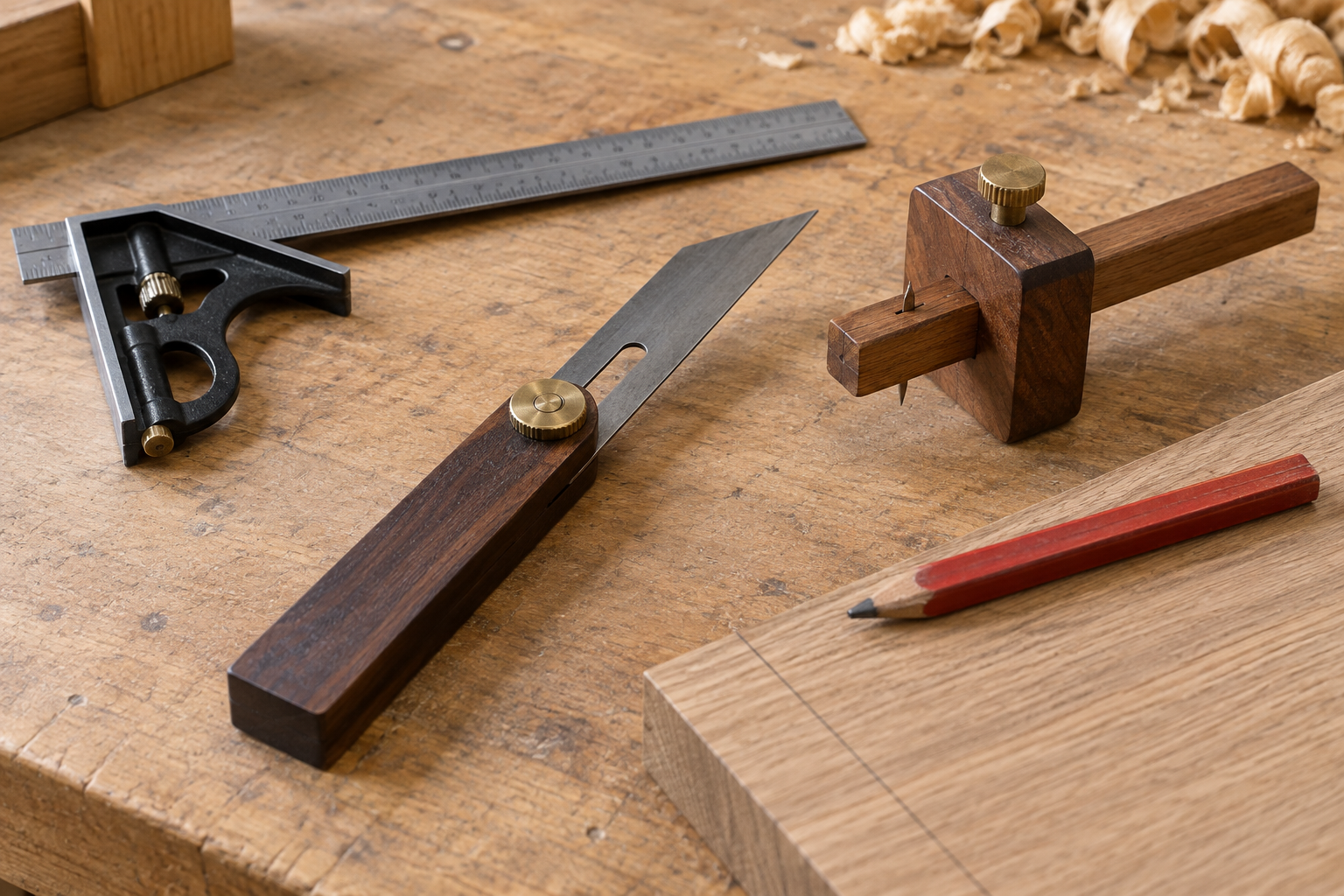
A standard marking gauge has a beam, a fence, and a pointed cutter—usually a knife-like blade or a sharpened pin. You set the cutter at a measured distance from the fence, lock the beam, then run the fence against the reference edge while dragging the cutter across the work.
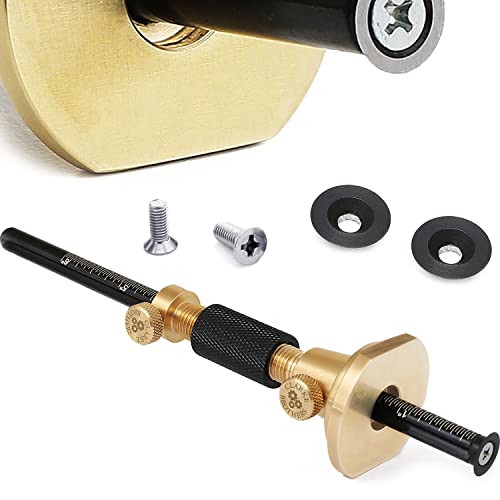
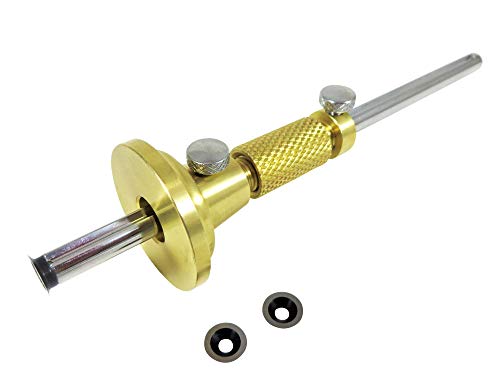
A wheel marking gauge replaces the projecting blade with a small circular cutter. The wheel rolls into the wood rather than scraping with a long exposed edge. Most wheel gauges use a fine adjustment screw or threaded beam, making it easier to move the cutter by small increments. Many also use a locking fence that can be held firmly against the stock.
Both tools are simple, but neither compensates for a poor reference edge. If the edge is bowed, rough, or out of square, the gauge will faithfully transfer those errors to your layout.
Marking Gauge vs Wheel Marking Gauge
| Feature | Traditional marking gauge | Wheel marking gauge |
|---|---|---|
| Typical cutter | Pin or knife blade | Rotating circular cutter |
| Best strength | General-purpose layout and mortise work | Clean, controlled lines and fine adjustment |
| End-grain performance | Good with a knife cutter; pin versions can tear | Usually very good, especially across end grain |
| Adjustment | Often loosen, slide, and retighten | Frequently includes precise screw adjustment |
| Multiple lines | Some models accept two cutters | Usually one wheel, though some accept accessories |
| Cost | Usually lower | Usually higher |
| Common drawback | Coarse adjustment and cutter alignment | Less versatile for deep or unusual marking jobs |
When a Traditional Marking Gauge Makes More Sense
A traditional gauge is the better value for basic mortises, tenons, rabbets, and dados. It is quick to set with a rule or setup block, and its long beam gives good reach around wider stock. If you are laying out a 6 mm mortise from a reference edge, for example, you can set the cutter, lock the beam, and mark both sides of the joint without needing a more specialized mechanism.
Knife-style traditional gauges are particularly useful for joinery. The cutter leaves a narrow line that a chisel can register against. This is valuable when chopping a mortise: place the gauge line on the waste side, then pare or chop up to it without crossing the boundary.
Traditional gauges can also be easier to repair or modify. A replaceable blade can be sharpened to suit the job, and many wooden gauges are comfortable to hold for long marking sessions. Some designs accept two cutters, allowing you to mark both sides of a mortise or tenon in one pass. That feature can save time when the joint width stays consistent.
The main weakness is adjustment. On a simple gauge, you loosen a wedge or thumbscrew, slide the beam, check the measurement, and lock it again. A small shift while tightening can move the cutter by 0.5 mm or more. That is not disastrous for rough carpentry, but it is enough to make a tight hand-cut joint noticeably less accurate.
Pin cutters are another limitation. They can follow the grain instead of cutting across it, particularly on softwood or figured stock. A knife cutter avoids much of this problem, so if you buy a traditional gauge for furniture joinery, choose a knife-style cutter rather than an ordinary pointed pin. A wheel marking gauge is also worth considering if clean cross-grain lines are a priority.
When a Wheel Marking Gauge Is Worth Paying For
The wheel cutter excels when the line must be clean and visible without tearing the surface. It slices a narrow groove through long grain and across end grain, making it a strong choice for dovetails, shoulders, and fine cabinetmaking layout. On a dovetail, the wheel line gives a clear stopping point for the saw and chisel, although you still need a knife or marking knife for some detailed work.
Fine adjustment is the other major advantage. A threaded mechanism may let you move the cutter in increments around 0.1 mm, depending on the design and how carefully you turn it. That makes it practical to sneak up on a dimension rather than repeatedly unlocking and repositioning the beam. It is especially useful when fitting a tenon to an existing mortise or matching a replacement part.
The wheel is less likely to dig in when you start or stop a cut, but technique still matters. Keep the fence flat against the reference edge and make several light passes instead of forcing the tool in one stroke. Heavy pressure can make the wheel skid, widen the groove, or push the fence away from the edge.
Wheel gauges are not automatically better. Their fences can be smaller or less comfortable than those on traditional gauges, and some have limited beam travel. The wheel can also become difficult to use in a narrow recess or near an obstruction. Replacement wheels and small adjustment parts may cost more or be harder to source. For straightforward workshop work, a knife-cutter marking gauge often does the same job for less money.
What to Look For Before Buying
Check the fence first. It should sit square to the beam and have enough bearing area to remain stable against your stock. A fence roughly 50 to 75 mm long is comfortable for general work; smaller fences demand more careful hand control.
Inspect the lock. A gauge that shifts while marking is worse than a less precise gauge that locks solidly. Test the beam after tightening and apply moderate side pressure to the fence. Any visible movement is a warning.
For a traditional gauge, prefer a replaceable knife cutter with a flat bevel that can be sharpened accurately. For a wheel gauge, look for a wheel that turns freely without side play. The cutter should protrude enough for your work but not so far that it catches easily. Around 1 to 3 mm of projection is sufficient for most furniture joinery.
Buy the traditional gauge if you need an affordable, versatile tool for mortises, tenons, and general layout. Choose the wheel type if you regularly fit fine joints, work across end grain, or value quick, repeatable micro-adjustment. If you are uncertain, a good knife-style traditional gauge is the safer first purchase; add a precision wheel marking gauge later when its cleaner cuts and finer adjustment solve a specific problem.
Getting Accurate Results
Always mark from the same reference face and edge, and mark the waste side clearly with a pencil or small crosshatch. Set the cutter against a rule or setup block rather than guessing from the gauge’s scale. Make one light scoring pass, then a second pass using the same fence pressure. Before cutting, confirm that the line is on the correct side of the joint and that the gauge has not slipped.
That process matters more than the cutter style. A perfectly adjusted wheel gauge used against a bad edge will produce bad joinery, while a modest traditional gauge, kept sharp and locked firmly, can produce consistently tight joints.