What's inside
As an Amazon Associate I earn from qualifying purchases. This post may contain affiliate links at no extra cost to you.
Long structural screws punish ordinary driver bits. The high torque needed to start a 6-inch or 8-inch screw into framing can twist a standard bit, round the recess, or snap the bit at the shank. The best choice is an impact-rated bit matched to the screw drive, preferably a short torsion-style bit made for use in an impact driver.
As an Amazon Associate we earn from qualifying purchases at no extra cost to you.



Our Top Picks
 DEWALT DWA2NGFT40IR Impact Ready Flextorq 40-Piece Steel Screwdriver8.75 x 1.74 x 8.75 inches8.75 x 1.74 x 8.75 inches1 poundsCheck on Amazon


What to look for in an impact-rated bit
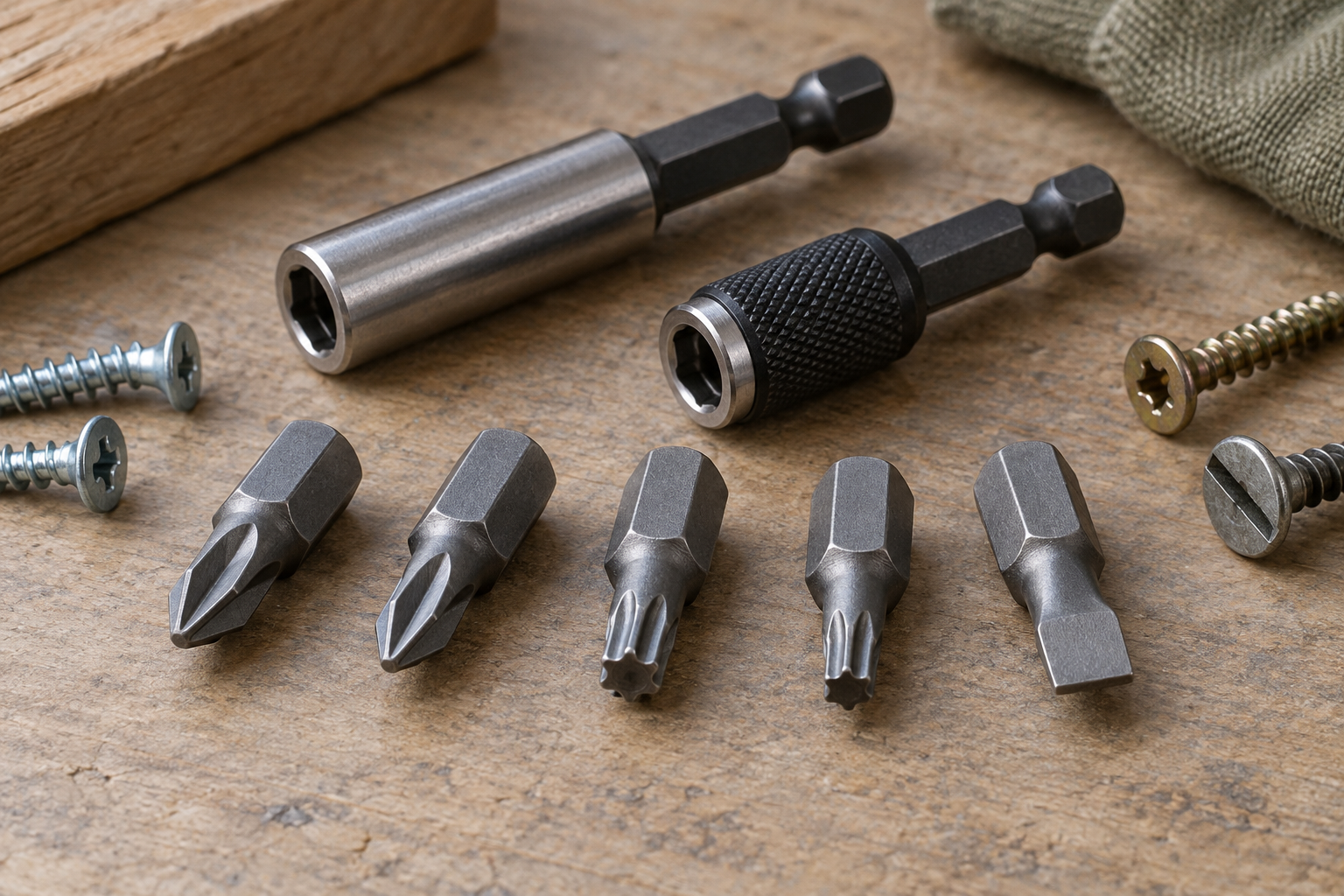
Buy bits marked “impact rated” or “impact ready.” These are made from tougher steel and are designed to flex slightly under the rapid hammering of an impact driver. A regular chrome-vanadium insert bit is hard but relatively brittle. It may work for a few screws, then chip or break when the driver reaches high torque.
For most structural screws, the practical choice is a 1-inch or 2-inch impact bit with a 1/4-inch hex shank. Short bits put less leverage on the shank and are less likely to wobble. A longer bit is useful when the screw head is recessed or access is restricted, but it has more opportunity to flex and twist.
Look for a torsion zone behind the tip. This narrowed section is intended to absorb torque spikes instead of transferring all the stress to the tip or the driver chuck. It does not make a bit indestructible, but it is helpful when driving large fasteners into dense lumber, engineered wood, or masonry-compatible structural screws.
Match the bit to the screw drive
Drive fit matters more than brand. A loose-fitting bit will cam out even if it is made from excellent steel. Torx-style drives, commonly labeled T25, T30, T40, or larger, generally hold the bit better than Phillips drives. Many structural screws use T25 or T30, but check the screw package rather than guessing.
Do not substitute a Phillips bit for a Pozidriv bit, or one Torx size for another. The wrong profile can appear to fit while leaving only a few contact points engaged. Under load, those points deform and the recess rounds off. Once that happens, removing the screw becomes slower than installing it.
For jobs using several screw sizes, a T25 and T30 impact bit set is usually more useful than a large assortment containing many rarely used Phillips and flat bits.
Bit types compared
| Bit type | Best use | Strengths | Limitations |
|---|---|---|---|
| 1-inch impact insert bit | Open framing and ordinary screw access | Low leverage, inexpensive, easy to replace | May not reach recessed heads |
| 2-inch torsion bit | General structural screw work | Good reach and torque absorption | Costs more; can still flex if forced sideways |
| Long impact bit, 4 inches or more | Deep or obstructed access | Reaches around brackets and into pockets | More flex, wobble, and breakage risk |
| Impact nut setter | Hex-head structural screws | Fast engagement and good control | Only works with external hex heads |
The best overall choice
For most people, the best all-around option is a 2-inch impact-rated torsion bit in the exact Torx size specified by the screw manufacturer. It gives enough reach for common framing connections without the excessive leverage of a long extension. Keep two or three spares on hand; structural screw work is hard on bits, especially when installing hundreds of fasteners.
If the screw uses a hex head, use an impact-rated nut setter instead of a Torx bit. Select the setter by the measured head size, such as 5/16 inch or 3/8 inch. A magnetic setter is convenient, but the magnet should not be relied on to hold a screw during difficult overhead work.
For a single deck repair or a small framing project, the cheaper option is fine: buy a small pack of impact-rated bits in the required size. Premium bits become worthwhile when you are driving several hundred screws, working in hardwood, or paying for downtime. Even then, a premium bit cannot compensate for a damaged screw recess or an underpowered, poorly controlled driver.
How to prevent premature bit failure
Seat the bit fully before pulling the trigger. Keep the driver aligned with the screw axis and use firm forward pressure. A small angle can make the bit ratchet across the recess, rounding it in seconds. If the bit starts slipping, stop immediately and inspect both the bit and the screw.
Start the driver at a moderate speed rather than holding the trigger wide open. A typical impact driver may deliver roughly 1,500 to 2,000 inch-pounds of peak torque, far more than is needed to strip a screw head. Let the bit engage and let the impact mechanism work. The final tightening should be controlled, not a long burst after the screw is already seated.
For long screws, drill a pilot hole when the manufacturer allows it and when splitting is a concern. A pilot hole reduces starting torque and helps keep the screw straight. It is especially useful near the end of a board, in dry lumber, and with screws 6 inches or longer. Do not enlarge the pilot hole through the receiving member unless the fastening instructions call for a clearance hole; the threads need to bite into the structural member.
When to replace the bit
Replace a bit when the tip corners look rounded, the coating is missing at the working surfaces, or the bit visibly wobbles in the screw recess. A worn bit may still drive short wood screws but can fail abruptly on a structural fastener. Continuing to use it increases the chance of cam-out, damaged screw heads, and hand or wrist strain.
Carry a spare bit in your pocket or tool bag, not buried in the original assortment. The right impact-rated torsion bit is a small purchase compared with extracting a stripped structural screw from a finished connection.
For the broadest selection, compare impact-rated torsion bits for structural screws by drive size, length, and pack quantity. Choose the exact drive profile first, then choose the shortest length that gives you comfortable access.