What's inside
As an Amazon Associate I earn from qualifying purchases. This post may contain affiliate links at no extra cost to you.
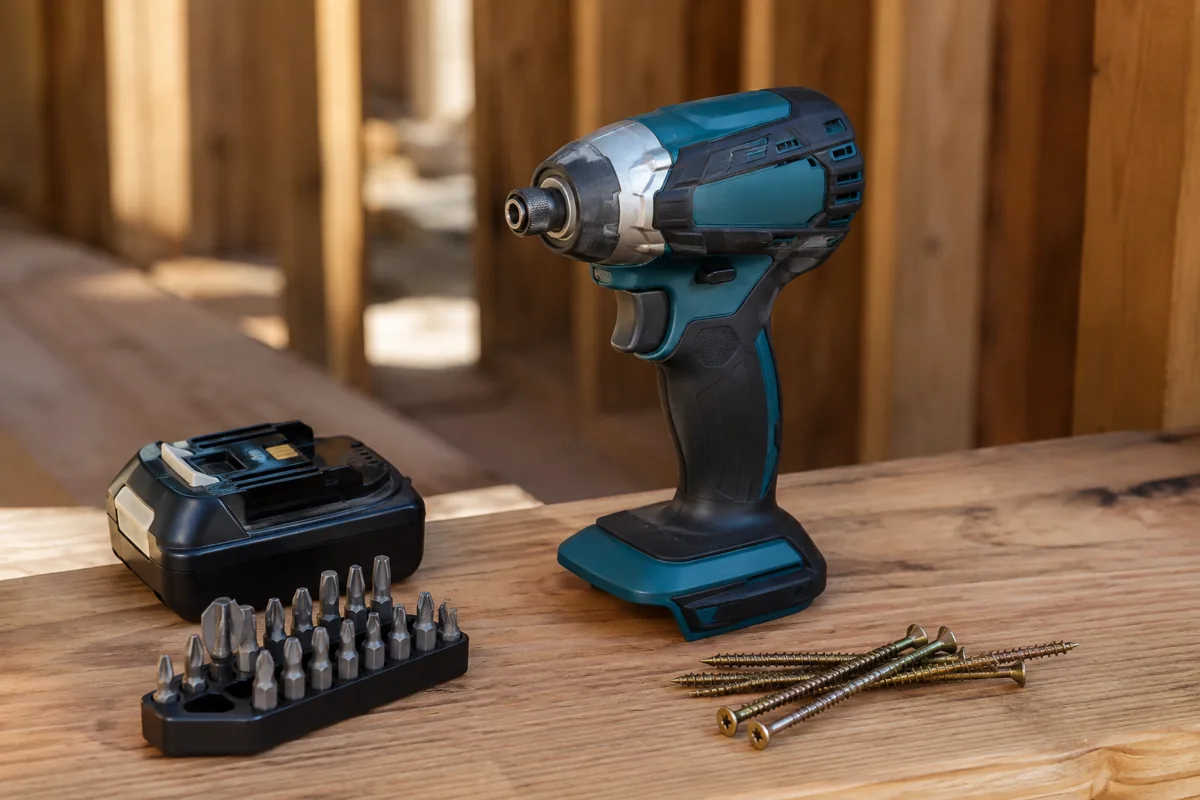
Structural screws are easy to underestimate. A few 6-inch screws driven into LVL, PSL, or multiple layers of engineered lumber can demand far more from a driver than ordinary deck screws. The best impact driver for this job is not necessarily the one with the highest advertised torque. It is the one that can drive long fasteners consistently, control speed near the end of the drive, and survive the heat and shock of repeated use.
As an Amazon Associate we earn from qualifying purchases at no extra cost to you.


Our Top Picks


Why engineered lumber demands more from an impact driver
Engineered lumber is dense, especially around end grain and laminated sections. A structural screw driven into a 1-3/4-inch LVL may pass through a dense outer layer before entering a different grain orientation. Long screws also create steadily increasing resistance as more of the threaded section enters the material.
For typical framing, structural screws range from 4 to 8 inches long and commonly use a T-25, T-30, T-40, or larger driver bit. A weak driver may still start the screw but stall halfway, overheat, or hammer the bit until the recess rounds out. An underpowered tool also encourages excessive downward force, which can damage the screw head or cause the bit to cam out.
Use the manufacturer’s installation instructions for the screw. Some structural fasteners require a specific pilot hole, washer, or minimum penetration. An impact driver cannot compensate for an incorrectly sized screw or a connection that needs a lag bolt or through-bolt instead.
The best driver type for structural screws
For most homeowners and contractors, an 18V or 20V brushless impact driver with three speed settings is the best fit. The voltage labels are largely marketing differences between battery platforms; the useful specifications are brushless construction, battery capacity, speed control, and the tool’s ability to maintain impact energy under load.
A brushless 18V or 20V impact driver kit gives you the best balance of power, size, and availability. A kit is often better value than a bare tool if you do not already own batteries. For occasional repairs, a compact 12V impact driver can be adequate for 3- to 4-inch structural screws, but it is a poor choice for repeated 6- or 8-inch drives into LVL.
| Driver type | Best use | Advantages | Limitations |
|---|---|---|---|
| 12V compact impact driver | Short structural screws and light repairs | Light, easy to control, usually inexpensive | More likely to stall or slow on long screws |
| 18V/20V brushless, three-speed | General structural framing | Good power, useful low-speed control, broad battery support | Heavier and more expensive than compact models |
| High-torque impact wrench with adapter | Large fasteners or production work | Very high output and excellent reserve power | Bulky, easy to overtighten, not ideal for standard hex bits |
| Corded impact driver | Stationary shop work | No battery charging or runtime limit | Rare category, less convenient, limited jobsite usefulness |
Features that matter more than peak torque
Three speed settings are especially useful. Use the low setting to start the screw and keep the bit seated. Move to medium or high only when the screw is tracking straight and the threads are fully engaged. A trigger with a wide variable-speed range is nearly as important as the mode selector.
Brushless motors generally run cooler and use battery power more efficiently than brushed motors. That matters when driving dozens of structural screws, although a brushed model can still handle occasional work. A 2.0Ah battery keeps the tool light, while a 4.0Ah or 5.0Ah pack reduces charging interruptions and usually maintains performance better during repeated high-load drives.
Do not choose solely by a torque number. Manufacturers measure and report torque differently, and impact mechanisms deliver short hammer blows rather than smooth rotational force. In practical terms, a reputable midrange brushless driver should handle common 6-inch structural screws. The upgrade to a premium model buys better control, less vibration, improved heat management, and sometimes a stronger impact mechanism—not necessarily a screw connection that is twice as strong.
A belt hook, bright work light, and a short head length are worthwhile on a framing site. A removable bit holder is convenient but not essential. Avoid models with excessive wobble at the 1/4-inch hex chuck; wobble makes long screws harder to start accurately and accelerates bit wear.
Bits are a frequent failure point
Use impact-rated bits, not ordinary chrome driver bits. Structural screws generate enough shock to fracture standard bits, sometimes leaving a broken tip in the screw head. Keep several fresh bits on hand and replace one as soon as the recess begins to deform.
Match the bit exactly to the fastener. A T-30 bit in a T-27 recess may seem to fit, but it will slip under load. Hold the driver in line with the screw and apply firm, steady pressure. Starting at full speed with a crooked bit is a reliable way to strip the head before the threads have done any useful work.
For a broad selection of compatible accessories, compare impact-rated structural screw bits by the exact size and shank style required by your fasteners. A magnetic bit holder is useful for ordinary screws, but direct-insert bits are usually shorter and more stable for long structural fasteners.
How to drive the screw without damaging the connection
Mark the location carefully and check for wiring, plumbing, and the edge of the member. If the screw manufacturer calls for a pilot hole, drill it to the specified diameter and depth; do not substitute a random bit size. Pilot holes are particularly valuable near ends and edges, where splitting or delamination is more likely.
Start on low speed with the driver square to the surface. Once the threads bite, increase speed while maintaining pressure. Stop when the head reaches the specified flush position or the washer seats. Do not continue hammering after the screw is seated. Overdriving can crush the wood fibers, bury the head too deeply, and reduce the intended clamping performance.
If the driver repeatedly stalls, switch to a larger battery, check the bit, and confirm that the screw is approved for the material. If it still struggles, a higher-output brushless driver is justified. For a handful of screws, the cheaper option is fine; for daily structural fastening, the better cooling and control of a premium three-speed brushless impact driver can save time and damaged fasteners.
What to buy
Choose an 18V or 20V brushless impact driver with three speeds, a 4.0Ah battery, and a solid 1/4-inch hex chuck. A midrange kit is the sensible choice for most structural repairs and framing projects. Buy the premium version when you drive long screws regularly, work overhead, or need better speed control and reduced downtime. Choose a 12V model only when portability matters more than speed and your screws are short.