What's inside
As an Amazon Associate I earn from qualifying purchases. This post may contain affiliate links at no extra cost to you.
Our Top Picks
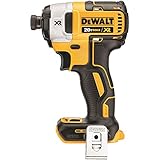
 DEWALT DCF850B 20V Cordless Brushless Compact 1/4'' Impact6.5 x 3 x 9 Inches2.18 poundsCheck on Amazon

Quick verdict
For driving long structural screws, both the DeWalt DCF887 and Bosch GDR18V-190 can do the job, but neither turns a marginal screw, bit or technique into a reliable connection. The DCF887 offers three speed settings and a higher claimed maximum torque; the Bosch is a simpler, lower-cost option in its 18V lineup. That does not mean the DeWalt will drive every long screw faster: fasteners, lumber, battery condition and the driver bit can matter more than headline torque.
Choose the Bosch if you already own compatible Bosch 18V batteries, drive structural screws occasionally and do not need extra speed control. The DCF887 is the more adaptable pick when you regularly switch between small fasteners and large screws, or want its three-speed settings to help control the start of a drive. If you are buying into either battery system, compare the tool-and-battery cost rather than the bare-tool price.
As an Amazon Associate we earn from qualifying purchases at no extra cost to you.


What the specifications tell you
The DCF887 is a 20V MAX impact driver—20V is DeWalt’s maximum-voltage label for a battery system commonly described as 18V nominal. DeWalt rates it at up to 1,825 in-lb of torque and 3,250 impacts per minute, with three speed modes. Bosch rates the GDR18V-190 at up to 1,900 in-lb of torque and 4,200 impacts per minute. These are manufacturer ratings, not a direct test of how quickly either tool will seat a particular structural screw.
| Detail | DeWalt DCF887 | Bosch GDR18V-190 |
|---|---|---|
| Battery platform | 20V MAX (18V nominal) DeWalt | 18V Bosch |
| Manufacturer-rated torque | Up to 1,825 in-lb | Up to 1,900 in-lb |
| Speed control | Three speed modes | Variable-speed trigger; single operating mode |
| Impact rate, maximum | Up to 3,250 impacts per minute | Up to 4,200 impacts per minute |
| Bit holder | 1/4-inch hex | 1/4-inch hex |
| Best reason to choose it | More control across different fastener sizes | Lower-cost route if you already own Bosch 18V batteries |
Torque and impact-rate figures do not predict a clean comparison across brands. Test methods and conditions can differ, and an impact driver delivers repeated rotational blows rather than steady torque. The useful question is whether the tool can drive your chosen fastener without stalling, overheating or damaging the head—and whether you can control it well enough to stop at the right depth.
Driving long structural screws
For an occasional 3- or 4-inch structural screw into ordinary framing lumber, a sound, fully charged battery and a sharp, correctly sized bit are more important than chasing the largest torque figure. Both drivers are capable candidates for this kind of work. Hard, dense or wet lumber, a longer screw, and driving close to an edge all raise the load. In those conditions, pilot holes may reduce splitting and help the screw start straight; follow the fastener maker’s instructions, since pilot-hole guidance varies by screw diameter and wood.
Start slowly, hold the driver square to the work, and increase trigger pressure once the threads have engaged. Let the tool’s impacts do the work; leaning hard on the driver can make it harder to control and encourages bit cam-out. A slipping bit rounds the screw recess, especially when the bit is worn or the driver is tilted. Stop if the screw is binding, the bit is climbing out, or the fastener begins to overheat. Back it out, inspect the hole and bit, and correct the cause rather than continuing to hammer the damaged head.
The DCF887’s low-speed mode is useful when starting a large fastener or working near an edge, and its additional settings help when the same tool also has to handle smaller screws. The Bosch relies more on trigger control. That is perfectly workable for a practiced user, but less convenient if you want a preset lower-speed mode. Neither tool has a clutch that guarantees a precise final depth for structural screws, so finish carefully and avoid driving the head below the surface unless the fastener instructions call for it.
Battery, fatigue and total cost
For repeated long-screw work, use a healthy battery with enough capacity for the task. A small, partly discharged pack can sag under heavy load, slowing the tool and prompting longer trigger time. Bigger batteries add runtime but also weight; that can make a difference when fastening overhead or working from a ladder. If you already have several batteries and a charger in one system, staying with that platform is often the most sensible saving.
Compare complete kits, not just bare tools. A bare driver is a poor bargain if you need to buy a battery and charger to use it. Check what is included, confirm battery compatibility with the exact product listing, and consider whether the kit’s battery size suits your work. If you are starting fresh, compare DeWalt DCF887 kits with Bosch GDR18V-190 kits on the same basis: included battery, charger, warranty and price.
Which one should you buy?
Buy the DCF887 if you value its three speed modes, already use DeWalt 20V MAX tools, or often move between small screws and demanding fasteners. Its extra control can make it easier to start screws cleanly and avoid overdriving, though it still takes a steady hand and the right bit.
Buy the Bosch GDR18V-190 if it costs less in the configuration you need, you own Bosch 18V batteries, and your work is mostly straightforward fastening. Its higher published torque and impact rate do not make it a guaranteed winner on long screws, but there is no reason to pay extra for the DeWalt if you do not need its additional modes.
If long structural screws are the main job, budget for quality impact-rated bits and the fastener specified for the connection before upgrading the driver. For unusually long or large-diameter screws, repeated heavy fastening, or a connection where the manufacturer specifies an installation method, follow that guidance rather than assuming either impact driver is suitable. A driver that seats the screw cleanly is useful; one that hides a poor setup behind more impacts is not.