What's inside
As an Amazon Associate I earn from qualifying purchases. This post may contain affiliate links at no extra cost to you.
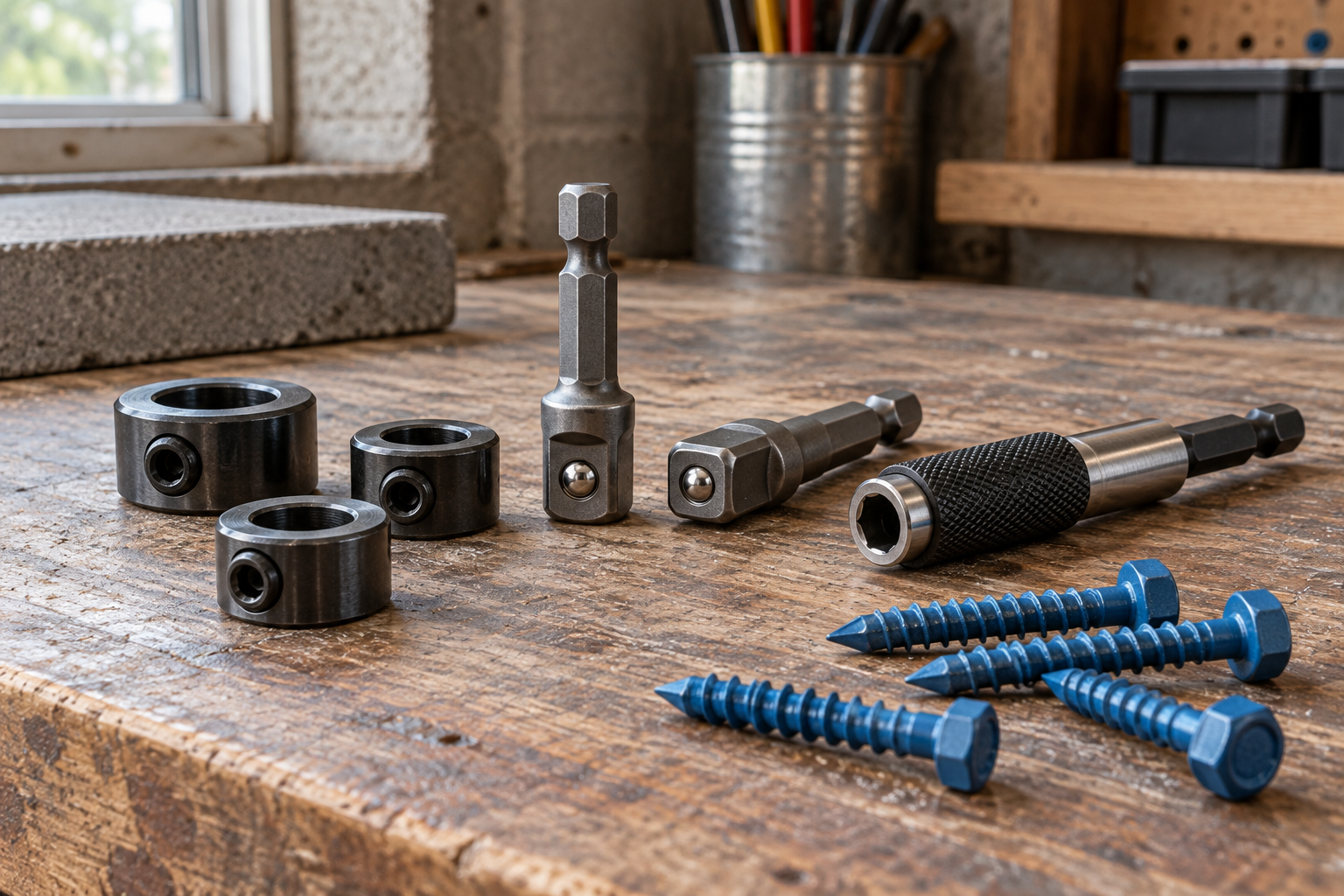
Choosing between an impact-rated socket adapter and an impact-rated nut setter comes down to the fasteners you use, the clearance around them, and how much control you need. Both fit an impact driver and both are designed to survive repeated hammering, but they are not interchangeable in everyday use.
An adapter lets your impact driver use regular sockets. A nut setter is a dedicated, hollow driver for hex-head screws and small hex fasteners. For occasional work, the cheaper adapter may be the better buy. For hundreds of roofing, siding, metal framing, or self-drilling screws, a nut setter is usually faster and easier to control.
As an Amazon Associate we earn from qualifying purchases at no extra cost to you.


Our Top Picks
 Milwaukee 48-32-5033 Power Drill Bit Extensions Shockwave SocketPack of 10.65 x 2.87 x 3.87 inches0.1 poundsCheck on Amazon


How Each Tool Works
An impact-rated socket adapter has a 1/4-inch hex shank on one end and a square-drive socket connection on the other. Common sizes are 1/4, 3/8, and 1/2 inch square drive. You then install a socket, preferably an impact socket, to match the fastener.
This setup is versatile. One adapter and a socket set can handle hex bolts, nuts, lag screws, and other fasteners. The downside is extra length, extra joints, and more pieces to lose. A wobble or poorly retained socket can also make it harder to keep the fastener straight.
An impact-rated nut setter has a hex shank and a fixed six-point socket at the working end. Typical sizes for hex-head screws include 1/4, 5/16, and 3/8 inch. The socket is usually relatively thin and deep enough to hold the fastener head while the driver applies torque directly through the tool.
Nut setters are made primarily for hex-head screws, such as self-drilling screws, metal roofing screws, pole-barn screws, and some construction screws. They are not a substitute for a complete socket system when you need to install or remove nuts on studs.
Socket Adapter vs. Nut Setter
| Factor | Impact-rated socket adapter | Impact-rated nut setter |
|---|---|---|
| Best use | Nuts, bolts, lag screws, and mixed fasteners | Hex-head screws and repetitive screw installation |
| Typical sizes | 1/4, 3/8, or 1/2-inch drive with separate sockets | 1/4, 5/16, and 3/8-inch fixed sizes |
| Speed | Slower to change and load | Fast; one-piece setup |
| Reach | Often longer, especially with a socket installed | Usually shorter and easier to control |
| Versatility | High | Limited to its size and fastener shape |
| Best value | One tool for occasional mixed work | Dedicated production work |
When an Adapter Is the Better Choice
Buy an adapter if your work includes more than hex-head screws. A single impact-rated socket adapter set can let one impact driver handle automotive fasteners, structural lag screws, furniture hardware, and machine bolts.
An adapter is also sensible when you already own impact sockets. You do not need a separate nut setter for every common size, and changing from a 1/4-inch socket to a 3/8-inch socket is straightforward. This matters for repairs where the fastener size is unknown until you open the job.
The main failure mode is using a non-impact socket on an impact driver. Chrome hand sockets can crack or shatter under repeated impact loading. Use sockets marked for impact use, and inspect the adapter’s retaining ball, pin hole, and hex shank. A rounded shank or loose socket wastes torque and can damage the driver’s chuck.
Adapters also add leverage and length. A long stack can bend slightly or twist out of alignment, especially when starting a lag screw. In tight spaces, that extra length can prevent the socket from sitting squarely on the fastener.
When a Nut Setter Is the Better Choice
Choose a nut setter for repetitive hex-screw work. Installing hundreds of metal panels or self-tapping screws is less tiring with a short, dedicated driver. There is no socket to install, and the fastener can often be held in the hollow end while you position the tool.
A quality impact-rated nut setter set is especially useful when a project uses several screw sizes. Buy the sizes you actually need rather than a large set with rarely used pieces.
Nut setters reduce wobble, but they have their own failure modes. The thin socket wall can spread or crack if used on a fastener that is too large, heavily rusted, or far beyond the tool’s intended torque. The socket can also wear smooth inside, allowing the driver to round a hex head. Magnetic versions hold screws conveniently, but magnets can collect metal chips and lose grip over time. Nonmagnetic models rely more on friction and are less likely to pull small steel debris into the socket.
For roofing and siding, do not confuse a nut setter with a depth-sensitive screw setter. A nut setter will drive the screw, but it will not automatically prevent overdriving. Excessive pressure can crush a washer, deform a panel, or strip the screw head.
Torque, Fit, and Driving Technique
Impact drivers commonly produce roughly 1,500 to 2,500 inch-pounds of breakaway torque, depending on the model and test method. Most small hex-head screws need far less. The tool’s available torque is therefore not a reason to force every fastener as hard as possible.
Use the exact-size six-point socket or nut setter. A 5/16-inch tool on a slightly smaller head may appear to work, but it concentrates load on the corners and can round the fastener. Keep the driver in line with the screw, use moderate trigger pressure, and stop when the head is seated or the washer is compressed correctly.
For larger structural screws or lag screws, an adapter with the correct impact socket usually wins. The thicker socket handles higher loads better, and you can replace an inexpensive socket without replacing the whole driver. For small sheet-metal screws, a nut setter is quicker and generally gives better control.
Which One Should You Buy?
Buy an adapter if you need one tool for varied repairs, already own impact sockets, or regularly work with nuts and bolts. A 1/4-inch hex to 3/8-inch impact adapter is a practical general-purpose starting point.
Buy nut setters if your normal job is driving one or two sizes of hex-head screws repeatedly. They are faster, shorter, and often cheaper per working size. The cheaper option is fine when the fasteners are light-duty and the tool is used occasionally. Spend more for thicker construction, a secure hex shank, and replaceable or clearly supported sizes when the tool will see daily impact use.
If you do both kinds of work, keep one impact adapter and a small group of impact sockets, then add nut setters for your most-used screw sizes. That combination avoids forcing either tool into a job it was not designed to do.