What's inside
As an Amazon Associate I earn from qualifying purchases. This post may contain affiliate links at no extra cost to you.
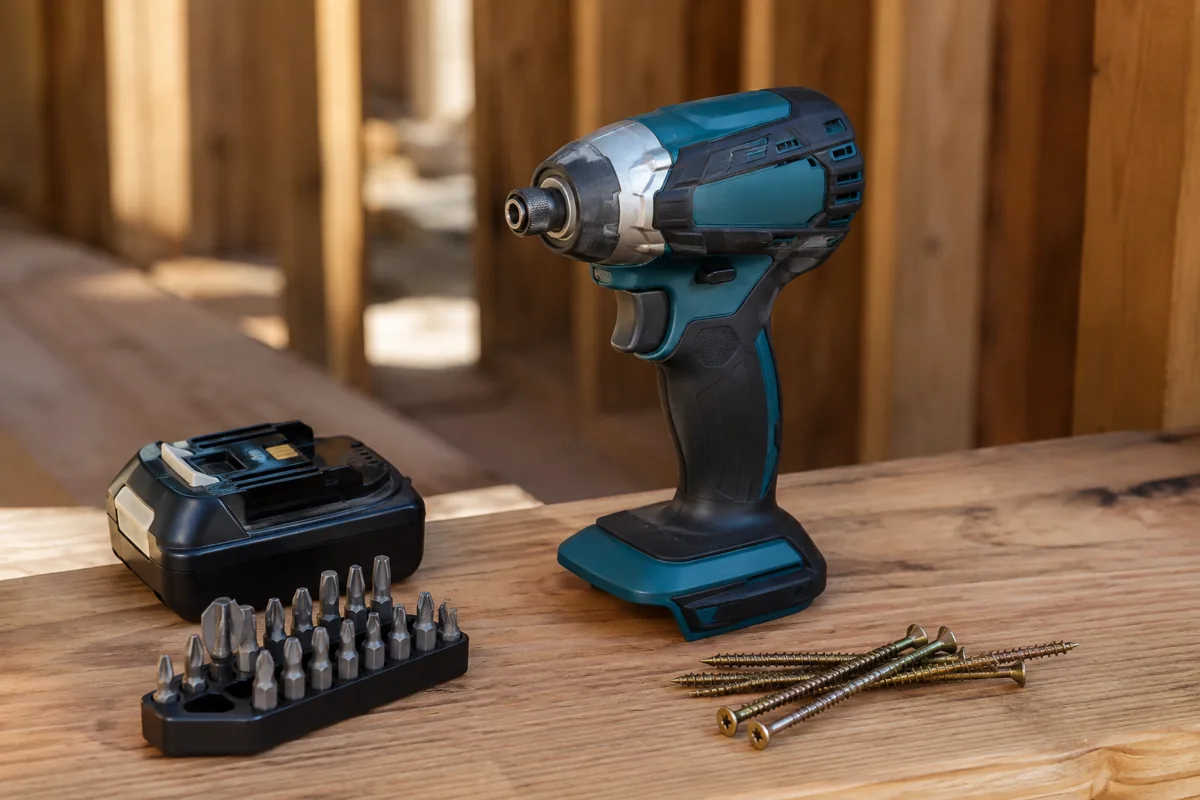
Long construction screws are where the difference between a brushless and brushed impact driver becomes noticeable. A short 2-inch screw may not challenge either type of tool, but driving 4-, 5-, or 6-inch structural screws into framing lumber demands sustained power, battery capacity, and good control.
For occasional deck repairs or a few long screws, a brushed impact driver can be perfectly adequate. For daily framing, repeated ledger work, or large quantities of structural fasteners, a brushless model is usually the better buy. The reason is not simply “more power.” Brushless motors waste less energy as heat, maintain performance better under load, and generally survive heavy use longer.
As an Amazon Associate we earn from qualifying purchases at no extra cost to you.


Our Top Picks


What changes with long construction screws
A long screw does not require maximum torque for its entire travel. Resistance rises as the threads enter dense wood, as the shank passes through a tight hole, and especially when the head seats against the workpiece. Knots, wet lumber, pressure-treated stock, and screws driven close to board ends can increase the load sharply.
Impact drivers handle this work by combining motor torque with a hammer-and-anvil mechanism. The motor spins the screw, while the impact mechanism delivers short bursts of rotational force when resistance becomes too high for continuous rotation. This lets an impact driver produce high fastening torque without requiring the user to hold the tool as firmly as they would a drill.
For a 4-inch construction screw, a suitable impact driver should drive the fastener without repeated stalls or long periods of hammering. If the tool spends 10 to 15 seconds impacting on every screw, the job is asking a lot of the motor, battery, bit, and fastener head. Pre-drilling may be faster and safer in hard or split-prone material.
Brushless vs. brushed for this job
| Factor | Brushless impact driver | Brushed impact driver |
|---|---|---|
| Long-screw performance | Maintains speed and output better during repeated heavy fastening | Can drive long screws, but may slow more under sustained load |
| Runtime | Typically longer on the same battery, often noticeably so in demanding work | Uses more energy and creates more motor heat |
| Heat management | Usually runs cooler because there are no brush contacts | Brush friction and arcing add heat during hard use |
| Service life | No replaceable motor brushes; electronics can still fail | Brushes wear and may eventually need replacement |
| Purchase price | Usually higher | Usually lower |
| Best fit | Frequent construction, structural screws, and larger battery platforms | Occasional repairs, light framing, and budget tool collections |
Brushless motors use electronic switching instead of physical carbon brushes rubbing against a commutator. That removes one source of friction and wear. Under long-screw loads, the practical benefit is better efficiency: more of the battery’s energy becomes useful rotation rather than heat and electrical loss.
Do not treat brushless as a guarantee of higher torque. A compact brushless impact driver can be weaker than a large brushed model, and advertised torque figures are not directly comparable between brands. Tool size, impact mechanism, battery voltage, control electronics, and gear reduction all matter.
When a brushed impact driver is enough
A brushed tool is a reasonable choice if you drive only a few dozen long screws at a time, already own compatible batteries, or are building a low-cost tool kit. For projects such as a small shed, fence repairs, blocking, shelving, or occasional deck maintenance, the lower purchase price may matter more than maximum runtime.
Use a sharp, correctly sized bit and let the impact mechanism work rather than forcing the tool. A 2.0Ah battery may drive a modest number of long screws, but a 4.0Ah or larger pack will usually provide better runtime and less voltage sag. The larger battery also adds weight, so it is not automatically preferable for overhead work.
The main brushed-tool failure modes are heat buildup, worn brushes, and reduced output as the motor gets hot. If the housing becomes uncomfortably hot, the smell of electrical insulation appears, or the tool loses speed after several minutes of hard fastening, stop and let it cool. Continuing can damage the motor or switch.
When brushless pays for itself
Choose a brushless impact driver when long screws are a regular part of the work. It is the stronger choice for framing crews, deck builders, remodelers, and anyone driving hundreds of structural fasteners. Longer runtime can reduce battery changes, and cooler operation is valuable when the tool is used continuously.
A good starting point is a mid-torque brushless model with a variable-speed trigger, three or more electronic speed settings, and a 1/4-inch hex chuck. The lowest setting helps prevent stripping and overdriving; the highest setting is useful for long structural screws. If you regularly drive 6-inch screws or larger fasteners, consider a high-torque model rather than assuming every compact driver is suitable. Compare brushless high-torque impact driver kits by battery size and control features, not just the torque number.
Brushless electronics can also provide useful protections such as overload shutdown, electronic braking, and selectable modes. These features reduce damage from stalls, but they do not eliminate the need for proper technique. A tool that repeatedly shuts down on a fastener is either being overloaded, using too large a screw, or working in material that needs a pilot hole.
Bits, batteries, and technique matter
Many “weak impact driver” complaints are actually bit failures. Use impact-rated bits, preferably a longer bit holder only when necessary. A worn bit rounds the recess, slips, and makes the tool hammer harder while removing little material. Replace the bit as soon as it starts camming out.
For construction screws, follow the manufacturer’s recommended bit and pilot-hole guidance. In hardwood, engineered lumber, or near the end of a board, a pilot hole can reduce splitting and cut driving time dramatically. Keep the driver aligned with the screw. Side pressure increases bit wear and can damage the fastener head.
Battery condition is also important. An old battery with high internal resistance may make a powerful driver feel weak, particularly under load. If a tool performs well with a fresh 5.0Ah pack but stalls with an aging compact pack, the driver may not be the problem.
Which one should you buy?
Buy a brushed impact driver if the work is occasional, the screw count is low, and the savings are substantial. It can handle common 3- and 4-inch construction screws when paired with a good battery and sharp impact-rated bits. Look for brushed impact driver kits if low upfront cost is the priority.
Buy brushless if you expect repeated long-screw fastening, want longer battery life, or plan to keep the tool for years of regular construction work. The extra cost is easiest to justify when downtime, battery swapping, and motor heat are more expensive than the initial price difference. For most serious construction use, a brushless mid-torque impact driver is the balanced choice; for occasional DIY work, brushed is still a defensible bargain.