What's inside
As an Amazon Associate I earn from qualifying purchases. This post may contain affiliate links at no extra cost to you.
Our Top Picks
 Magic Mill Premium Borosilicate Glass Food Storage ContainersVarious16 x 12 x 7 inches12 poundsCheck on Amazon
 Rubbermaid Brilliance Glass Food Storage ContainersAssorted Sizes (18-Piece)17.25 x 12.18 x 7.12 inches14.8 poundsCheck on Amazon
 VERONES 30 Pieces Glass Food Storage Containers Set30 Pieces16 x 12 x 8 inches13.4 PoundsCheck on Amazon

Best Glass Food Storage Container Sets
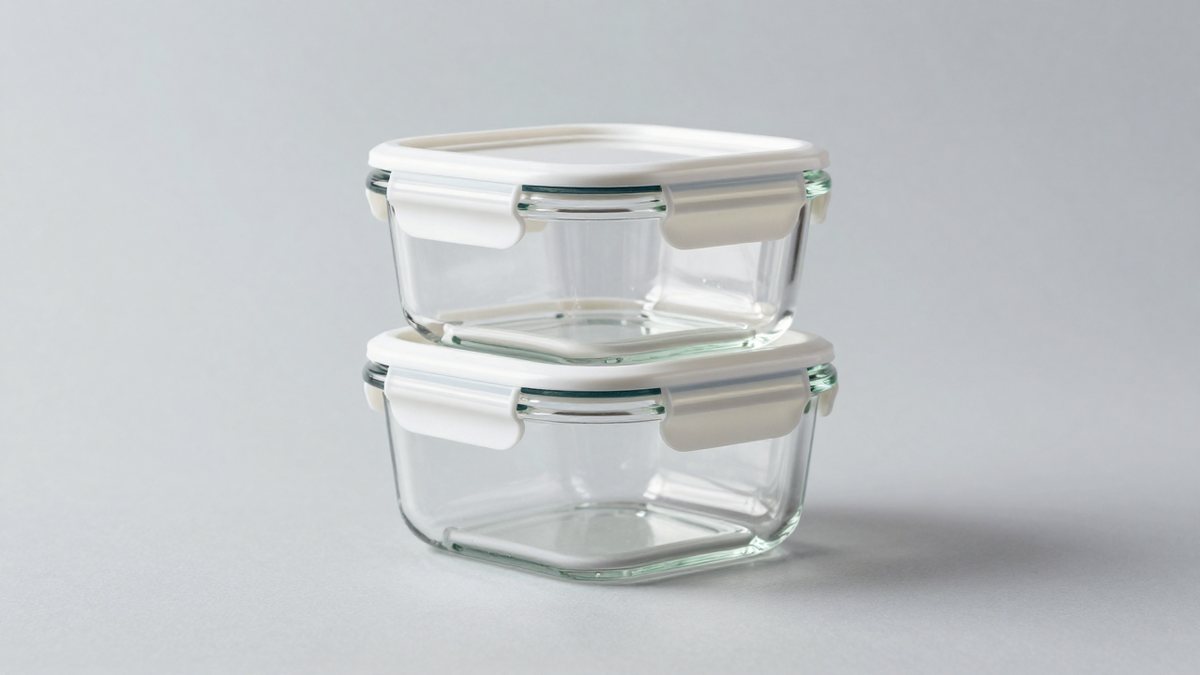
The best glass food storage container set for most kitchens is a mixed-size set made from durable tempered soda-lime glass, with leak-resistant locking lids, at least one 3- to 4-cup rectangular container, and a clear oven-temperature rating; choose borosilicate glass instead if you regularly move containers from a refrigerator or freezer into a hot oven.
Quick picks by kitchen situation
| Situation | Best choice | Why | Trade-off |
|---|---|---|---|
| Everyday leftovers and meal prep | Tempered-glass rectangular set | Good durability, efficient shapes, widely available replacement lids | Usually less resistant to sudden temperature changes than borosilicate glass |
| Oven-to-table cooking | Borosilicate-glass set | Handles wider temperature swings when the manufacturer permits the use | Often costs more and may have fewer compatible replacement lids |
| Small refrigerator or crowded cabinets | Nested set with square and rectangular footprints | Uses vertical space efficiently and reduces lid clutter | Deep shapes can be awkward for scraping out food |
| Soups, sauces, and packed lunches | Locking-lid set with removable silicone gasket | Better spill protection and easier gasket cleaning | More parts to wash and eventually replace |
| Lowest initial cost | Basic tempered-glass set with snap-on lids | Usually offers the most containers per dollar | Snap-on lids may stain, warp, or lose their seal sooner |
Tempered glass versus borosilicate glass
Tempered soda-lime glass
Most mainstream glass food containers use tempered soda-lime glass. It is heat-treated to improve resistance to ordinary impact and thermal stress compared with untreated glass. Brands such as Pyrex, Anchor Hocking, OXO, and Glasslock sell sets using tempered glass in at least some product lines, but the exact material differs by product and region.
As an Amazon Associate we earn from qualifying purchases at no extra cost to you.


Tempered glass is a practical choice for refrigerated leftovers, freezer storage, reheating, and many baking tasks within the printed instructions. Its main limitation is thermal shock: placing a very cold container directly into a hot oven, setting a hot dish on a wet or cold surface, or pouring boiling liquid into a cold container can cause breakage.
Borosilicate glass
Borosilicate glass contains more boron oxide than ordinary soda-lime glass and generally expands less as temperatures change. That makes it attractive for oven-to-freezer routines, although it is not unbreakable and should never be treated as automatically safe for every temperature transition. A borosilicate container can still crack from a hard impact, a damaged rim, uneven heating, or misuse.
Do not choose by the word “glass” alone. Check whether the listing identifies the glass type, the maximum oven temperature, whether the lid must be removed, and whether freezer-to-oven use is specifically allowed. “Oven safe” does not necessarily mean “safe directly from freezer to broiler.”
Container sizes that are genuinely useful
A set with many tiny containers can look impressive but still fail at storing a family-sized portion. The following capacity range covers most household jobs:
| Approximate capacity | Useful dimensions | Best use |
|---|---|---|
| 1 cup / 240 ml | About 12 × 9 × 5 cm | Dips, chopped ingredients, sauces, nuts, small portions |
| 2 cups / 475 ml | About 16 × 11 × 6 cm | Single servings, side dishes, breakfast, cut fruit |
| 3 cups / 710 ml | About 19 × 14 × 6 cm | Lunches, cooked vegetables, two servings of leftovers |
| 4 cups / 950 ml | About 21 × 16 × 7 cm | Meal prep, pasta, rice, casseroles, family leftovers |
| 7 to 8 cups / 1.7 to 1.9 L | About 28 × 20 × 8 cm | Large bakes, salads, bulk cooking, refrigerator organization |
Dimensions are approximate because wall thickness, handles, and lid design vary. Rectangular containers usually use refrigerator shelves and lunch bags more efficiently than round ones. Round containers are easier to stir and clean, while square containers maximize cabinet and refrigerator corners. A balanced set normally includes several 1- to 2-cup containers, two or three medium containers, and at least one 4-cup or larger dish.
Lid seals matter more than the number of pieces
The lid is normally the first part to show wear. Look for four-sided locking lids with a silicone or rubber gasket seated in a removable channel. These provide better protection against leaks than simple press-on lids, especially for soup or saucy food. They are not a guarantee that a container can be carried upside down; seals can fail when the lid is warped, the gasket is misaligned, or food residue is trapped under it.
Check whether the gasket is replaceable and whether the manufacturer sells individual lids. A set becomes expensive to own when one cracked lid makes an otherwise good container unusable. Some lids use vent valves for microwave reheating. These can reduce splattering but add another small component to clean.
Plastic lids are usually intended for storage rather than oven use. Even when a lid is microwave-safe, it may need to be loosened or vented. Remove lids entirely for conventional-oven use unless the instructions explicitly say otherwise.
Oven, microwave, freezer, and dishwasher checks
- Oven: Confirm the maximum temperature, commonly listed around 400 to 450 degrees Fahrenheit (204 to 232 degrees Celsius) for qualifying glass containers. The rating is not universal across a brand.
- Broiler: Assume the container is not broiler-safe unless the instructions specifically permit it. Broiler heat is much more intense than ordinary baking.
- Microwave: Use a vented or loosened lid, avoid heating an empty container, and stir dense food to red
Affiliate disclosure. As an Amazon Associate we earn from qualifying purchases at no extra cost to you. Prices accurate as of the date shown.Best Glass Food Storage Container SetsCheck price on AmazonRelated guides