What's inside
As an Amazon Associate I earn from qualifying purchases. This post may contain affiliate links at no extra cost to you.
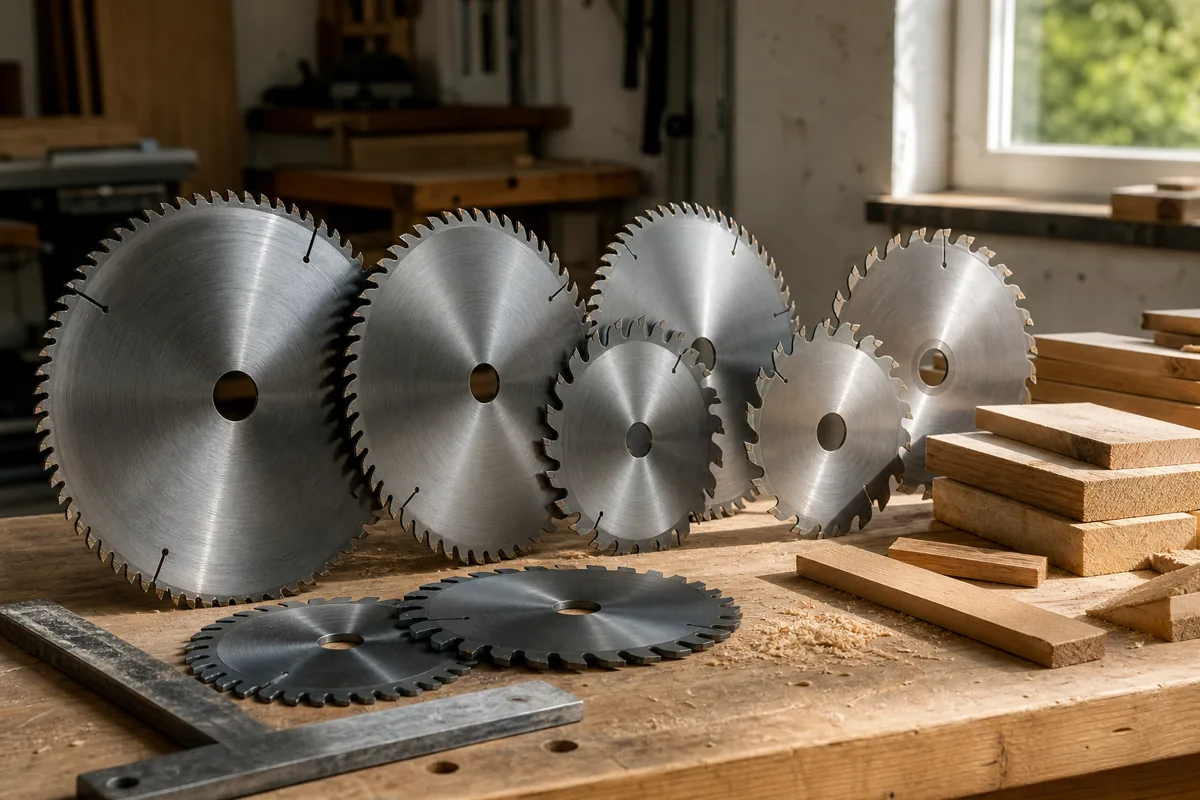
Cutting reclaimed lumber with hidden nails is a job for a blade that can survive metal contact, not the finest-finish blade in the rack. The best all-around choice for a circular saw is a carbide-tipped framing blade with roughly 18 to 24 teeth, a thin or standard kerf, and teeth advertised for nail-embedded wood or demolition work.
This type of blade will not make furniture-grade cuts, but it gives you the right balance of speed, cost, and durability. It can cut through ordinary framing lumber quickly and usually survives the occasional nail you failed to spot. No blade is truly nail-proof, however. A nail can still chip carbide, bend a tooth, or kick the saw back if the work is unstable.
As an Amazon Associate we earn from qualifying purchases at no extra cost to you.


Our Top Picks
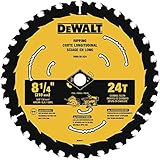
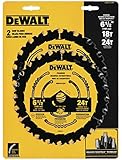
 DEWALT 10 in. 24 Tooth General Purpose Saw10" / 24 Teeth13.4 x 11.5 x 0.5 inches0.8 poundsCheck on Amazon


The best blade type for reclaimed lumber
For most 7-1/4-inch circular saws, start with a nail-embedded wood framing blade in the 18- to 24-tooth range. Look for carbide teeth rather than a plain steel blade. Carbide gives the teeth enough hardness to keep cutting after occasional contact with nails, screws, and staples.
An 18-tooth blade cuts faster and clears chips well in wet, dirty, or thick stock. A 24-tooth blade leaves a somewhat cleaner edge and is the better compromise if you are cutting boards that will remain visible. Blades with 30 teeth or more can work for lightly contaminated lumber, but they cut slower and expose more teeth to impact. Fine-tooth finish blades are the wrong choice when you expect metal.
Some manufacturers sell dedicated demolition blades with reinforced carbide teeth or tooth designs intended to cut both wood and embedded metal. These are the safest bet when the lumber is heavily contaminated. They cost more, and their cuts are generally rougher, but replacing one blade is cheaper than replacing a saw or spending an hour extracting damaged teeth.
Blade choices compared
| Blade type | Best use | Advantages | Drawbacks |
|---|---|---|---|
| 18-tooth carbide framing | Fast rough cuts in reclaimed framing lumber | Fast feed rate, good chip clearance, affordable | Rough edges; can lose teeth on repeated metal strikes |
| 24-tooth carbide framing | General-purpose repair and construction cuts | Good speed and a cleaner edge | Slower than 18-tooth blades; not ideal for heavy contamination |
| Metal-and-wood demolition blade | Boards with frequent nails, screws, or staples | Most resistant to embedded metal | Higher price, rougher cut, more dust and vibration |
| Fine-finish blade, 40 teeth or more | Clean wood known to be metal-free | Smooth cuts with less tear-out | Teeth can be ruined by one hidden nail |
What to check before buying
Match the blade diameter and arbor hole to your saw. A common corded circular saw uses a 7-1/4-inch blade with a 5/8-inch arbor, but compact saws may use 6-1/2-inch blades, and some cordless models use different sizes. Do not assume a blade will fit because it is labeled “framing.” Check the saw’s guard clearance and maximum blade size as well.
Kerf matters when cutting thick, hard, or wet reclaimed wood. A thin-kerf blade removes less material and puts less load on a cordless saw. It also tends to cut faster and stretch battery runtime. The trade-off is that very thin blades can deflect if you force the saw, especially when the blade hits a nail. A standard-kerf blade is usually more rigid and is a good choice for a powerful corded saw.
Anti-kickback shoulders and expansion slots are useful features, but they do not make an unsafe cut safe. Expansion slots reduce heat and noise. A reinforced shoulder behind each tooth limits how aggressively the blade can grab the wood. Avoid blades with missing carbide, cracked plates, or visibly distorted gullets before you even start.
For a heavier-duty option, compare carbide demolition blades for wood and metal. If you only have a few boards and can inspect both faces carefully, a basic 24-tooth carbide framing blade is often the cheaper and perfectly adequate choice.
How to cut without destroying the blade
Remove loose dirt first. Mud and grit dull carbide quickly, and a wire brush can expose nail heads hidden under paint. Scan both faces with a metal detector, then mark suspicious areas. A detector is not a guarantee: nails can sit deep in thick beams, and dense knots can produce confusing readings.
Support the board on sacrificial lumber so the blade can pass completely through without hitting concrete or a steel sawhorse. Keep the cut line at least 2 inches from an unsupported edge. If the board is bowed, clamp it flat or cut from the convex side while keeping your hands clear. Pinched blades are a common cause of kickback, especially when the cut closes behind the saw.
Let the blade reach full speed before entering the wood. Feed steadily, but do not force it. If the motor slows sharply, stop and back out only after the blade has stopped. A sudden metallic snap, new vibration, smoke, or a wandering cut means the blade may have lost a tooth or the plate may be damaged.
When another tool is better
For a handful of heavily nailed boards, a reciprocating saw with a demolition blade may be more practical than repeatedly risking a circular-saw blade. It is slower and produces less accurate straight cuts, but it handles localized metal contact well. A portable bandsaw is useful for controlled cuts in thick stock, though it is not a replacement for a circular saw when you need long, straight construction cuts.
If the lumber is valuable, first cut around the nails with a cheap blade, then remove the metal and make the final dimension cuts with a clean 24- or 40-tooth blade. That two-step method takes longer, but it preserves both the reclaimed board and the finish blade. For routine framing work, buy the 18-tooth carbide blade; for mixed jobs, the 24-tooth version is the better default.