What's inside
As an Amazon Associate I earn from qualifying purchases. This post may contain affiliate links at no extra cost to you.
Flush-cutting framing nails is a harder job than cutting clean wood. The blade has to pass through wood, nail steel, and often a second layer of wood without bending or losing its teeth. The best general choice is a 6 TPI bi-metal demolition blade in the 9-inch range. It cuts quickly, handles ordinary framing nails, and has enough length to stay useful when the workpiece is awkward.
That is not automatically the best blade for every cut. Blade length, tooth count, steel construction, and kerf all affect whether the cut is fast and controlled or turns into a bent, overheated mess.
As an Amazon Associate we earn from qualifying purchases at no extra cost to you.


Our Top Picks
 DEWALT Reciprocating Saw Blade Set for Metal andOne Size6.5 x 6.5 x 0.09 Inches0.28 poundsCheck on Amazon
 Milwaukee Electric Tool 48-00-1600 Sewall Torch Bi-Metal Reciprocating0.38 L x 3.00 W x 14.75 H0.6 PoundsCheck on Amazon

The Best Blade Type for Framing Nails
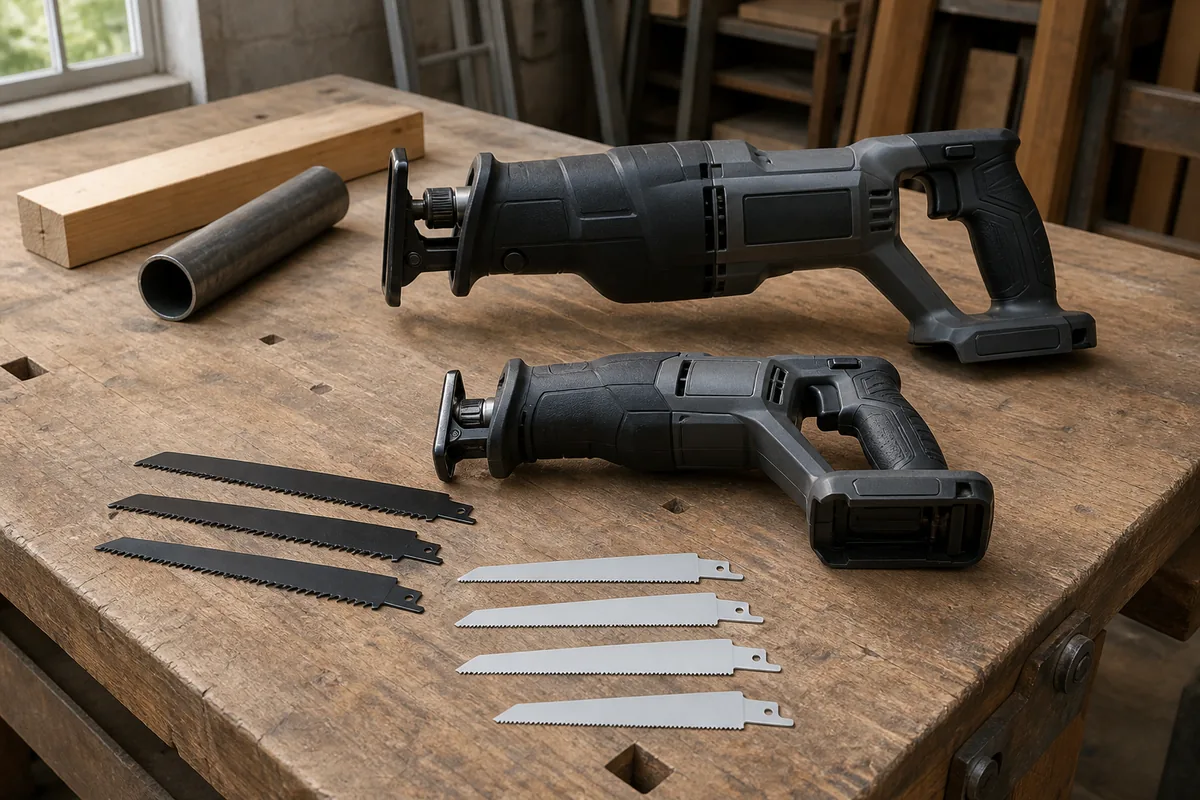
Choose a bi-metal blade labeled for demolition, nail-embedded wood, or wood with nails. These blades combine a flexible alloy-steel body with hardened high-speed-steel teeth. The body can flex without snapping, while the teeth tolerate occasional contact with nails better than ordinary carbon-steel wood blades.
A 6 TPI blade is the best starting point for most framing work. Its coarse teeth clear chips quickly and cut through nails without requiring excessive pressure. An 8 TPI blade gives a smoother, more controlled cut and can last longer when the wood is relatively clean, but it is usually slower in nail-filled framing. Blades below about 5 TPI are fast in soft wood but tend to catch, vibrate, and lose teeth when they encounter hardened nails.
For repeated nail cutting, look for a thicker demolition blade, typically around 0.050 to 0.062 inch thick. Thicker blades resist twisting and survive contact with hidden metal better. The trade-off is a wider kerf and more resistance, so they remove material more slowly than thin pruning or general-purpose blades.
Blade Choices Compared
| Blade type | Best use | Strengths | Weaknesses |
|---|---|---|---|
| 6 TPI bi-metal demolition | General framing nails and remodel work | Fast, durable, good balance of control and toughness | Rougher cut; can bend if used with excessive side pressure |
| 8 TPI bi-metal demolition | Cleaner flush cuts and lighter nail loads | More controlled, smoother action, often less aggressive | Slower in dense nail patterns; teeth can pack with chips |
| Thin kerf wood-and-metal blade | Restricted spaces and light-duty flush cuts | Gets into tight gaps and removes less material | Flexes more and is easier to kink or break |
| Carbide-tipped demolition blade | Frequent cutting of hardened screws, nails, and mixed materials | Longest tooth life in difficult metal | Much more expensive; unnecessary for occasional framing |
Choosing Length and Tooth Count
A 6-inch blade can make a flush cut when access is open, but it leaves little working length once the blade passes through a thick stud or a doubled member. An 8-inch blade is more versatile. A 9- or 12-inch blade is useful for deep cuts and awkward framing, but the extra length increases blade whip and makes it easier to bend the blade against the work.
For most remodeling and construction work, buy 8- or 9-inch blades first. Use a 6-inch blade only when the gap is tight or the fastener is close to the surface. Use a 12-inch blade for thick built-up framing, but support the blade and keep the shoe firmly against the workpiece.
Tooth count is not the same as cutting quality. The important figure is how many teeth remain engaged in the material. If only one or two teeth are contacting a thin nail or narrow piece of wood, the blade can chatter and strip teeth. A coarse blade works well when several teeth can stay in the cut, while a finer blade is safer for thin stock.
What to Buy
For a single framing project, a pack of bi-metal 6 TPI blades for wood with nails is the sensible purchase. A multipack is usually cheaper per blade, and you should expect to use more than one if you are cutting a large number of fasteners. The cheaper option is fine when you are removing a few studs or cutting several exposed nails; there is no practical reason to buy carbide teeth for occasional work.
Spend more on carbide-tipped demolition blades when you regularly cut hardened screws, structural fasteners, roofing nails, or nail-filled pallets. Carbide teeth can keep cutting after a standard bi-metal blade has become slow, but they are not immune to breakage. A sharp impact, twisting force, or hitting masonry can still damage them.
How to Make a Clean Flush Cut
Install the blade with the teeth facing the direction that gives you the best control, then set the saw shoe firmly against the surface. Start at low speed until the blade has established a groove. Increase speed once the teeth are engaged. Do not force the saw; moderate pressure lets the blade flex around the nail instead of wedging against it.
Keep the blade as straight as possible. Side pressure is the main cause of bent blades, broken teeth, and cuts that wander into the framing. If access allows, use the last few inches of the blade rather than the section right next to the shoe. The tip has more movement and is harder to control.
When cutting a nail between two pieces of wood, pause if the blade begins to chatter or smoke. Pull back slightly, let the blade cool for a few seconds, and resume with lighter pressure. A hot blade loses its temper and dulls quickly. If the nail is visibly hardened or the blade stops making progress, switch to a carbide blade rather than leaning harder on the saw.
Common Failures to Avoid
A wood-only blade is the wrong shortcut. It may cut the surrounding lumber quickly, but one or two nails can strip its teeth immediately. A very thin blade can make a narrower cut, yet it is a poor choice if the blade must travel through a thick stud or resist twisting.
Do not use a long blade as a pry bar after the cut. Reciprocating saw blades are designed to cut, not lever apart framing. If the wood closes on the blade, stop the saw and reposition it. Finally, inspect the cut area for electrical cable, plumbing, and metal plates before starting. A nail-cutting blade can also cut through concealed wiring or a protective nail plate in seconds.