What's inside
As an Amazon Associate I earn from qualifying purchases. This post may contain affiliate links at no extra cost to you.
Large plumbing fittings inside a cabinet create a difficult combination: you need wide jaw capacity, enough leverage to break a stuck connection, and a tool that can still fit between the cabinet wall and the pipe. The best water pump pliers for this job are not necessarily the largest pair on the rack. Oversized handles can be impossible to swing, while small pliers may slip, round off a fitting, or leave you unable to apply useful force.
For most under-sink repairs, a 10- to 12-inch tongue-and-groove plier is the most useful starting point. It usually reaches fittings around 2 to 2-1/2 inches across, depending on the jaw design, while remaining short enough for cabinet work. If the fitting is especially large or seized, a 16-inch pair offers more leverage, but it also needs more room to open and rotate.
As an Amazon Associate we earn from qualifying purchases at no extra cost to you.


Our Top Picks
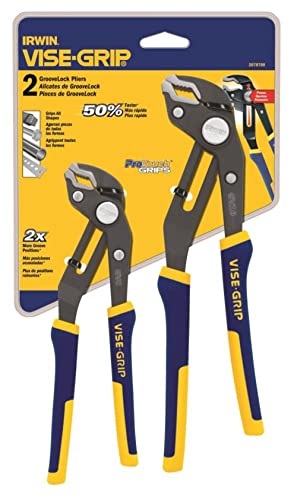 IRWIN Tools Vise-Grip GrooveLock Pliers Set2-pack (8", 10")0.75 x 7 x 11.6 inches1.4 poundsCheck on Amazon


What matters in a confined cabinet
Jaw capacity is only part of the specification. Look at the jaw shape, handle length, adjustment system, and the amount of clearance needed behind the fitting.
A narrow, offset jaw can reach a compression nut or slip-joint nut when a broad jaw cannot. Fine adjustment is also valuable. If the jaws are too far apart, they contact the fitting at an angle and tend to slip. If they are too close, you may crush a plastic nut before getting enough grip.
Most tongue-and-groove pliers have several adjustment positions. More positions do not automatically mean better performance, but they make it easier to keep the jaws square to the fitting. A smooth, tightly machined groove is preferable to a loose adjustment joint that allows the jaws to shift under load.
For a typical cabinet, prioritize a slim head and a 10- or 12-inch handle over maximum jaw size. If you routinely work on larger drain assemblies, a 12-inch tongue-and-groove water pump plier is a sensible general-purpose choice.
The best types of water pump pliers
| Type | Best use | Strength | Limitation |
|---|---|---|---|
| 10-inch tongue-and-groove | Most under-sink fittings | Good access and control | Limited leverage on seized metal |
| 12-inch tongue-and-groove | Large nuts and supply connections | Balanced capacity and leverage | May be awkward in narrow cabinets |
| 16-inch tongue-and-groove | Large, stuck fittings | High leverage and jaw reach | Needs substantial swing room |
| Push-button water pump plier | Frequent size changes | Fast, precise adjustment | More expensive; button can be obstructed |
| Slip-joint plier | Light-duty nuts and clamps | Cheap and compact | Less grip and smaller capacity |
Recommended size and jaw design
A 10-inch pair is often the easiest tool to maneuver around a P-trap. It is a good choice for plastic slip nuts, faucet supply-line nuts, and smaller shutoff-valve connections. The trade-off is leverage. If a corroded metal nut needs 60 pounds of force at the fitting, a short handle makes that force harder to produce without straining your hand.
A 12-inch pair generally gives a better margin. It can handle more stubborn fittings and often opens wide enough for larger waste-line components. The disadvantage appears when the handles hit the cabinet floor, back panel, or adjacent plumbing before the fitting turns.
Choose 16-inch pliers only when you have a clear reason. They are useful on large threaded fittings, outdoor plumbing, and heavy steel connections, but they are commonly too cumbersome under a sink. In a confined cabinet, longer handles can also increase the chance of striking a fragile drain or pulling a pipe out of alignment.
Jaw teeth should be sharp enough to bite metal but not so aggressive that they destroy plastic. For chrome-plated or plastic fittings, wrap the fitting with a strip of leather or a few layers of thick cloth when appearance matters. This reduces tooth marks, but it also reduces grip, so use less force and keep the jaws aligned.
Strongest options for stuck fittings
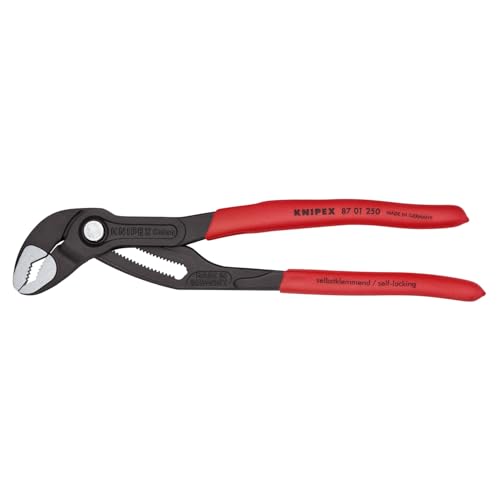
For maximum grip, look for forged steel construction, hardened teeth, and handles with a non-slip coating. A well-made push-button Cobra-style water pump plier gives quick jaw adjustment and strong tooth engagement. The button is useful when moving between several fitting sizes, though it can be harder to operate while wearing thick gloves or working by feel.
Traditional tongue-and-groove pliers remain excellent. Their open adjustment slots are simple, durable, and easy to clean after plumbing work. A reputable 12-inch pair is often the best value for occasional repairs. The cheaper option is fine when you only need to loosen plastic drain nuts or replace a faucet once or twice a year.
Spend more for tighter jaw alignment and better heat treatment if you regularly work on seized fittings. Cheap pliers can have soft teeth that round over quickly. Their handles may also flex noticeably under load. That lost movement matters: a tool that flexes 1/8 inch at the handle can let the jaws walk off a narrow nut.
How to use them without damage
Shut off the water and support the pipe or valve body with a second wrench whenever possible. Do not use the cabinet wall, a flexible supply line, or a thin plastic drain as the reaction point. Turning one fitting while twisting the connected pipe can break a solder joint or damage a valve.
Set the jaws so they contact opposite flats or broad edges, not just the tips of the teeth. Keep the handles roughly in line with the fitting. A sideways pull encourages the pliers to slip. Apply steady pressure rather than bouncing on the handles; sudden loading is more likely to crack a plastic nut.
If the fitting will not move, clean visible corrosion and apply penetrating oil to metal threads. Wait 10 to 15 minutes, then try again. Heat is risky inside a cabinet because of wood, insulation, plastic pipe, and trapped water. If the fitting is plastic, replace it rather than escalating force until it splits.
The practical buying choice
For one tool that covers most cabinet plumbing, buy a 12-inch forged tongue-and-groove pair with a slim head and a comfortable grip. If access is especially tight, choose a 10-inch model instead. If you frequently service large metal fittings, add a 16-inch pair rather than trying to force a short tool beyond its useful range.
A compact 10-inch slim-jaw water pump plier is the better choice for crowded sink cabinets. For general household maintenance, a 12-inch forged tongue-and-groove plier offers the best balance of reach, grip, and cost. The right size will do more for the job than simply buying the largest pair available.