What's inside
As an Amazon Associate I earn from qualifying purchases. This post may contain affiliate links at no extra cost to you.
Our Top Picks
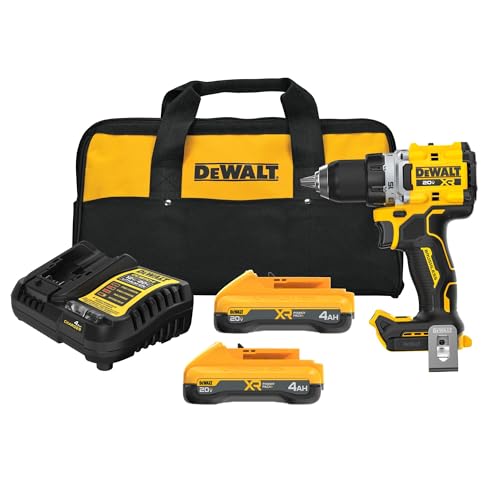 DEWALT 20V MAX XR Brushless Cordless 1/2 in.20 volts (pack of 1)9.92 x 3.98 x 12.8 inches7.52 poundsCheck on Amazon

The short version
The DeWalt DCD800 and Makita XFD14 are 18V-class, brushless drills built for demanding work, but neither is a hole-saw specialist. Both can make repeated holes in wood or other suitable materials when paired with a sharp saw and the right technique. The better choice depends less on headline torque than on how well the drill, side handle, battery and operator manage the repeated load.
Choose the DCD800 if you want a compact-feeling drill with a useful three-position LED and already own DeWalt 20V MAX batteries. Choose the XFD14 if you’re invested in Makita’s 18V LXT system and want its substantial side handle and two-speed mechanical gearbox. For large hole saws, frequent production work or holes in metal, consider a dedicated drill or a slower, torque-focused setup instead of assuming either compact drill is ideal.
As an Amazon Associate we earn from qualifying purchases at no extra cost to you.


What the specs do—and don’t—tell you
Both drills have a half-inch chuck, two speed ranges and a brushless motor. DeWalt lists the DCD800 at up to 2,000 rpm in high gear and 1,000 rpm in low; Makita lists the XFD14 at up to 2,100 rpm and 550 rpm. Those maximum speeds aren’t a recommendation to run a hole saw flat out. The appropriate speed depends on the saw diameter, material and manufacturer’s instructions. Larger saws generally need lower speed.
Published torque figures aren’t a reliable way to declare a winner. Manufacturers may use different tests, and maximum torque doesn’t tell you how smoothly a drill handles a binding saw, how much it weighs with a battery, or how tiring it feels after dozens of holes. In this work, a properly secured side handle, controlled low-speed trigger use and protection against sudden rotation matter as much as raw output.
At a glance
| Feature | DeWalt DCD800 | Makita XFD14 |
|---|---|---|
| Battery platform | 20V MAX (18V nominal) | 18V LXT |
| Chuck | 1/2-inch ratcheting chuck | 1/2-inch chuck |
| Two-speed range | 0–2,000 rpm high; 0–1,000 rpm low | 0–2,100 rpm high; 0–550 rpm low |
| Useful feature for hole-saw work | Three-position LED; adjustable side handle | Mechanical two-speed gearbox; substantial side handle |
| Best reason to buy | Existing DeWalt battery investment | Existing Makita LXT battery investment |
Check the exact kit contents before buying: batteries, charger and case vary by package. Tool-only prices can look attractive but may be poor value if you’re starting a battery platform from scratch.
Handling repeated hole-saw cuts
A hole saw can catch abruptly when its teeth snag, the pilot bit breaks through, or the cup fills with chips. That reaction can twist the drill and your wrist. Fit the supplied side handle, brace the work securely, keep both hands on the drill and avoid leaning your body over the tool’s rotation path. If the workpiece is small, clamp it; don’t try to hold it by hand.
Use the low gear for large saws and start slowly enough to establish the cut without walking. Clear chips regularly, especially in deep cuts, and back the saw out if it starts to bind or smoke. A hot, glazed saw, discoloured wood, stalled motor or repeated clutch-like interruptions are signs to stop and reassess—not to squeeze harder. A dull or unsuitable saw raises the load on the drill and increases the chance of a grab.
The DCD800’s speed range gives it a higher low-gear maximum than the Makita, so its low setting still may be too fast for some large hole saws. The XFD14’s lower 550-rpm low range offers a slower ceiling, which can be useful for demanding cuts, but it does not make the drill immune to binding. In either case, control speed with the trigger and follow the hole-saw maker’s guidance.
Which one fits your work?
For occasional holes in framing lumber or sheet goods, either drill is capable with a sharp, compatible saw. If you already own batteries and chargers for one platform, that’s usually the sensible buy. Battery compatibility has practical value on a job: you can swap packs rather than stop work, and you avoid paying twice for chargers and batteries.
The DCD800 is a strong fit for users who value its compact handling and work light, particularly when drilling in dim cabinets or utility spaces. The Makita is a good fit for LXT owners who want a broad low-speed range and a substantial handle for controlled, higher-load work. Neither advantage is decisive enough to justify switching platforms by itself.
For a dozen or more large holes per day, especially with big saws, don’t choose solely between these two. A heavier, slower drill designed for high-torque work—or a purpose-built hole-cutting setup—may be easier to control and more durable under sustained load. If you’re equipping a shop, compare right-angle drills for hole-saw work as well. They can suit access-limited work, but their shape doesn’t remove the need to manage torque reaction.
Batteries and accessories matter
For repeated holes, a larger-capacity compatible battery can mean fewer changes, but it also adds weight. That extra mass may help balance a demanding cut, yet it increases fatigue when drilling overhead or at arm’s length. If you already have several packs, rotate them rather than running one hot and depleted. Let a warm battery cool before charging, following its manufacturer’s instructions.
Match the hole saw to the material and cut size, and use a pilot bit that is secure and in good condition. For a new setup, compare hole-saw kits suited to the materials you cut, checking the stated material compatibility and diameter range rather than buying by tooth count alone. A spare sharp saw can be more useful than a higher-spec drill when the current cutter is worn.
Buying decision
Buy the DCD800 if you’re already on DeWalt 20V MAX and want a capable general-purpose drill that can handle intermittent hole-saw work. Buy the XFD14 if you’re on Makita LXT or specifically want its lower low-gear speed ceiling. For occasional, modest-size holes, the cheaper option within your existing battery system is fine; the job does not automatically demand the more expensive drill.
If large hole saws are your daily workload, spend first on the right cutter, secure workholding and a drill suited to sustained low-speed torque. Whatever drill you choose, test the setup on scrap, use the side handle, and stop when the saw binds or the tool overheats.