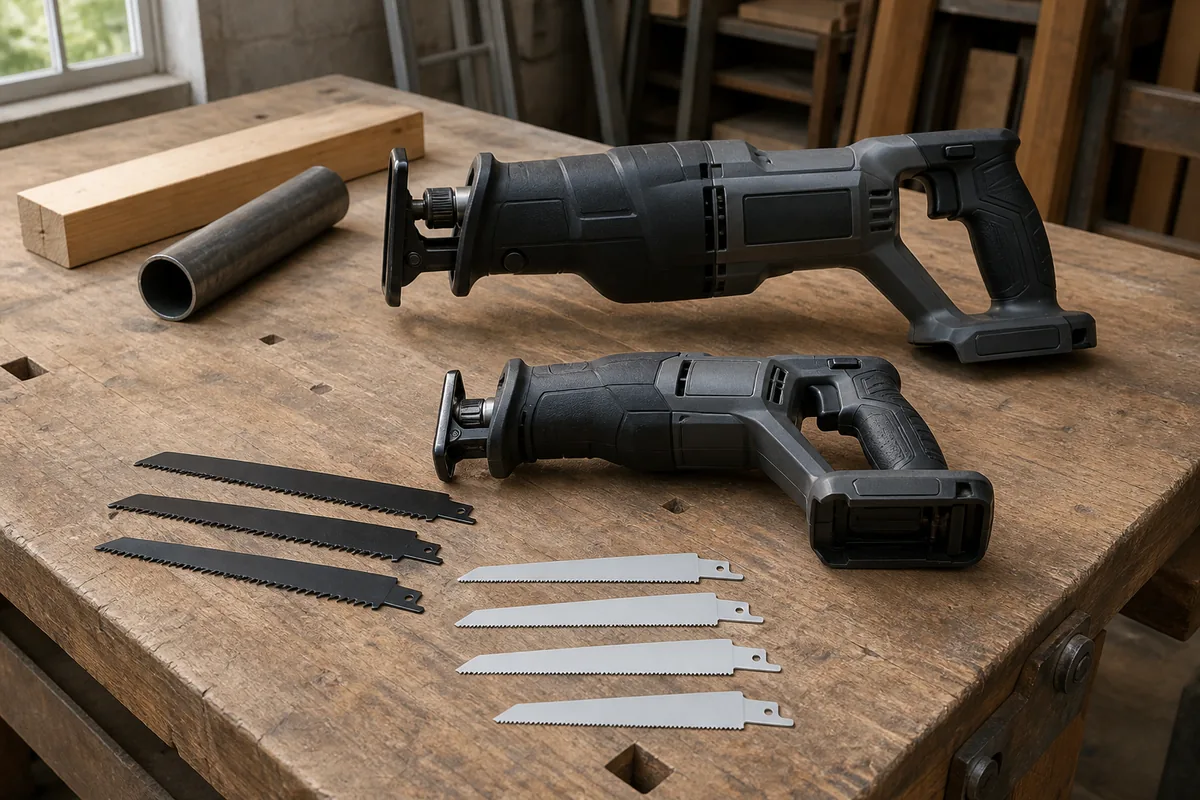
What's inside
As an Amazon Associate I earn from qualifying purchases. This post may contain affiliate links at no extra cost to you.
For cutting framing lumber that still contains nails, the best all-around choice is a 6-inch, 6–10 TPI bi-metal reciprocating saw blade. It is long enough for most 2-by framing, flexible enough to tolerate some twisting, and made to cut both wood and embedded steel. For heavy demolition, a 9-inch version reaches farther; for cleaner, faster wood-only cuts, a coarse wood blade is better—but only after you know the cut is clear of metal.
As an Amazon Associate we earn from qualifying purchases at no extra cost to you.


Our Top Picks
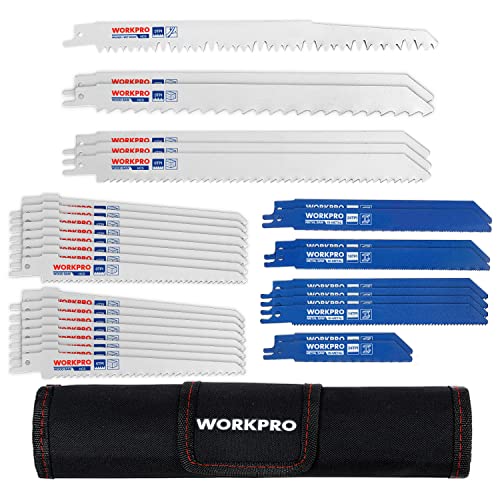 WORKPRO 32-Piece Reciprocating Saw Blade Set for Wood4 Inch & 6 Inch & 9 Inch1.3 poundsCheck on Amazon


What to buy
Look for a bi-metal blade labeled for wood with nails or demolition, with a variable tooth pitch around 6–10 TPI. Bi-metal construction combines a flexible steel body with harder teeth, so it generally survives nail strikes and bending better than a basic carbon-steel blade. A 6-inch blade is easier to control in tight framing and wastes less motion on short cuts. Choose a 9-inch blade when you need reach through thick assemblies or need to cut from one side without repositioning.
Compare 6-inch bi-metal demolition blades by tooth pattern and pack price. A mixed pack can be useful if it includes both shorter and longer blades, but check the TPI and material description rather than choosing by the word “demolition” alone.
Blade comparison
| Blade type | Best use | Trade-off |
|---|---|---|
| Bi-metal, 6–10 TPI, 6-inch | Typical 2-by lumber with nails | Good control and reach for common cuts; can be too short for thick assemblies |
| Bi-metal, 6–10 TPI, 9-inch | Deep cuts, stacked lumber, awkward access | More flex and vibration; easier to bend if pushed sideways |
| Coarse wood blade, about 3–6 TPI | Fast cuts in wood confirmed free of metal | Teeth can snag, chip, or lose their edge on nails |
| Carbide-tooth demolition blade | Repeated nail-heavy work or abrasive mixed material | Higher purchase cost; unnecessary for occasional ordinary framing cuts |
When to step up to carbide
Carbide-tooth blades are worth considering when you are making many cuts through nail-heavy lumber, or when the framing contains more than ordinary smooth-shank nails. Their teeth tend to last longer under repeated impacts than standard bi-metal teeth, but they cost more and still can be damaged by severe side loading or unsuitable material. For a few cuts during a small repair, a bi-metal blade is usually the sensible buy. For frequent demolition, compare the cost per blade against how quickly your current blades dull.
See carbide-tooth blades for nail-embedded lumber if you expect sustained demolition work. Verify that the blade is specified for wood and embedded nails; a metal-cutting blade can cut steel, but its fine teeth often make slow work of thick lumber.
Choose length and fit
A blade needs enough exposed length to pass through the full thickness of the material throughout the stroke. For a single 2-by board, a 6-inch blade is usually manageable; for two boards together, a thicker assembly, or a cut near a wall, a 9-inch blade may be more practical. Longer is not automatically better: the extra blade can flex, whip, or strike hidden material behind the work. Match length to the cut and keep the shoe pressed against the surface.
Check the saw’s manual for blade-shank compatibility and any restrictions. Most current reciprocating saws accept standard universal-shank blades, but do not assume compatibility if the tool uses a proprietary system. A blade that is bent, cracked, missing teeth, or visibly blue from heat should be replaced. Continuing with it can make the cut wander and puts extra load on the saw.
Cutting technique that protects the blade
Secure the lumber before cutting and inspect both sides for utilities, pipes, wiring, and fasteners. Wear eye protection; a broken tooth or nail fragment can travel. Set the saw shoe firmly against the work, start at a controlled speed, and let the blade cut without forcing it. Push too hard and the blade heats up, binds, or bends. Twisting the saw to steer through a cut is a common way to kink a long blade.
For a flush cut against a surface, use a flexible blade and lay it nearly flat, but keep the shoe supported where possible. Expect nail contact to slow the saw and create sparks. Stop if the blade binds or the cut suddenly changes direction; release the trigger, withdraw the blade when it is safe, and check for a shifted workpiece or an unexpected obstruction. Do not use a nail-cutting blade as permission to cut blindly into a wall or floor.
When cheaper blades are fine
Budget bi-metal blades are reasonable for occasional repairs, a handful of cuts, or lumber with only a few ordinary nails. Buy a small pack and replace blades when they stop cutting efficiently rather than leaning harder on a dull one. Cheap blades are less attractive for long demolition sessions: teeth may wear or break sooner, and repeated changes can erase the initial savings.
Keep a coarse wood blade for lumber verified to be nail-free. It can cut faster and leave a more aggressive cut, but hitting even one hardened fastener can damage its teeth. For mixed framing where nail locations are uncertain, the 6–10 TPI bi-metal blade remains the safer general-purpose choice. Compare 9-inch bi-metal blades if reach is the main problem; otherwise, start with 6-inch blades and move up only when the work demands it.