What's inside
- Best Manual Espresso Machines for Home Baristas
- Quick comparison of the leading designs
- Direct lever versus spring lever
- Choosing by situation
- How pressure control affects the shot
- Counter space and workflow realities
- A practical setup for consistent shots
- Durability, cleaning, and ownership costs
- Final buying advice
As an Amazon Associate I earn from qualifying purchases. This post may contain affiliate links at no extra cost to you.
Our Top Picks


Best Manual Espresso Machines for Home Baristas
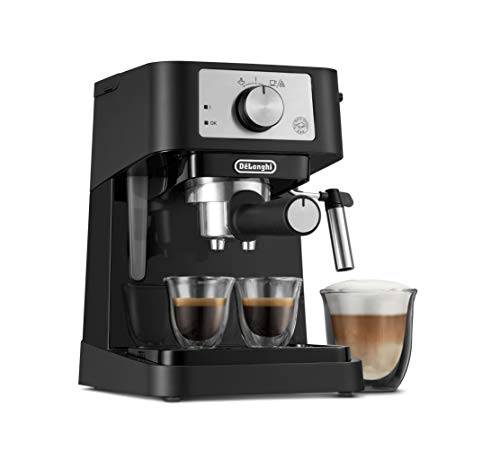
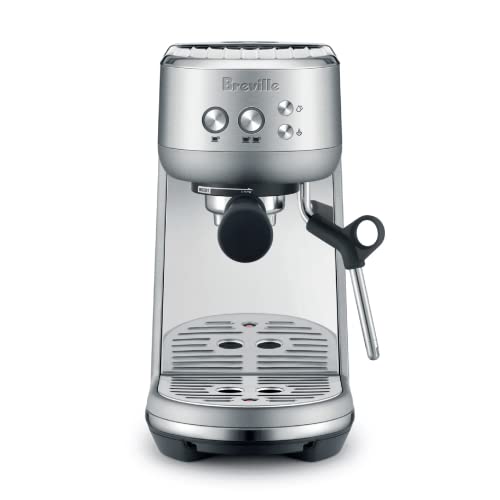
The best manual espresso machine for most home baristas is the Flair 58 if you want maximum control, the Cafelat Robot if you need a compact and durable countertop machine, and the La Pavoni Europiccola if you want a traditional boiler-and-lever workflow for multiple drinks.
Manual machines can produce café-quality espresso, but they do not remove the variables that automatic machines hide. You must grind finely enough, distribute the coffee evenly, control pressure through the lever, and stop the shot at the right time. The right choice therefore depends less on headline pressure and more on your experience, drink volume, available counter space, and tolerance for preparation.
As an Amazon Associate we earn from qualifying purchases at no extra cost to you.

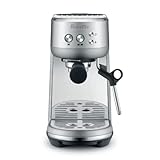

Quick comparison of the leading designs
| Machine type or example | Lever system | Heating method | Typical dose | Approx. footprint | Best suited to |
|---|---|---|---|---|---|
| Flair 58 | Direct lever | Preheated brew cylinder; no boiler | 18–20 g | 15 × 25 cm | Experienced home baristas seeking pressure control |
| Cafelat Robot | Direct lever | Preheated brew chamber; no boiler | 16–18 g | 19 × 24 cm | Small kitchens and durable, low-maintenance ownership |
| ROK EspressoGC | Direct lever | Preheated metal chamber; no boiler | 15–18 g | 15 × 22 cm | Occasional use and portable setups |
| La Pavoni Europiccola | Direct lever with boiler | Brass boiler, approximately 1.6 L | 14–16 g standard basket | 29 × 20 cm | Traditional lever operation and several drinks in succession |
| Spring-lever machine | Spring-controlled lever | Usually a heated boiler | 14–21 g, depending on group | Typically 25–35 cm wide | Repeatable declining-pressure shots and higher budgets |
Dimensions and capacities are approximate and can change between revisions or configurations. A manual machine also requires a capable espresso grinder, a scale, and a kettle or other heat source unless it has an integrated boiler.
Direct lever versus spring lever
Direct lever machines: maximum feedback, maximum responsibility
On a direct-lever machine, the lever is connected closely to the brew piston. Your hand supplies the brewing force, so you can increase or reduce pressure during the shot. This makes it possible to compensate for a coffee that is flowing too quickly or too slowly, and it lets advanced users create pressure profiles that differ from a standard nine-bar extraction.
The trade-off is consistency. Small changes in grind size, puck preparation, water temperature, and lever speed can noticeably change the cup. Direct levers are rewarding for people who enjoy adjusting one variable at a time, but they are less forgiving when several variables change together.
Spring levers: more repeatable pressure
A spring lever compresses a spring as you lower the lever. When released, the spring pushes water through the coffee, usually beginning at higher pressure and declining as the spring expands. This pressure curve can be gentler and more repeatable than manually holding a lever at a target force.
Spring-lever machines often include a boiler and group head that need time to reach a stable temperature. They are a better choice for someone who wants the distinctive lever experience but does not want to regulate pressure continuously. They still require good grinding and puck preparation; the spring cannot correct a badly prepared coffee bed.
Choosing by situation
| Your situation | Best direction | Why |
|---|---|---|
| Lowest equipment cost and one or two drinks at a time | Compact direct lever | No boiler, simpler construction, and lower energy use |
| Very limited counter space | Cafelat Robot or ROK-style machine | Small footprint and no permanent water connection |
| Learning espresso from scratch | Flair 58 or a pressure-gauge direct lever | Visible pressure feedback makes cause and effect easier to understand |
| Several milk drinks in a session | Boiler-equipped lever machine | Faster workflow and integrated steam capability |
| Preference for repeatable shots | Spring lever | The spring provides a more consistent pressure curve |
| Travel or occasional espresso | Small non-boiler lever | Less to drain, descale, and store between uses |
How pressure control affects the shot
Pressure is only one part of extraction. A nominal nine-bar reading does not guarantee good espresso if the grind is too coarse, the puck is uneven, or the water temperature is too low. Manual machines are valuable because they show how these variables interact.
A common starting recipe is 18 g of coffee producing approximately 36 g of espresso in 25–35 seconds. Begin with a modest pre-infusion: apply enough lever force to wet the puck and wait about 5–10 seconds. Then increase pressure gradually, aiming for roughly 6–9 bar while watching the flow. If the stream becomes pale and fast early in the shot, grind finer or improve distribution. If almost nothing emerges after pre-infusion, grind coarser before changing pressure.
Do not treat these numbers as fixed rules. Lightly roasted coffee may benefit from a higher brew temperature and longer ratio, while darker coffee can taste harsh if pushed too hard. The useful feature is not the ability to hit one exact pressure; it is the ability to repeat a chosen process.
Counter space and workflow realities
A non-boiler machine appears compact, but the complete setup needs more room than the chassis alone suggests. Allow space for a grinder, kettle, scale, dosing cup, knock box or waste container, and a place to rinse the brew chamber. A Flair 58-style setup may occupy approximately 60–75 cm of usable counter length once the grinder and kettle are included.
Boiler machines have a different space requirement. A La Pavoni Europiccola is relatively narrow, but its height matters beneath cabinets, and the boiler must be filled, heated, and periodically descaled. It can make consecutive shots more conveniently, yet it also adds heat, electrical consumption, seals, switches, and pressure-related components that require maintenance.
If you mostly drink straight espresso, a non-boiler lever paired with a good kettle may be the simplest arrangement. If you regularly make cappuccinos, steaming capacity can matter more than the smallest footprint.
A practical setup for consistent shots
- Use a proper espresso grinder. Blade grinders and many inexpensive filter grinders cannot make sufficiently fine, evenly sized particles. A stepless or finely stepped burr grinder is one of the most important purchases in the setup.
- Weigh the dose. Start with the basket’s stated capacity, such as 18 g in an 18 g basket. Overfilling can interfere with the screen or piston; underfilling can make the puck unstable.
- Distribute before tamping. Break up clumps and level the coffee. Uneven density encourages channeling, where water finds a narrow path and leaves much of the coffee under-extracted.
- Preheat every metal part that contacts the water. On a non-boiler machine, rinse or fill the brew cylinder with hot water before brewing. A cold chamber can reduce brew temperature enough to make the shot thin and sour.
- Use a scale under the cup. Stop at the target beverage weight rather than relying only on time or appearance.
- Change one variable at a time. Adjust grind first, then dose or yield, and only afterward experiment with pressure or temperature. This makes the result easier to diagnose.
Durability, cleaning, and ownership costs
Simple direct-lever machines generally have fewer parts that can fail. Their first wear items are usually piston seals, silicone gaskets, portafilter seals, and occasionally pressure-gauge components. These parts are consumables rather than signs that the machine has reached the end of its life. Keeping coffee oils and grounds away from seals helps them last longer.
Boiler machines add a heating element, thermostat or pressure switch, valves, and a larger water circuit. Mineral buildup is the main long-term concern, especially with hard water. Follow the manufacturer’s descaling guidance rather than using aggressive chemicals indiscriminately; brass, aluminum, stainless steel, and plated surfaces do not all respond identically to cleaning products.
After each session, remove the spent puck, rinse the basket and brew chamber, wipe the group area, and release pressure fully before disassembly. Backflushing may be appropriate for some machines but not for every lever design. Lubricate food-safe piston seals only with a product specified for espresso equipment.
To estimate operating cost, consider a 250 g bag of coffee costing $18. At an 18 g dose, it makes about 13 full doses, or approximately $1.38 of coffee per shot before shipping, water, and electricity. A machine that costs more does not automatically reduce this cost; its value is in workflow, temperature stability, pressure control, repairability, and the type of espresso experience you want.
Final buying advice
Choose the Flair 58 when pressure visibility, a 58 mm workflow, and hands-on control matter most. Choose the Cafelat Robot when you want a compact, sturdy direct lever with minimal maintenance. Consider the ROK EspressoGC for occasional or portable use, accepting its greater dependence on preheating and technique. Choose the La Pavoni Europiccola or another boiler-equipped lever when you value traditional operation and need to prepare several drinks. For the easiest pressure repeatability, look at a spring-lever machine.
Whichever design you select, reserve part of the budget for the grinder, scale, water treatment, and replacement seals. Those supporting choices usually have more influence on consistent espresso than a small difference in the machine’s advertised pressure.