What's inside
As an Amazon Associate I earn from qualifying purchases. This post may contain affiliate links at no extra cost to you.
Our Top Picks
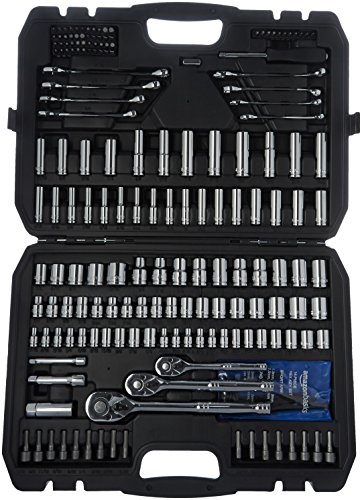 Amazon Basics 201-Piece Mechanic's Socket Tool Set With201 Piece17.7 x 13 x 3.53 inches16.49 poundsCheck on Amazon


Best Quality Socket Sets for Long-Term Workshop Use
The best quality socket set for long-term workshop use is usually a well-supported 1/2-inch set for higher-torque jobs or a 3/8-inch set for general repairs, chosen for its alloy-steel specification, durable finish, dependable ratchet, useful size coverage, and replaceable parts—not its headline piece count. For a versatile home or woodworking workshop, start with a 3/8-inch drive set that includes both metric and SAE sockets, a fine-tooth ratchet, and a case that keeps every size in place.
Best picks by workshop situation
- One set for general repairs: Choose a 3/8-inch drive, preferably with metric and SAE coverage. It handles many fasteners on machinery, vehicles, and shop fixtures without the bulk of a large 1/2-inch set.
- Large or stubborn fasteners: Add a 1/2-inch drive set with six-point sockets. Its larger drive and socket walls are better suited to higher torque than a compact set.
- Small mechanisms and cramped spaces: A 1/4-inch drive set offers finer control and access, but should not substitute for a larger drive on tight fasteners.
- Best inexpensive quality socket sets: Look for a modestly sized set from an established tool brand with chrome-vanadium sockets, a clear size range, and a sound warranty. A smaller, complete set is a better buy than a huge kit padded with bits or duplicate accessories.
What matters more than piece count
Socket sets count every included item, from sockets to adapters and bits, so the total can make two kits look comparable when their useful coverage is not. Check the actual drive size, whether sockets are six-point or twelve-point, and whether the set includes both shallow and deep sockets where you need them. Six-point sockets contact the flats of a fastener and are generally the safer choice for stubborn or worn hex heads; twelve-point sockets can be useful when positioning space is limited.
As an Amazon Associate we earn from qualifying purchases at no extra cost to you.


For repeated workshop use, chrome-vanadium steel is common in hand sockets. Higher-end sets may specify particular alloy grades or heat treatment, but a steel label alone does not tell you how a socket will hold up: manufacturing quality, hardness, and fit also matter. Chrome plating resists rust and wipes clean easily, but chipped or flaking plating is a reason to retire a socket. Avoid using chrome hand sockets with an impact wrench; impact-rated sockets are designed for that purpose and are typically made and finished differently.
Comparison: what to check before buying
| Drive and use | Typical useful coverage | What to prioritize | Trade-off |
|---|---|---|---|
| 1/4-inch, small assemblies | Commonly 4–14 mm or 3/16–9/16 in | Compact ratchet, shallow and deep sockets, secure case | Limited leverage for tight fasteners |
| 3/8-inch, general workshop | Commonly 8–19 mm or 5/16–3/4 in | Fine-tooth ratchet, metric/SAE coverage, extensions | May not cover larger fasteners or very small hardware |
| 1/2-inch, higher-torque work | Commonly 10–24 mm or 3/8–1 in | Six-point sockets, sturdy ratchet, clear size markings | Bulkier; not suited to delicate small fasteners |
These are common ranges, not a promise about any particular kit. Confirm the exact sizes in the manufacturer’s contents list, especially if you work mainly in metric or SAE. A set can skip the one size you use most often while still advertising a large piece count.
Ratchets, cases, and warranties: the ownership details
A ratchet’s tooth count is only one part of its performance. A higher tooth count can allow a smaller swing arc, useful between a bench, machine, or cabinet wall, but the mechanism still needs a positive direction switch and a comfortable grip. A fine-tooth ratchet is not automatically stronger; use the right drive size and avoid adding a pipe to the handle. For difficult fasteners, use a breaker bar rather than sacrificing the ratchet mechanism.
Case design affects whether a set stays complete after years of use. Look for readable size labels, sockets that lock or fit firmly in their slots, and hinges and latches that are not flimsy. A molded case is convenient for storage, while rails can be easier to use at a bench but may let sockets slide off during transport. If the set will live in a shared shop, labels that remain legible and a quick visual inventory can save time.
Warranty terms vary by brand, product line, and country. Before buying, check whether the warranty covers the ratchet as well as the sockets, how replacement parts are obtained, and whether proof of purchase is required. A replaceable ratchet is valuable: the mechanism is more likely to wear before a properly used socket does.
Choose by use frequency and budget
| Your situation | Practical choice | Why |
|---|---|---|
| Occasional household or shop-fixture repairs; tight budget | Small 3/8-inch set from an established brand, with the sizes you actually use | Limits cost without paying for accessories that may stay unused |
| Weekly maintenance; mixed metric and SAE fasteners | Mid-range 3/8-inch set with both systems, extensions, and a reversible ratchet | Broad everyday coverage and fewer interruptions to find a missing size |
| Frequent mechanical work or high torque | Separate 1/2-inch six-point set, plus a breaker bar | Better suited to larger fasteners than forcing a smaller ratchet |
| Small, crowded work area | Compact 1/4-inch set, supplemented by a larger drive when needed | Improves access while avoiding misuse on tight fasteners |
As a simple value check, divide the set’s price by how many times you expect to use it over its service life. A $60 set used 300 times works out to $0.20 per use; a $30 set used 30 times costs $1 per use. This is only a planning aid, not a prediction of lifespan. It shows why a dependable ratchet and the right size coverage can matter more than choosing the lowest price or the largest kit.
Keeping a socket set in service
- Wipe sockets after use: Oil, moisture, and grime left in the case can encourage corrosion and obscure size markings.
- Keep hand and impact sockets separate: Do not put chrome hand sockets on an impact wrench; use impact-rated sockets for powered tools.
- Do not force a poor fit: Confirm the socket size and seat it fully. A loose or angled fit can damage fastener corners.
- Watch the ratchet: If it slips, feels gritty, or will not hold its direction, stop using it under load. Clean or service it only as its manufacturer allows, or replace the ratchet.
- Store the set dry and complete: Return pieces to labeled slots so missing sizes are easy to spot before a job.
For most workshops, the strongest starting point is a well-made 3/8-inch set with honest size coverage, a serviceable ratchet, and a case that keeps sockets organized. Buy a separate 1/2-inch set when your work regularly involves larger or tighter fasteners. That approach tends to deliver better long-term value than selecting the biggest piece count on the shelf.