What's inside
As an Amazon Associate I earn from qualifying purchases. This post may contain affiliate links at no extra cost to you.
Our Top Picks


What you need from a guard
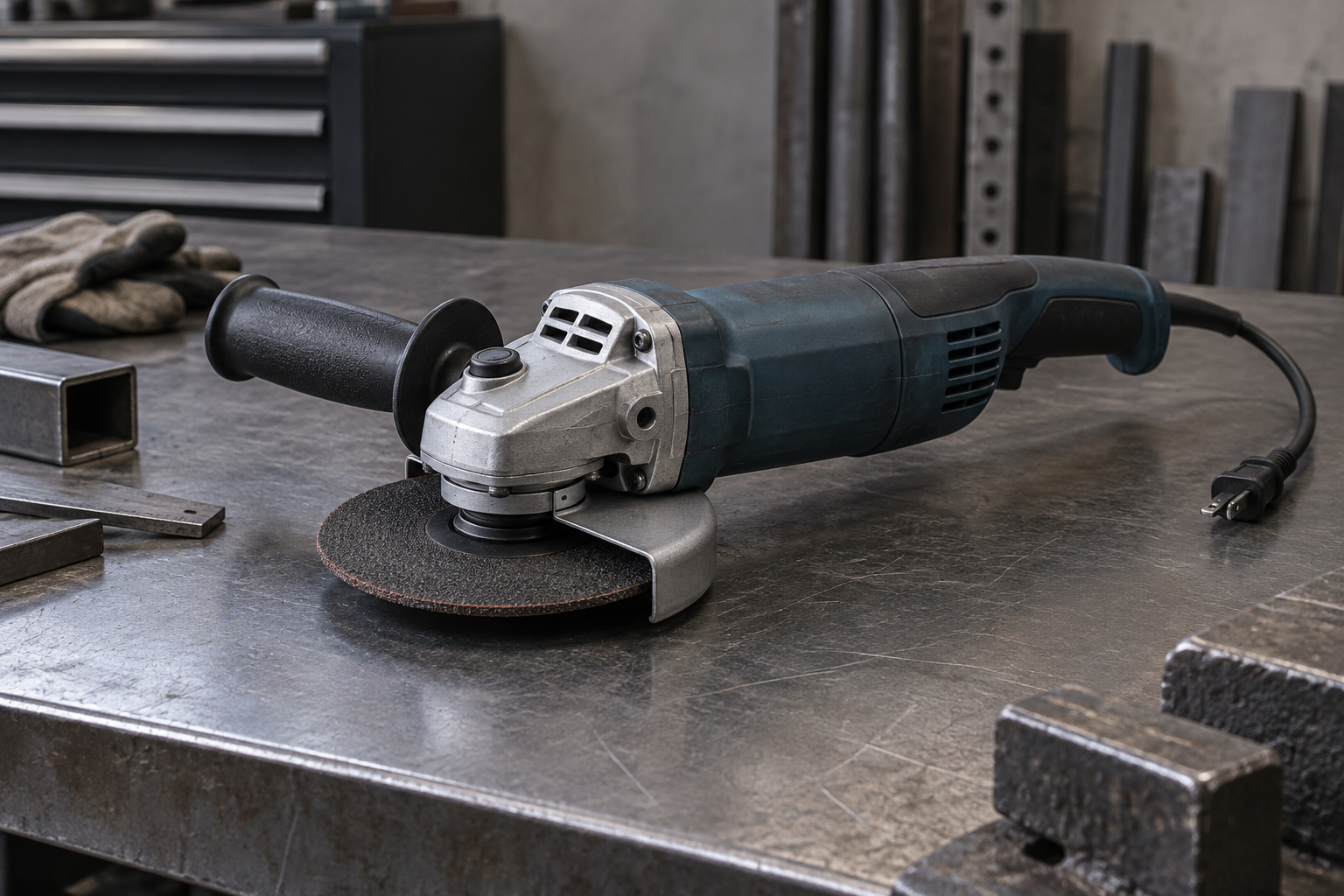
Switching an angle grinder between grinding and cutting is not a reason to run without a guard. It is a reason to use a guard designed for the wheel and operation, and to check that it can be repositioned securely. A grinding guard is deeper and covers more of the wheel’s circumference. A cut-off guard is typically narrower and shaped to contain fragments if a thin wheel breaks.
For occasional work, the least expensive sensible choice is usually the guard supplied with the grinder, provided its manual approves it for the wheel you plan to use. If you routinely alternate between jobs, a compatible quick-adjust guard can save time. A separate cut-off guard is worth considering when the manufacturer offers one for your exact grinder.
As an Amazon Associate we earn from qualifying purchases at no extra cost to you.


Guard types compared
| Guard type | Best for | Trade-off |
|---|---|---|
| Standard grinding guard | Grinding wheels and general-purpose work | May be too bulky or not approved for cutting wheels |
| Quick-adjust grinding guard | Frequent changes in guard position while grinding | Costs more; adjustment mechanism must lock firmly |
| Cut-off guard | Thin abrasive cut-off wheels | Usually not a substitute for a grinding guard |
| Two compatible guards | Regularly switching between grinding and cutting | Costs more and means storing the unused guard |
A quick-adjust guard changes position without tools; it does not automatically make one guard suitable for every wheel. Check the grinder manual and guard markings for the permitted wheel type and diameter. A 4½-inch grinder, for example, generally takes wheels rated for that diameter, but the guard and spindle configuration still need to match the tool.
What to buy
If your grinder came with a properly fitting grinding guard and you cut only now and then, keep it for grinding and buy a manufacturer-approved cut-off guard if one is available. Search by the grinder’s exact brand and model, not just the wheel diameter. A guard that looks close may have the wrong collar, locking features, or clearance.
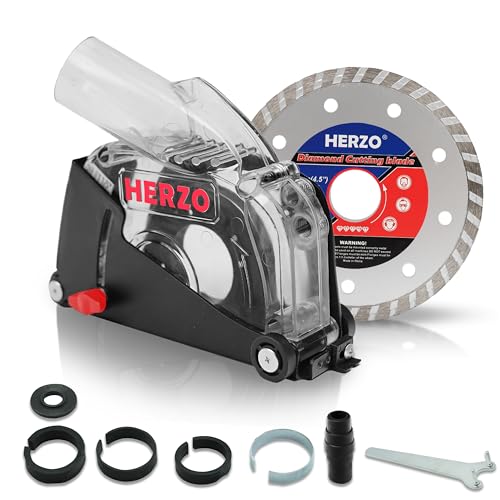
For frequent repositioning during grinding, compare a 4½-inch angle grinder quick-adjust guard with the standard guard. Confirm the listing specifies your grinder or mounting system. If you need to cut, look for a separate compatible cut-off guard; do not assume an adjustable grinding guard is rated for cut-off wheels.
Replacement guards are often cheaper than replacing a grinder, but a generic guard is a poor bargain if it does not lock securely or leaves the wheel exposed. When the original manufacturer does not sell a suitable accessory, choosing a grinder designed to accept the required guard may be safer than improvising an adapter.
Fit and failure checks
Before installing a guard, unplug a corded grinder or remove the battery. The guard should seat fully on the grinder’s collar and lock against rotation. Try to turn it by hand after locking: it should not slip under moderate pressure. If the clamp is cracked, distorted, or missing its locking piece, replace the guard rather than tightening it with a workaround.
Check clearance with the wheel installed and the tool still disconnected. The wheel must not rub the guard as you turn it by hand. Use a wheel diameter allowed by the manual; a larger wheel can extend beyond the guard’s intended coverage and may exceed the tool’s speed or design limits. Never remove the guard just to fit a larger wheel.
Look for bent metal, a damaged clamp, or a guard that has been cut or ground for extra access. Those changes can reduce fragment protection. A guard that shifts during a test run is not ready for work: stop, disconnect power, and correct the fit. Do not rely on the auxiliary handle alone to control a grinder if a wheel catches.
Switching between grinding and cutting
Disconnect power before changing a wheel or repositioning a guard. Fit the wheel specified for the task, then set the guard so its closed side faces you and the open portion directs sparks and debris away from your body and other people. Keep the guard between you and the wheel’s exposed side. Wear eye protection plus a face shield, and use hearing protection; a face shield does not replace safety glasses.
Grinding wheels are made for material removal with their face. Thin cut-off wheels are made to cut with their edge. Do not grind on the side of a cut-off wheel: side pressure can crack it, and a wheel failure can throw fragments at high speed. Likewise, do not twist a cut through the work or force the wheel sideways to widen a kerf. Let the wheel do the work and keep the material supported so the cut does not pinch the disc.
After a change, check the wheel’s speed rating against the grinder’s no-load RPM. The wheel rating must be at least as high as the grinder’s RPM. Inspect the disc for chips or cracks, and stand clear of its plane during a brief test run. If vibration, rubbing, or an unusual sound appears, stop and inspect before continuing.
Which setup makes sense?
For an occasional homeowner, the original guard is fine when it is approved for the wheel and job, fits correctly, and can be positioned safely. A quick-adjust design is convenient for repeated grinding changes, but it is not a safety upgrade if the lock is loose or the guard is incompatible. For regular cutting and grinding, two correctly matched guards are the clearer choice: use the grinding guard for grinding and the cut-off guard for cutting. The extra purchase is justified by the right coverage for each operation, not by convenience alone.