What's inside
As an Amazon Associate I earn from qualifying purchases. This post may contain affiliate links at no extra cost to you.
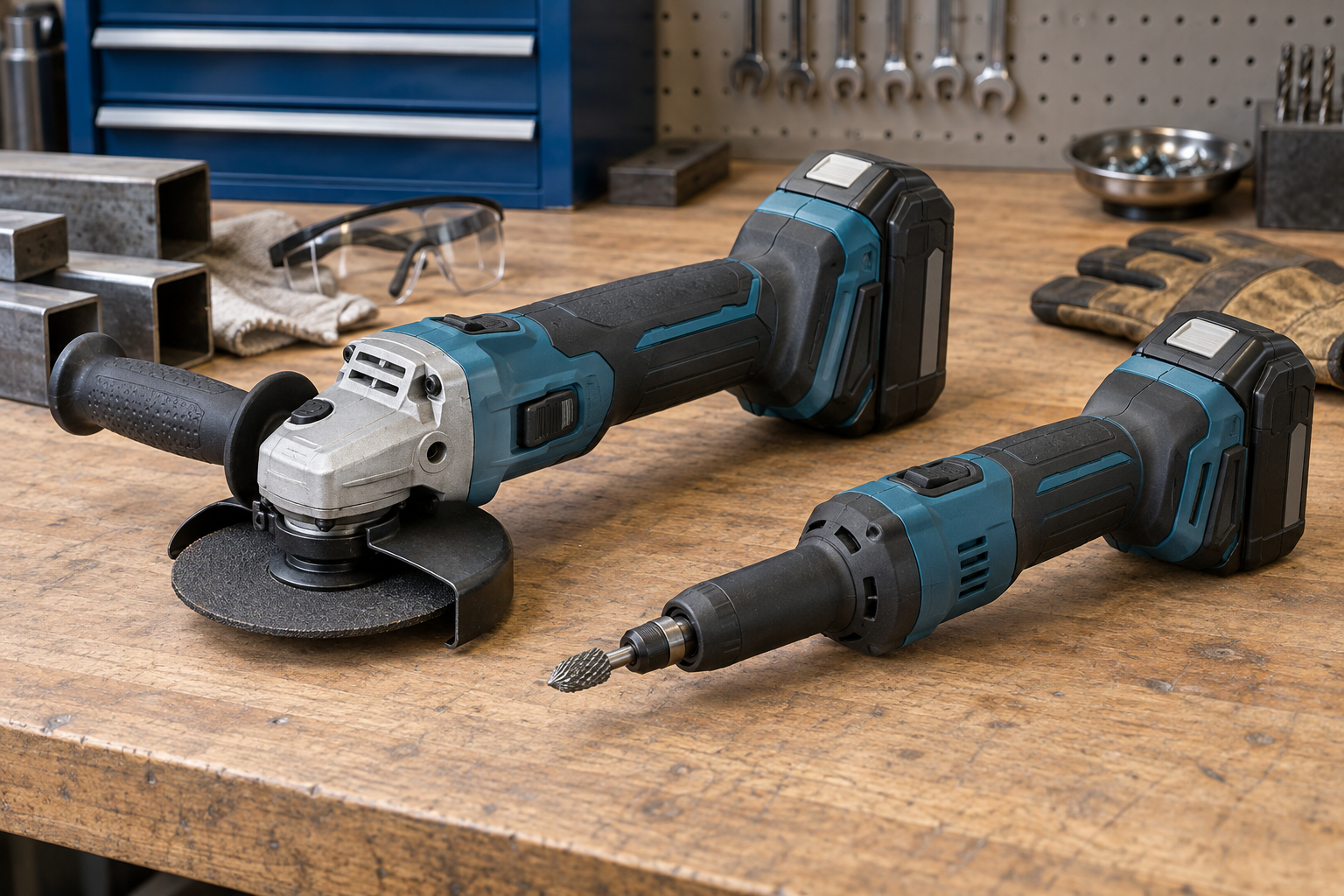
For metal cleanup, the Milwaukee M18 FUEL grinder and Makita XAG26 are both capable 4½-inch cordless angle grinders. They can remove weld spatter, clean edges and cut steel, but their controls and handling differ enough to matter when you’re working for more than a few minutes. The right pick depends less on peak power than on how you start, control and stop the grinder—and whether you already own batteries for either system.
As an Amazon Associate we earn from qualifying purchases at no extra cost to you.


Our Top Picks
Quick comparison
| Feature | Milwaukee M18 FUEL grinder | Makita XAG26 |
|---|---|---|
| Wheel size | 4½ or 5 inches, depending on configuration | 4½ inches |
| Power source | Milwaukee M18 battery platform | Makita 18V LXT batteries |
| Speed control | Variable-speed versions are available; check the exact model | Variable speed, roughly 3,000–8,500 rpm |
| Notable control feature | Model-dependent; some versions include a brake and paddle switch | Automatic Speed Change adjusts speed and torque under load |
| Best fit | Users already invested in M18, especially those wanting a larger wheel option | Users who value speed adjustment and are already on LXT |
“M18 FUEL grinder” covers several configurations, so check the model number before buying. Wheel capacity, switch style, speed settings and braking features can vary. The comparison here focuses on the common work these tools are bought for, not on assuming every version has the same controls.
How they handle metal cleanup
For grinding welds or knocking down a sharp edge, both tools have enough output for ordinary shop and repair work when fitted with a suitable wheel. Use a grinding wheel for stock removal and a flap disc for blending; a thin cutoff wheel is for cutting, not side grinding. Leaning on a cutoff wheel can crack it and throw fragments.
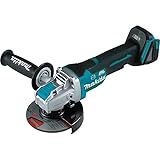
The Makita’s variable-speed range is useful when the job calls for less aggression. A lower setting can help with light deburring, controlled blending or work where heat and surface damage are concerns. Its Automatic Speed Change feature increases speed or torque in response to load, but it does not replace choosing the right wheel or keeping a steady hand.
Milwaukee’s advantage is platform choice and, on some versions, the option to use a 5-inch wheel. That extra diameter can cover more surface per pass, but it also changes the tool’s reach and handling. Don’t assume a 5-inch wheel fits every M18 FUEL grinder: confirm the grinder’s rated size, guard and accessories before mounting one.
Control, starting and stopping
Switch design matters during cleanup, especially when you’re making short passes or repositioning around a workpiece. Compare the exact switch type before buying: a paddle switch requires a deliberate grip, while a slide switch can be easier to keep running during a long pass. Neither is automatically safer for every user. A grinder that starts unexpectedly, or that can’t be released quickly, is a poor match for your work habits.
Braking is another model-specific detail. A rapid stop can reduce the wait between passes, but it doesn’t make the wheel harmless immediately. Keep the tool clear of the work and set it down only after the wheel has stopped. Both tools still demand a guard, eye and face protection, hearing protection and gloves suited to the task. Secure the metal so it can’t shift or pinch the wheel.
Battery choice and runtime
Grinding draws sustained power, so a small battery that feels fine in a drill may run down quickly here. A higher-capacity pack generally gives more working time, at the cost of added weight. That weight matters when you’re holding the grinder at shoulder height or making careful passes on a narrow edge. If possible, handle the tool with the battery size you plan to use before committing.
Runtime varies with battery condition, wheel type, pressure and material. Pressing hard does not necessarily remove metal faster; it can bog the motor, heat the workpiece and drain the battery sooner. Let the abrasive do the cutting, and replace a worn or glazed disc rather than forcing it. For repeated heavy grinding, spare batteries or a corded grinder may be more practical than expecting one pack to last all day.
Which one should you buy?
Choose the Makita XAG26 if you own LXT batteries and want variable speed for work that ranges from aggressive cleanup to lighter blending. It’s a sensible choice for repairs and fabrication where adjusting the grinder’s pace is useful, but it is not a shortcut around correct technique.
Choose an M18 FUEL model if you already have M18 batteries, prefer Milwaukee’s available configurations, or want a model rated for a 5-inch wheel. Verify its switch, braking and speed features by model number; those differences can outweigh the brand comparison.
If you only grind metal occasionally, either tool may be more grinder than you need. A corded 4½-inch grinder can be a cheaper choice for a fixed bench or infrequent cleanup where an outlet is close. If cordless convenience is the priority, compare the bare-tool price with the cost of batteries and charger—not just the tool price. Browse 4½-inch cordless angle grinders or 4½-inch flap discs for metal to compare compatible options.
For occasional weld cleanup, the cheaper platform you already own is usually the better buy. For regular work, prioritize a comfortable grip, the switch you can control confidently, and a battery setup that won’t make the tool tiring. Those factors affect the quality of a cleanup pass more than a small difference in advertised power.