What's inside
As an Amazon Associate I earn from qualifying purchases. This post may contain affiliate links at no extra cost to you.
Toolbox Widget Review: Do the Modular Organizers Work?
The Toolbox Widget’s modular organizers can save drawer space when you have a compatible drawer and a mixed set of frequently used wrenches or sockets, but the gain depends on how tightly you can arrange the fittings—not just on how many tools the rails hold. Treat the system as a configurable alternative to fixed trays, rather than a guaranteed space-saving upgrade for every toolbox.
What matters when choosing the system
The key question is whether the rails let you use space that standard trays leave empty. A fixed wrench tray reserves space for a particular set and spacing; a modular rail lets you position individual grippers around your actual tools. That flexibility can help with irregular sets, missing sizes, or drawers shared with other equipment. It can also leave you with unused fittings or awkward gaps if the drawer is narrow or the tool assortment is large.
As an Amazon Associate we earn from qualifying purchases at no extra cost to you.


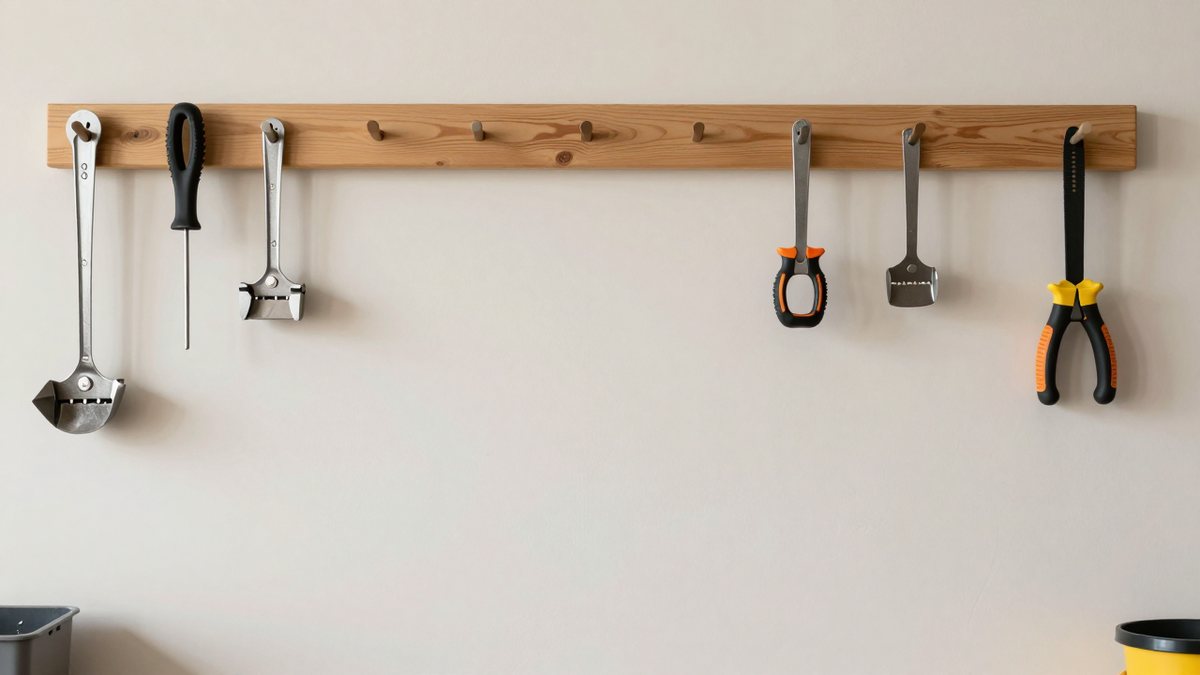
Toolbox Widget’s core idea is a rail-and-fitting layout: grippers hold tools, while modular fittings let you configure the storage around the drawer and assortment. Before buying, confirm the current kit’s rail dimensions, fitting compatibility, and intended tool sizes with the seller. Those details can vary by package, so do not assume a rail or gripper from one kit will fit another.
Space comparison: modular rails versus standard trays
There is no reliable universal space-saving figure without measuring the exact drawer and tool set. The table below gives a repeatable comparison method and an illustrative example—not a claim about measured Toolbox Widget dimensions or performance. Measure the outside footprint occupied by the organizers, including gaps that cannot hold tools.
| Measure | Standard tray example | Modular rail example | How to interpret it |
|---|---|---|---|
| Drawer usable area | 500 × 350 mm = 175,000 mm² | 500 × 350 mm = 175,000 mm² | Measure between drawer walls and account for obstructions. |
| Organizer footprint | 450 × 120 mm = 54,000 mm² | 400 × 90 mm = 36,000 mm² | Illustrative dimensions only; measure the actual loaded layout. |
| Footprint saved | — | 18,000 mm² | (54,000 − 36,000) ÷ 54,000 = 33% less organizer footprint. |
| Remaining drawer area | 121,000 mm² | 139,000 mm² | Area not occupied by the organizer; it may not all be usable. |
The worked example shows how to compare layouts, not what every buyer will get. A smaller footprint is useful only if the saved strip is wide enough for something else, such as a ratchet or extensions. Also check drawer height: a compact layout that makes sockets stand too tall can stop the drawer from closing.
Fit the layout to your situation
| Your situation | Better starting point | Why |
|---|---|---|
| One complete, uniform wrench set; shallow drawer | Standard tray, unless it wastes substantial width | Fixed spacing is simple and keeps the set easy to scan. |
| Mixed brands, missing sizes, or unusually shaped tools | Modular rails | Individual positions can be arranged around the tools you own. |
| Frequently used service drawer | Modular rails, if grippers hold tools securely | Repositioning may improve access, but stability matters more than theoretical density. |
| Low-use home toolbox or tight budget | Keep the existing tray until it causes a real problem | Replacing a functional organizer may not repay its cost in convenience. |
| Drawer with limited depth or a liner that shifts | Measure first; consider a tray or secure the rail layout | Loose organizers can slide, bunch up, or interfere with drawer travel. |
How to check whether it will fit
-
Measure the drawer. Record usable width, depth, and closed height. Subtract space taken by slides, handles, or other obstructions.
-
Lay out the tools you intend to store. Group wrenches by size and sockets by drive size. Include the ratchets, extensions, and adapters that need to share the drawer.
-
Measure the standard-tray footprint. Include empty slots and the clearance needed to lift tools out. A tray’s outside dimensions alone do not show how much space its layout wastes.
-
Plan the rails around real access. Leave enough clearance to pinch or lift each tool. Packing grippers tightly can reduce the footprint but make tools harder to remove.
-
Load and cycle the drawer. Check that tools remain seated when the drawer opens and closes, and that nothing contacts the drawer above. Reposition fittings before treating the layout as finished.
Ownership trade-offs
Modularity is most valuable during setup and when the tool collection changes. If you replace a wrench or add a different socket size, you may be able to move fittings rather than replace an entire tray. The trade-off is that each added or repositioned part creates another interface to check. Confirm that grippers are compatible with the tool’s shape and size; a fitting that works for a straight wrench may not hold a bulky or unusually shaped handle equally well.
Dust, oil, and shop debris can collect around rails and fittings. Periodically remove the tools, brush or wipe the organizer, and check for cracked, loose, or distorted grippers. Avoid forcing a tool into a fitting that is too small: repeated strain can loosen the hold or damage the fitting. If the loaded rail shifts inside the drawer, address the movement rather than relying on tighter tool packing to keep it in place.
For cost, compare the price of the specific kit and any extra fittings you need with a standard tray in your market. A modular system can cost more than a basic fixed organizer, and unused fittings do not add value. Its practical return is less time searching, easier reconfiguration, or space freed for another tool. If the new layout saves 18,000 mm² in the illustrative example but leaves a narrow, unusable gap, the percentage improvement overstates the real benefit.
Verdict
The Toolbox Widget approach makes sense for drawers where a fixed tray poorly matches a mixed or changing tool set, and where the rails can be arranged to create genuinely usable space. It is less compelling for a uniform set that already fits neatly, a drawer with severe height limits, or a toolbox that rarely gets reorganized. Measure first, compare loaded footprints, and prioritize secure tool retention and easy access over the smallest possible layout.