What's inside
As an Amazon Associate I earn from qualifying purchases. This post may contain affiliate links at no extra cost to you.
Our Top Picks


The short answer
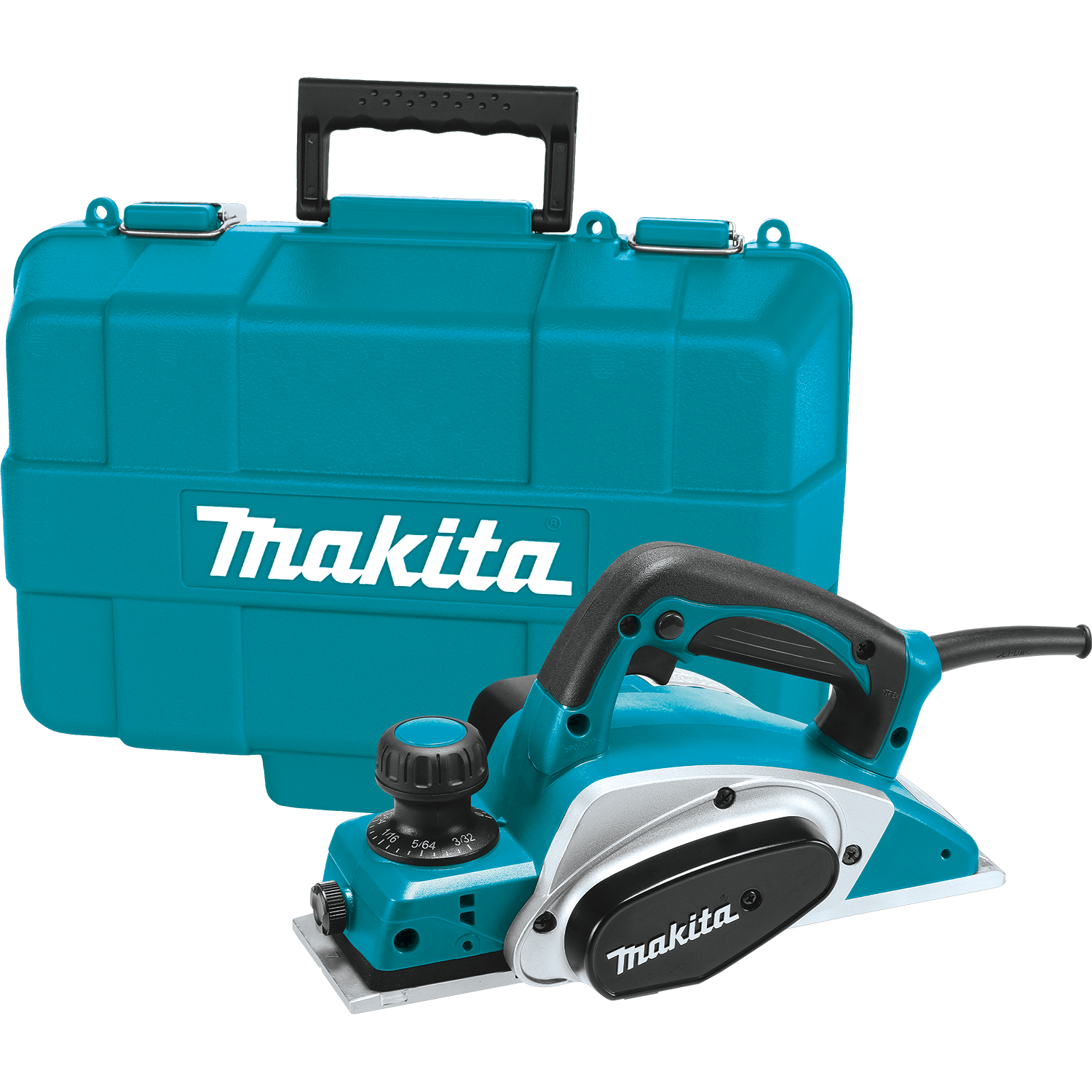
The Bosch PL2632K and Makita KP0800K are both corded 3¼-inch planers with a maximum cut depth of 3/32 inch per pass. Neither is a precision jointer, and neither will guarantee a flat edge just because you run it along one. For an edge that needs to stay straight over its full length, setup and technique matter more than the small differences between these machines.
The Bosch is the more adjustable choice: its cut-depth dial has positive detents, and its included guide fence helps with controlled edge work. The Makita is a straightforward, lighter-feeling planer with a simpler depth adjustment. If you’ll use a planer often and value repeatable settings, lean Bosch. For occasional door fitting, trimming a proud edge, or general job-site work, the Makita is usually enough.
As an Amazon Associate we earn from qualifying purchases at no extra cost to you.

What differs on paper
| Feature | Bosch PL2632K | Makita KP0800K |
|---|---|---|
| Planing width | 3¼ inches | 3¼ inches |
| Maximum cut depth | 3/32 inch per pass | 3/32 inch per pass |
| Motor rating | 6.5 amps | 6.5 amps |
| Speed | 16,500 RPM | 17,000 RPM |
| Depth adjustment | Detented adjustment dial | Rotary depth-adjustment knob |
| Edge-work support | Includes guide fence | Guide fence included with the kit |
Both cut a strip 3¼ inches wide, so a single pass can cover a typical door edge. Their maximum depth is aggressive enough to remove material quickly, but it is not a sensible setting for every pass. On a long edge, a deep cut can make the tool harder to control and leave a rougher surface, particularly near the end of the board.
Which one leaves a flatter edge?
In a careful pass on a straight, stable board, either planer can leave a clean edge. The harder question is whether that edge is straight from end to end. A power planer’s front and rear shoes bridge small bumps, but the tool is short compared with a long board. If you tilt it at the start, lift it at the finish, or press unevenly, you can create a tapered edge or a shallow hollow. A planer can also follow a bowed edge rather than straighten it.
The Bosch has an advantage for repeatability, not a magic flatness advantage. Its detented depth control makes it easier to return to a known setting after test cuts. That helps when you’re removing a measured amount in several passes. The Makita’s simple knob works well too, but you need to read the scale and verify the actual cut on scrap; don’t assume a dial marking equals the exact amount removed from every board.
For the flattest result, mark the edge with pencil, clamp the work securely, and take several light passes. Start the planer with the front shoe flat on the wood, keep pressure over the front shoe at the beginning, then shift pressure toward the rear shoe as you finish. Avoid leaning down hard: that can dig the nose in at entry or round over the end. Check the edge with a straightedge after each pass.
Buying trade-offs
At around 6½ pounds, the Makita is a practical choice for overhead or repeated fitting work where tool weight adds up. It also has a slightly higher no-load speed, but the 500-RPM difference does not settle the flatness question. Blade sharpness, stock condition, and how steadily you guide the tool have more effect on the finished edge.
The Bosch PL2632K’s main case is control and included accessories, rather than a dramatic difference in cutting capacity. Its guide fence is useful for keeping a planer aligned on narrow work, but a fence still needs to be set square and held against the work. If it drifts away from the edge, it won’t rescue a crooked pass.
Check what comes in the specific package before buying: kits and included accessories can vary by retailer. Also factor in replacement blades and dust collection. Both machines can make a lot of chips quickly; a dust bag fills fast, and a shop vacuum or dust extractor is more practical for sustained work. Wear eye and hearing protection, and unplug the tool before changing or checking blades.
Which should you buy?
Choose the Bosch if you expect to plane often, want more repeatable depth settings, or plan to use the included fence for recurring edge work. It is the better fit for a woodworker who makes multiple controlled passes and wants a more deliberate adjustment system.
Choose the Makita if the job is occasional and mostly involves fitting doors, easing edges, or removing a modest amount of material. It has the same width and maximum cut depth, and the cheaper option is perfectly reasonable when you don’t need frequent depth changes or the Bosch’s adjustment features. Compare current prices for the Bosch PL2632K and Makita KP0800K, including the accessories in each package.
If the edge must be reliably straight for glue-up or precise joinery, neither hand planer should be your only reference. Use a long straightedge to check your work, or consider a jointer or a suitable hand-plane setup for correcting the full length. These power planers are efficient stock-removal tools; getting a genuinely flat edge still takes a way to measure it.