What's inside
- Quick comparison of the standout claw hammers
- Best all-around: Estwing E3-16C
- Best traditional design: Vaughan & Bushnell 999 16 oz
- Best for vibration control: Fiskars IsoCore 16 oz
- Best premium framing hammer: Stiletto TiBone 14 oz
- Best heavy-duty option: Estwing E3-20C
- Decision guide by situation
- What matters more than the brand name
- Maintenance that extends hammer life
- Related Guides
As an Amazon Associate I earn from qualifying purchases. This post may contain affiliate links at no extra cost to you.
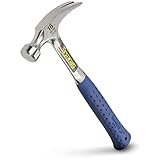
The Estwing E3-16C is the best claw hammer ever made for most people because its one-piece forged-steel construction, balanced 16-ounce head, and permanently fitted shock-reducing grip deliver dependable driving and nail-pulling without the maintenance of a separate wood handle.
That does not make it the best choice for every job. A titanium hammer reduces hand fatigue, a wood-handled model offers a more traditional feel and easy handle replacement, and a heavier framing hammer drives large nails faster. The right decision depends on how often you use a hammer, what you build, and whether striking power or control matters more.
As an Amazon Associate we earn from qualifying purchases at no extra cost to you.


Our Top Picks


Quick comparison of the standout claw hammers
| Hammer | Head or overall weight | Head construction | Handle design | Best suited to | Typical market range |
|---|---|---|---|---|---|
| Estwing E3-16C | 16 oz head | Forged one-piece steel | Steel tang with bonded grip | Best all-around household and carpentry use | $35–$55 |
| Vaughan & Bushnell 999 16 oz | 16 oz head | Forged steel head | Hickory handle | Traditional balance and repairability | $25–$45 |
| Fiskars IsoCore 16 oz | 16 oz head | Forged steel head | IsoCore shock-control handle | Frequent users wanting vibration reduction | $30–$45 |
| Stiletto TiBone 14 oz | 14 oz titanium head | Forged titanium head with replaceable face | Curved wood handle | Professional framing and reduced swing fatigue | $220–$300 |
| Estwing E3-20C | 20 oz head | Forged one-piece steel | Steel tang with bonded grip | Framing, sheathing, and heavy driving | $40–$60 |
Published weights can vary slightly by model generation and whether a manufacturer describes head weight or total tool weight. Check the exact label before ordering, particularly when comparing a 14-ounce titanium hammer with a 16-ounce steel model.
Best all-around: Estwing E3-16C
The E3-16C earns the strongest all-purpose recommendation through balance rather than maximum force. Its 16-ounce forged-steel head is heavy enough for common framing nails, fence repairs, trim support, and general workshop work, while remaining controllable for smaller fasteners. The straight claw gives useful access in tight spaces, and the relatively slim head is less cumbersome than many dedicated framing hammers.
Its head and handle are forged as one piece, eliminating the separate head-to-handle joint that eventually loosens on some conventional hammers. The main ownership advantage is durability: there is no wooden eye to dry out, no wedge to reseat, and no fiberglass handle to split at the head. The grip can still wear, become slick, or tear after years of hard use, but the structural hammer is usually still serviceable.
The trade-off is feel. One-piece steel transmits more impact vibration than titanium or a well-isolated composite handle. Users who drive hundreds of nails daily may prefer a lighter titanium model or the IsoCore design.
Best traditional design: Vaughan & Bushnell 999 16 oz
The Vaughan & Bushnell 999 is a strong choice for anyone who values the lively feel of a hickory handle. Hickory absorbs and flexes under impact in a way that many steel-handled tools do not, and its gradual taper gives the hammer a natural, forgiving balance. The 16-ounce head is a practical middle ground for repairs, cabinetry support work, framing, and ordinary construction.
A replaceable handle is its greatest ownership advantage. If the hickory becomes cracked, loose, or badly worn, the head can normally be fitted with a correctly sized replacement rather than discarding the entire tool. This requires more care than a one-piece hammer: keep the handle dry, inspect the eye and wedges, and stop using it if the head moves.
Hickory is not indestructible. Striking steel, prying sideways with the claw, or repeatedly hitting the handle against framing can create damage. The claw is a nail puller, not a general-purpose wrecking bar.
Best for vibration control: Fiskars IsoCore 16 oz
The Fiskars IsoCore 16-ounce claw hammer is aimed at users who want steel-head durability without a bare steel tang in the hand. Its handle incorporates a shock-control system intended to reduce transmitted vibration, and its grip has a pronounced shape that helps prevent sliding during repeated swings.
It is a sensible option for renovation, deck repair, and maintenance sessions where the hammer is used for longer periods but a professional titanium tool is difficult to justify. The head has enough mass for general construction, and the claw provides useful leverage for removing ordinary nails.
Its molded handle is not replaceable in the same simple way as hickory. Inspect the area around the head after heavy use, especially if the tool has been used for prying or struck against hard metal. Vibration reduction also does not make poor technique safe: use the correct hammer for the nail and keep the striking face aligned.
Best premium framing hammer: Stiletto TiBone 14 oz
The Stiletto TiBone 14-ounce hammer is the specialist choice when a user drives large quantities of framing nails and values low swing weight. Titanium is lighter than steel, so a 14-ounce titanium head can feel quicker and less tiring than a similarly effective steel framing hammer. The model’s replaceable steel face is important because the striking surface is a wear item rather than a permanent part of the expensive head.
The milled face improves grip on framing nails, while the curved claw provides useful pulling leverage. Its cost is difficult to justify for occasional household repairs, but the calculation changes for daily use. Suppose the hammer costs $260 and is used for 2,000 workdays: the tool cost is $0.13 per day before replacing the face or handle. For a homeowner who uses it 20 days over ten years, the same purchase costs $13 per use, making a $40 steel hammer the more rational buy.
Titanium is not permission to strike hardened objects, pry aggressively, or hit the hammer with another hammer. Keep a replacement face available and replace it when the striking surface becomes damaged or excessively mushroomed.
Best heavy-duty option: Estwing E3-20C
The E3-20C uses the same one-piece steel concept as the E3-16C but adds four ounces of head weight. That extra mass helps with framing lumber, sheathing, landscaping stakes, and large nails where a lighter hammer requires more swings. It also increases fatigue and makes delicate work less precise.
Choose it when heavy driving is a regular task, not simply because a larger number sounds more powerful. For trim, furniture assembly, small repairs, and occasional picture hanging, the 16-ounce model is easier to control and less likely to damage the workpiece.
Decision guide by situation
- One hammer for home repairs: Choose the Estwing E3-16C. It has the broadest combination of strength, manageable weight, and low maintenance.
- Lowest sensible budget: Choose the Vaughan & Bushnell 999 16 oz. Its replaceable hickory handle can extend ownership if maintained properly.
- Frequent renovation or maintenance: Choose the Fiskars IsoCore 16 oz if vibration and grip comfort matter more than traditional balance.
- Professional framing: Choose the Stiletto TiBone 14 oz when reduced swing fatigue can repay the premium; otherwise choose the Estwing E3-20C for lower initial cost.
- Tight storage or smaller hands: Prefer a 16-ounce general-purpose hammer with a standard-length handle over a long framing hammer. A compact tool is easier to control in cabinets, closets, and interior work.
- Occasional large nails: Keep the E3-16C and use a nail set or a heavier hammer only when necessary. Buying a 20-ounce tool for one annual project adds bulk every other day.
What matters more than the brand name
Striking face: A smooth face is less likely to mark finished wood but can glance off a nail head more readily. A milled face grips nails better during framing but leaves a textured impression if the hammer misses.
Claw geometry: A straight claw reaches into narrow gaps and is versatile for pulling nails. A curved claw generally offers more direct leverage. Neither claw should be twisted sideways under heavy load; that can bend the claw or damage the surrounding material.
Balance: Hold the hammer near the end of the handle and make a controlled practice swing. The head should carry momentum without forcing the wrist to correct its path. A heavier head is not automatically more efficient if it causes inaccurate strikes.
Handle durability: Steel and composite handles resist splitting but can transmit shock or become difficult to repair. Hickory offers excellent feel and replaceability but needs inspection. On any model, examine the grip, head, claw, and striking face before use.
Maintenance that extends hammer life
- Wipe off moisture and construction dust after use, especially around the claw and striking face.
- Lightly remove surface rust from exposed steel with a rust eraser or fine abrasive; do not grind away the face geometry.
- Check that a wood handle and head remain tight before every substantial job. Retire the tool if the head shifts.
- Replace a damaged titanium face or worn grip rather than continuing until the underlying head is damaged.
- Store the hammer dry and do not leave it outdoors, in a damp tool bag, or resting on the striking face.
For most buyers, the Estwing E3-16C remains the best claw hammer ever made in the practical all-around sense: durable construction, useful leverage, balanced power, and little maintenance. Choose the Vaughan for traditional repairable craftsmanship, the IsoCore for comfort, the TiBone for professional high-volume framing, and the E3-20C when heavier driving is the priority.