What's inside
As an Amazon Associate I earn from qualifying purchases. This post may contain affiliate links at no extra cost to you.
Our Top Picks


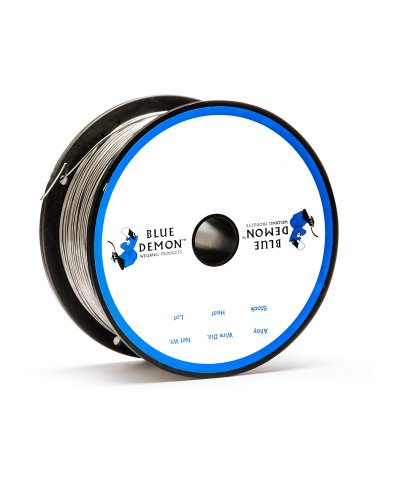
Best Stainless Steel Flux-Core Welding Wire
The best stainless steel flux-core welding wire is the classification that matches your base metal and job: choose E308LT1-1 for common 304 stainless, E316LT1-1 for molybdenum-bearing 316, and E309LT1-1 for joining stainless to carbon steel or handling dissimilar metals. Confirm the exact classification, diameter, shielding-gas requirement, and polarity on the manufacturer’s data sheet before buying—“stainless flux-core” alone is not a complete specification.
Choose by the metal and application
Flux-core wire for stainless steel is not one universal product. The numbers and letters identify the weld metal and operating characteristics. The examples below are common AWS A5.22 classifications; availability and approved operating settings vary by manufacturer. “T1” wires are generally designed for gas-shielded operation, so they are not automatically gasless just because they are flux-cored.
As an Amazon Associate we earn from qualifying purchases at no extra cost to you.


| Classification | Best fit | Common diameters | Typical polarity | What to know |
|---|---|---|---|---|
| E308LT1-1 | 304 and similar 18-8 stainless | 0.035 in (0.9 mm), 0.045 in (1.2 mm), 1/16 in (1.6 mm) | DCEP (electrode positive) | A common choice for general fabrication. The “L” indicates low carbon deposit, which helps limit carbide precipitation in many applications. |
| E316LT1-1 | 316/316L and some corrosive-service fabrication | 0.035 in (0.9 mm), 0.045 in (1.2 mm), 1/16 in (1.6 mm) | DCEP | Contains molybdenum in the deposit to better match 316’s corrosion-resistance requirements. It does not make every weld suitable for every chemical or marine environment. |
| E309LT1-1 | Stainless-to-carbon-steel joints and dissimilar-metal work | 0.035 in (0.9 mm), 0.045 in (1.2 mm), 1/16 in (1.6 mm) | DCEP | Higher alloy content helps accommodate dilution from carbon steel. It is a common transition filler, but joint design and service conditions still matter. |
These are typical size and polarity options, not a guarantee that every brand sells every combination. Check the specific wire label and technical data sheet. Many gas-shielded stainless flux-cored wires call for DCEP, but polarity is not safe to infer from the word “flux-core”; some self-shielded products and other classifications use different settings.
Shortlist by situation
- Repairing or fabricating 304 stainless: Start with E308LT1-1. It is the usual match for 304/304L when the procedure and service conditions support that filler.
- Working with 316 stainless: Choose E316LT1-1 when the weld deposit needs to match 316’s alloy system. For exposure to salt, chemicals, or elevated temperatures, confirm suitability with the project specification rather than relying on the classification alone.
- Joining stainless to mild steel: Consider E309LT1-1. It is commonly used for dissimilar joints, but a qualified welding procedure may specify a different filler based on dilution, thickness, and service.
- Using a small 120-volt machine or welding thin sheet: A 0.035-inch wire can offer more manageable feed and heat input than larger wire, if the machine supports it. Stainless still warps readily; short, controlled welds and a suitable procedure matter more than simply choosing the smallest spool.
- Welding outdoors without shielding gas: Do not assume a gas-shielded T1 wire will work. Look specifically for a self-shielded stainless classification and follow its data sheet; these products are less commonly stocked, and their performance and available grades may be more limited.
Diameter and spool size: what to buy
For occasional repairs, a small spool reduces the amount of specialized wire left unused. Common package sizes include 1 lb (0.45 kg), 2 lb (0.9 kg), and 10 lb (4.5 kg), though exact packaging differs by supplier. A 1 lb spool is convenient for a one-off job; a 10 lb spool makes more sense when the same classification is used regularly. Stainless wire is a specialty consumable, so compare the price per pound and account for storage and shelf life—not just the upfront price.
| Wire diameter | Practical use | Before you buy |
|---|---|---|
| 0.035 in (0.9 mm) | Light fabrication and smaller machines | Confirm your feeder drive rolls, liner, contact tip, and machine range support it. |
| 0.045 in (1.2 mm) | General shop work and many mid-range setups | Often a useful compromise, but it may be too much wire for a low-output machine or very thin material. |
| 1/16 in (1.6 mm) | Higher-deposition work on appropriately powered equipment | Check machine output, feeder capacity, and the wire’s specified operating range; it is not a default choice for small repairs. |
A product listing may show a diameter without telling you whether the wire is compatible with your welder. For flux-core wire welding stainless steel, the complete setup must match: drive-roll groove, liner, contact tip, spool hub, polarity, and—when required—gas and regulator. The wire manufacturer’s voltage, wire-feed-speed, stick-out, and gas recommendations take precedence over generic settings.
What welding stainless steel with flux-core wire changes
Flux-core can be practical where a process needs good deposition or the joint is awkward to reach, but slag and spatter add cleanup. Stainless also loses corrosion resistance when its surface is contaminated or overheated. Keep tools and brushes dedicated to stainless; carbon-steel particles can cause rust staining. Remove oil, paint, and other contaminants, and clean off slag and heat tint using a method appropriate to the alloy and job. For critical corrosion service, consult the applicable welding procedure and post-weld cleaning requirements.
Use the shielding gas specified for the wire. Gas-shielded stainless flux-core products often require a particular gas blend, not simply any gas already on the shop cart. Wind can disrupt shielding outdoors, while changing to a self-shielded wire may require a different polarity and procedure. Never change polarity based only on a generic flux-core rule.
Buying checklist
- Match the filler classification to the stainless grade—or to the dissimilar-metal joint.
- Verify whether the wire is gas-shielded or self-shielded, and buy the specified gas if required.
- Confirm polarity on the exact product data sheet; DCEP is common for the T1 examples above, not universal.
- Choose a diameter your welder and feeder can run, then verify the matching consumables.
- Pick a spool size that fits expected use. Keep the wire dry, covered, and clean; moisture or contamination can impair feeding and weld quality.
- Follow the product’s operating ranges and the job’s welding procedure, especially for pressure, structural, food-contact, or corrosive-service work.
For most routine 304 work, E308LT1-1 is the starting point; for 316, look at E316LT1-1; and for stainless-to-carbon-steel joints, E309LT1-1 is a common candidate. The best stainless steel flux-core welding wire is ultimately the one whose classification, shielding method, diameter, and polarity all match the metal and the machine.