What's inside
As an Amazon Associate I earn from qualifying purchases. This post may contain affiliate links at no extra cost to you.
Our Top Picks
 Qnkaa Flexible Ratchet Wrench Set 12pcs 8-19mm Spanner12-Piece Metric Set10 x 4 x 3 inches4.2 poundsCheck on Amazon
 VEVOR 24-piece Ratcheting Wrench Set with 180° FlexMetric&SAE13.39 x 9.84 x 3.31 inches9.57 PoundsCheck on Amazon


Best flex head ratchet wrench set: the right pick depends on access and load
The best flex head ratchet wrench set for most home mechanics is a metric combination set with a locking flex head, roughly 72 teeth or more, and enough handle length to reach common fasteners without forcing the wrench. Choose a compact, non-locking set for very cramped spaces; choose longer handles and fewer, sturdier teeth when breaking loose stubborn fasteners is the priority.
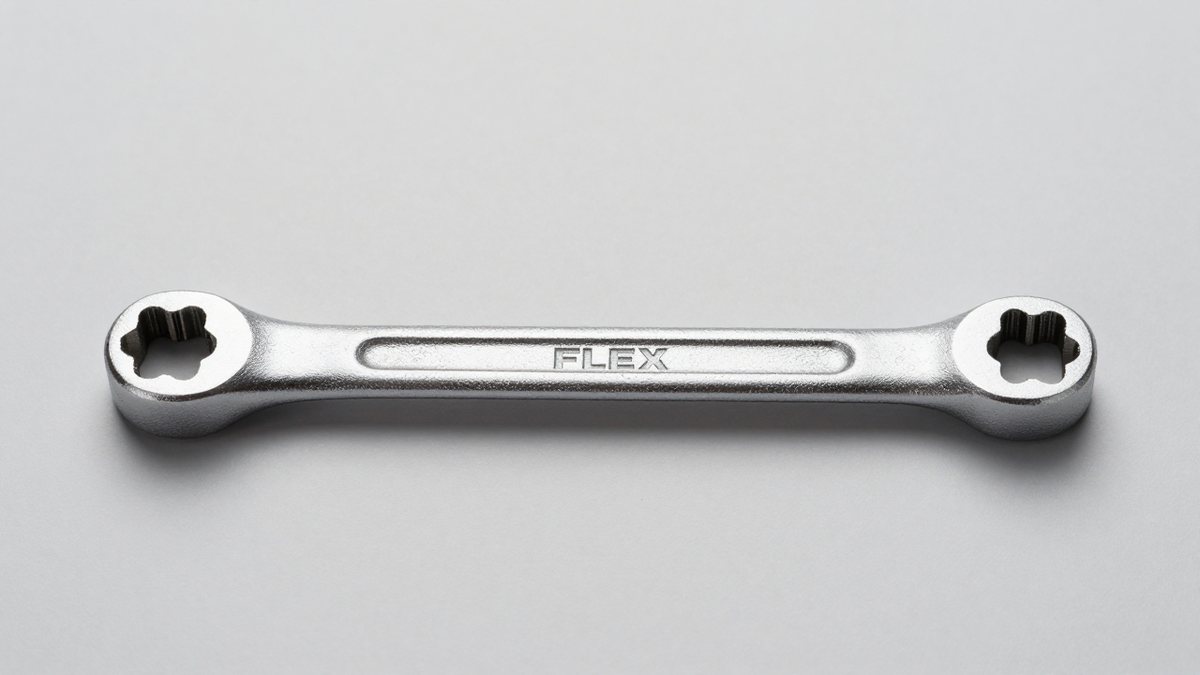
Flex-head ratchets solve an access problem, not every access problem. The head pivots to approach a fastener at an angle, while the ratcheting box end lets you swing the handle through a limited arc. The useful comparison is how well a set balances that flexibility with a head that stays put, manageable tooth spacing, and sizes you will actually use.
As an Amazon Associate we earn from qualifying purchases at no extra cost to you.



Compare the features that matter in tight spaces
| Set type | Typical sizes | Typical tooth count | Handle length | Best for | Main trade-off |
|---|---|---|---|---|---|
| Compact flex-head metric | 8–19 mm | 72–90 | About 140–220 mm, size-dependent | Engine bays, cabinets, and close-clearance work | Shorter handles offer less leverage |
| Standard-length locking flex-head metric | 8–19 mm or 8–22 mm | 72–90 | About 170–300 mm, size-dependent | General repair with angled access and repeatable positioning | Locking heads may be bulkier |
| Long-handle flex-head metric | 10–19 mm or 10–22 mm | 72–144 | About 200–350 mm, size-dependent | Recessed fasteners and added reach | Long handles need more swing room and can overload a small fastener |
| SAE flex-head set | Typically 1/4–3/4 in | Commonly 72–90 | Varies by size | Older vehicles, machinery, and inch-size hardware | Does not replace metric sizes; check for gaps in the range |
These are comparison ranges, not specifications for one particular set. Manufacturers vary the length, tooth count, and size coverage by model. Verify the actual product chart before buying, especially if you need a particular size or an SAE/metric combination.
Head articulation and locking
A free-moving flex head can fold quickly to the angle you need, but it may flop while you position the wrench or start a fastener one-handed. A locking head holds a selected angle, making it easier to keep the handle clear of a nearby obstruction. The mechanism adds parts and can make the head wider, so it is not automatically better for the narrowest gap.
Check whether the head locks at a few indexed positions or at multiple angles, and whether the release is accessible when the wrench is installed. If the working angle changes constantly, a smooth non-locking head may be quicker. If the same awkward angle repeats, locking is often worth the added bulk.
Tooth count: small swing versus strength
More teeth generally mean a smaller handle swing before the ratchet catches again. A 72-tooth mechanism has a nominal 5-degree increment; a 90-tooth mechanism, 4 degrees; and a 144-tooth mechanism, 2.5 degrees. Those figures describe the theoretical increment, not guaranteed performance under load or in every position.
In a cramped space, finer engagement can save repeated repositioning. But tooth count alone does not tell you a ratchet’s strength or durability. For high-torque loosening, avoid treating a fine-tooth ratcheting wrench as a breaker bar. Use a suitable non-ratcheting wrench or breaker bar where access and the fastener allow, then use the ratcheting wrench for turning.
Choose by job, not by the biggest set
| Your situation | What to prioritize | Why |
|---|---|---|
| Occasional household repairs on a budget | Common metric sizes, sturdy case or holder, standard-length handles | A complete, usable range matters more than premium tooth counts you seldom need |
| Frequent automotive or equipment work | Locking heads, clear size markings, broad size coverage, reputable warranty support | Repeated use makes secure positioning and replacement options more valuable |
| Very restricted clearance | Compact heads, fine engagement, slim profile | Head width and the needed swing arc can matter more than handle length |
| Recessed fasteners or reach across an obstruction | Longer handles and a useful flex range | Reach can improve access, provided there is room to move the handle |
| Mixed older and newer hardware | Separate metric and SAE coverage, or a clearly listed combination set | Near-fitting sizes can round fasteners; do not substitute by feel |
As a general market guide, basic sets tend to cost less than premium professional sets; broader coverage, finer mechanisms, locking heads, and warranty support can raise the price. Compare the cost against the sizes and features you will use, rather than paying for a large count of duplicate or rarely needed wrenches.
How to check whether a set will fit your work
-
Measure the fastener and the approach. Confirm the wrench size, then measure the clearance around the nut or bolt head. A flex head cannot compensate for a head that is too wide to enter the gap.
-
Estimate the swing arc. Note how far the handle can move between obstructions. If it is less than about 5 degrees, a 72-tooth ratchet may not re-engage on every stroke; finer teeth can help, though the actual mechanism and load affect engagement.
-
Compare handle length with available room. Longer handles reach farther and provide more leverage, but need a larger sweep. For a recessed bolt with open space beyond it, long handles can help; inside a crowded enclosure, they can become a disadvantage.
-
Pick locking or non-locking based on repeatability. If the head must stay at one angle while you work, prioritize a lock. If the angle shifts often or the gap is extremely narrow, prioritize a slimmer head.
-
Check the size chart and storage. Look for missing sizes in the range you need, a clear metric or SAE marking system, and a holder that keeps the wrenches from getting mixed up.
Strength, care, and ownership realities
In regular use, dirt and dried lubricant can make a ratchet feel rough, while impacts, side-loading, or excessive force can damage the ratcheting mechanism or loosen a flex-head joint. Keep the tools clean and dry, wipe away oil and grit after use, and follow the manufacturer’s care instructions. Do not use a ratcheting wrench as a hammer, extension, or substitute for a breaker bar.
To loosen a stubborn fastener, first make sure the wrench is fully seated and the size is correct. If the fastener does not move with reasonable force, switch to an appropriate tool rather than adding a pipe to the handle. On a flex head, support the wrench so force is applied in line with the handle and does not twist the joint sideways. This protects both the tool and the fastener.
Before purchase, compare the manufacturer’s stated warranty and whether replacement or service is available for the ratcheting mechanism. A set that covers fewer sizes but fits your regular jobs, holds its head angle reliably, and is easy to maintain can be a better long-term choice than a larger set with awkward heads or sizes you will never use.