What's inside
As an Amazon Associate I earn from qualifying purchases. This post may contain affiliate links at no extra cost to you.
Our Top Picks
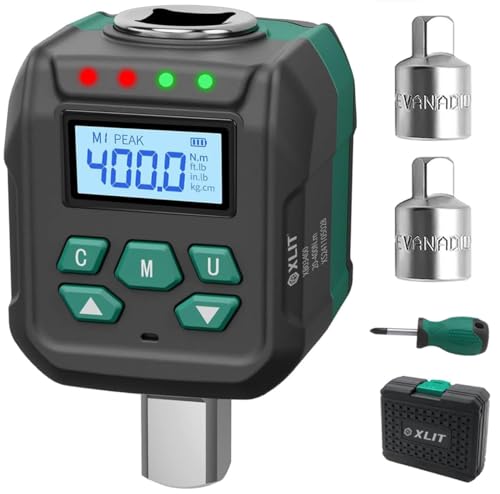 XLIT 1/2" Digital Torque Wrench Adapter 8.8-295 ft-lb8.8-295 ft-lb (12-400 N·m)0.37 poundsCheck on Amazon


Best Torque Wrench Adapters for Accurate Tightening
The best torque wrench adapter is a correctly sized, rigid adapter that fits your fastener and wrench, with its length and angle accounted for before you tighten. For most occasional jobs, a quality crowfoot wrench is the simplest choice; for confined spaces, a compact extension or a digital torque adapter may suit better. The key is not the adapter label—it is whether the setup preserves the torque your wrench indicates.
Quick picks by situation
| Situation | Best fit | What to check | Typical trade-off |
|---|---|---|---|
| Reaching a side-facing nut in open space | Crowfoot wrench | Drive size, jaw size, and effective length | Changes applied torque when aligned with the wrench |
| Working around an obstruction | Short square-drive extension | Drive compatibility and whether the extension is straight | A straight extension generally does not change the lever length |
| Checking torque with a readable display | Digital torque adapter | Torque range, drive size, units, and calibration guidance | Adds setup and battery considerations; does not remove the need for correct technique |
| Frequent, repeatable work | Calibrated wrench with the right fixed adapter | Calibration status, fit, and a repeatable setup | Higher initial cost than a basic adapter |
These are tool categories, not model rankings: specifications and dimensions vary by manufacturer. Match the adapter to the fastener and torque range rather than buying by drive size alone.
As an Amazon Associate we earn from qualifying purchases at no extra cost to you.


How adapter length changes torque
A torque wrench measures force applied through its handle at a known effective length. A crowfoot placed in line with the wrench extends that lever, so the fastener receives more torque than the wrench setting indicates. To target a required fastener torque, reduce the wrench setting using this relationship:
Wrench setting = required torque × (L ÷ (L + A))
Here, L is the wrench’s effective length, measured from the center of the handle grip to the center of the drive, and A is the adapter’s added length from the drive center to the fastener center. Use consistent units.
Worked example: A 450 mm effective-length wrench needs to deliver 80 N·m through a 50 mm inline crowfoot. Set the wrench to 80 × 450 ÷ (450 + 50) = 72 N·m. If you instead set 80 N·m, the idealized result is about 88.9 N·m. Real results also depend on calibration, technique, and the joint, so follow the wrench and fastener manufacturers’ instructions.
Orientation matters
Place a crowfoot at 90 degrees to the wrench handle, when the fastener and surrounding space allow it. In this position, the adapter adds little or no length in the direction of the wrench’s lever arm, so the inline correction is generally unnecessary. Keep the wrench and adapter in the same plane, and avoid an angled or tilted connection that can introduce side loading.
For other angles, the effective added length is approximately A × cos(θ), where θ is the angle between the adapter and the wrench. The corresponding idealized setting is required torque × L ÷ (L + A × cos(θ)). This is a geometry guide, not a substitute for a manufacturer’s method—especially if the connection cannot be held square or the tool instructions specify a different procedure.
Crowfoot, extension, or digital adapter?
Crowfoot wrench
Choose a crowfoot when you need to reach a nut from the side, such as a fitting with limited axial access. Confirm the opening is the right size and profile; a loose or mismatched jaw can slip and damage the fastener. Check the adapter’s effective length and use the torque correction if it sits inline. Open-end crowfoots are convenient but require a fully seated, stable fit.
Square-drive extension
A straight extension moves the wrench away from an obstruction without changing the lever arm in the same way an inline crowfoot does. It typically does not require the crowfoot length correction, provided it remains straight and coaxial. A wobble extension or universal joint introduces an angle and can make torque less predictable; use one only when the tool makers permit it and the joint can be kept aligned. Avoid stacking extensions unnecessarily.
Digital torque adapter
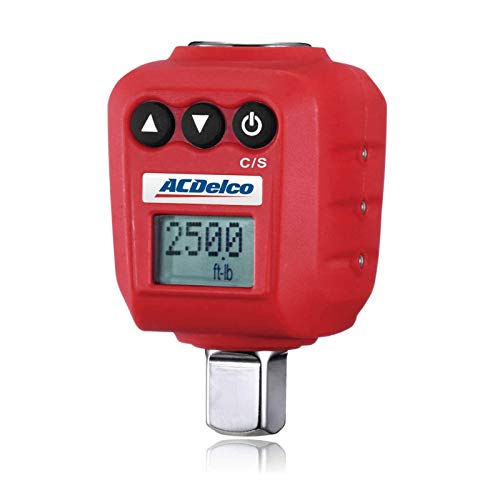
A digital adapter sits between the wrench or ratchet and the socket, displaying measured torque. It can be useful for controlled tightening or checking a wrench, but its accuracy depends on the device’s stated range, calibration, correct setup, and steady loading. It does not automatically compensate for a crowfoot farther down the tool chain. Read the manual for peak/track mode, units, direction of operation, battery type, and any calibration interval. Do not assume a digital display makes an unsuitable drive or adapter combination safe.
Compatibility checks before buying
- Drive size: Match the adapter’s square drive to the wrench and socket, or use a suitable reducer only if the tool manufacturer allows it. Common drive sizes include 1/4, 3/8, 1/2, and 3/4 inch.
- Fastener fit: Match the crowfoot opening and profile to the fastener. For digital adapters, confirm the drive is appropriate for the socket and the intended direction.
- Torque range: Keep the required torque within the wrench or digital adapter’s specified operating range. A tool at the very bottom or top of its range may not be the right choice; consult its accuracy specification.
- Clearance and length: Compare the adapter’s effective length with the space available, then decide whether it will sit inline or at 90 degrees.
- Materials and rating: Use an adapter rated for the application. Do not substitute an impact-rated accessory for a precision torque tool, or use a low-profile adapter beyond its stated capacity.
- Units and calibration: Check whether the tool displays N·m, lb·ft, or another unit, and follow its calibration and storage guidance.
Practical setup for repeatable tightening
- Confirm the target. Use the fastener or equipment maker’s torque specification; do not infer a value from the adapter.
- Dry-fit the setup. Check that the socket or crowfoot seats fully and that the wrench can move without striking nearby parts.
- Choose the orientation. Put a crowfoot at 90 degrees when practical. If it must align with the wrench, measure its effective length and calculate the adjusted setting.
- Load smoothly. Apply force steadily at the wrench’s designated grip point, in the specified direction. Avoid jerking, adding a pipe, or pushing sideways.
- Stop at the indication. With a click wrench, stop at the click rather than clicking repeatedly. With a digital adapter, follow the manual’s alert and peak-reading procedure.
- Reset and store correctly. For an adjustable click wrench, return it to the maker’s recommended storage setting. Keep adapters clean, dry, and free of damaged drive squares or rounded jaws.
What wears first—and how to avoid accuracy problems
On crowfoots, the jaw edges and drive connection take the most abuse; rounded jaws can slip even when the nominal size is correct. On extensions, inspect the square ends for twisting, cracks, and looseness. Digital adapters add batteries and electronic components, so protect the display from impact and moisture and replace batteries as directed. Stop using any adapter that is visibly bent, cracked, loose, or damaged.
Common errors include applying the full wrench setting with an inline crowfoot, confusing a straight extension with a lever-extending adapter, using a universal joint at an uncontrolled angle, and pulling away from the marked grip. For critical or safety-related assemblies, use the specified procedure and a torque tool with current calibration; if the access geometry cannot be kept controlled, choose a different tool arrangement rather than guessing.