What's inside
- For bicycle work, choose a 2–14 Nm torque wrench with a 1/4-inch drive, or a preset tool matched to the fasteners you adjust most.
- What matters when choosing
- Tool types compared
- Choose by the work you actually do
- Matching the wrench to carbon and other bike components
- Where the bicycle tool stops: small engines
- Use it accurately and make it last
- Bottom line
- Related Guides
As an Amazon Associate I earn from qualifying purchases. This post may contain affiliate links at no extra cost to you.
Our Top Picks
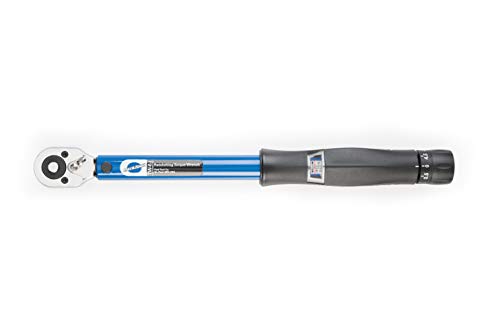 Park Tool TW-6.2 Ratcheting Torque Wrench 10-60Nm DriveOne Size14.75 x 2.75 x 2 Inches1.1 poundsCheck on Amazon
 LEZYNE Torque Drive Portable Compact Bicycle Multi-Piece ToolTorque Drive - 11 Bits9 x 5 x 2 inches0.4 PoundsCheck on Amazon


For bicycle work, choose a 2–14 Nm torque wrench with a 1/4-inch drive, or a preset tool matched to the fasteners you adjust most.
The best torque wrench for bicycle repair is one that stays accurate near the low end of its range and accepts the bits your bike needs. For occasional home maintenance, a preset 5 Nm tool is simple and hard to misread. For a bike with a mix of fastener specifications—or several bikes—an adjustable wrench covering roughly 2–14 Nm is more versatile. Neither replaces checking the torque value marked by the component maker.
What matters when choosing
- Low-range accuracy: A wrench rated from 2 Nm is more suitable for delicate bicycle fasteners than a large automotive wrench whose working range starts much higher. Check the manufacturer’s accuracy specification and the range over which it applies. A tool may be less dependable at the very bottom of its scale.
- Bit compatibility: Many bicycle fasteners use 4, 5, or 6 mm hex bits; Torx T25 is also common. A 1/4-inch-drive tool can use standard 1/4-inch bits, but confirm whether the kit includes them. Some bike-specific tools use proprietary bits or adapters.
- Preset or adjustable: Preset tools trade flexibility for speed and simplicity. Adjustable models handle more jobs but require setting, locking, and reading the scale correctly.
- Handle and release feel: A comfortable grip helps you apply force steadily. Look for a clear click or other distinct signal and enough room to work without striking nearby frame parts.
- Calibration and care: Torque wrenches are measuring tools. Check the maker’s calibration guidance, avoid dropping the tool, and store adjustable click-type models at their recommended setting—often the lowest marked value, not below it.
Tool types compared
The figures below are typical examples of tool formats, not specifications for every model. Always verify the exact range, accuracy, and included bits before buying.
As an Amazon Associate we earn from qualifying purchases at no extra cost to you.


| Tool type | Typical range or setting | Drive and bits | Best fit | Trade-off |
|---|---|---|---|---|
| Preset bicycle torque key | Commonly 4, 5, or 6 Nm | Often supplied with a small set of hex or Torx bits | Routine stem, bar, and seatpost-clamp work when the specified value matches | One setting cannot cover every component |
| Adjustable bicycle wrench | Commonly about 2–14 Nm | Usually 1/4-inch drive; bits may be separate | Home mechanics adjusting different low-torque fasteners | Needs careful setting and more storage space |
| Small-range beam or dial wrench | Model-dependent; select a range centered on bicycle values | Drive and bit adapters vary | Users who prefer to watch a scale rather than rely on a click | Can be awkward to read in tight spaces; avoid parallax when reading a scale |
| Automotive click wrench | Often starts well above delicate bike-fastener values | Commonly 3/8-inch or 1/2-inch drive | Higher-torque jobs when its range matches the specification | Usually too large or poorly ranged for small bicycle fasteners |
Choose by the work you actually do
| Your situation | Practical choice | Why |
|---|---|---|
| Occasional maintenance; several fasteners specify 5 Nm | Preset 5 Nm tool with the required bits | Simple to use and less prone to setting errors |
| Multiple bikes or components with different torque values | Adjustable low-range tool, roughly 2–14 Nm | One tool can cover more of the common low-torque range |
| New to torque tools; wants an uncomplicated routine | Preset tool, or an adjustable model with a clear scale and lock | Fewer ambiguous settings make it easier to follow component instructions |
| Already own a large workshop wrench | Add a bicycle-range tool rather than forcing the large wrench into low settings | A tool is most useful within its specified operating range |
Matching the wrench to carbon and other bike components
Carbon bars, stems, and seatposts
Carbon parts are especially poor candidates for “tighten until it feels secure.” Follow the value and tightening sequence supplied by the handlebar, stem, frame, or seatpost manufacturer. For a multi-bolt stem faceplate, tighten bolts gradually and evenly in the stated pattern; do not fully tighten one bolt while leaving the others loose. Some carbon assemblies call for friction paste, but use it only where the component instructions recommend it. Paste changes friction and can affect the relationship between tightening torque and clamping force.
Check that the wrench’s range includes the specified value, not merely that its maximum exceeds it. For example, a 2–14 Nm tool can suit a 5 Nm instruction, while a tool whose minimum is 10 Nm cannot. Use a properly fitting bit to prevent rounding the fastener, keep the bit straight, and stop at the wrench’s signal. Do not add an extension that changes leverage unless the tool maker explains how to compensate.
Derailleurs and small fasteners
Derailleur mounting bolts, cable clamps, and accessory fasteners can have different limits, and not every screw is intended to be set with a torque wrench. Consult the component documentation rather than applying one familiar value across the whole bike. If a fastener’s specified torque is below your wrench’s range, use an appropriate lower-range tool instead of guessing.
Where the bicycle tool stops: small engines
The best torque wrench for small engine repair depends on the engine’s fastener specifications, which may include values far above typical bicycle hardware. A 2–14 Nm bicycle wrench is useful only for engine fasteners whose required torque falls within that range and within the tool’s stated accuracy limits. For head bolts, crankcase fasteners, or other higher-load joints, choose a wrench sized for the specified range. One small wrench rarely covers both delicate bicycle fittings and the full range of engine assembly work.
Use it accurately and make it last
- Find the correct value. Read the component maker’s instructions; do not assume every bolt on the same assembly shares a limit.
- Check the tool and bit. Confirm the value is within range, the wrench is set correctly, and the bit fits snugly.
- Prepare the joint as specified. Follow instructions about clean or lubricated threads and any assembly paste. These conditions affect clamping force.
- Apply force smoothly. Keep the tool aligned with the fastener and turn steadily. Stop at the click, signal, or specified reading; repeated clicking can add torque.
- Reset and store it properly. For adjustable click-type tools, return the setting to the maker’s recommended storage position. Keep it clean and dry, and have it checked if dropped, damaged, or suspected of giving inconsistent readings.
With regular use, the bits may wear or round first, especially if they are undersized or used at an angle. Replace damaged bits rather than risking a rounded fastener. The wrench’s mechanism and calibration also need care: do not use it as a breaker bar, and do not exceed its rated capacity.
Bottom line
For most home bicycle work, a quality adjustable wrench in the approximate 2–14 Nm range with a 1/4-inch drive offers the most coverage. A preset 5 Nm tool is a sensible, simpler choice if that setting matches the jobs you do and its bits fit your hardware. In either case, the right purchase is the one whose range includes your components’ specified values—and whose instructions you can follow consistently.