What's inside
As an Amazon Associate I earn from qualifying purchases. This post may contain affiliate links at no extra cost to you.
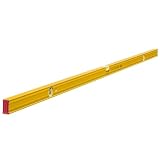
For rough framing, a level has one basic job: tell you whether a wall, stud, header, or sill is actually straight and level. The harder part is surviving drops, sawdust, wet lumber, and being used as a straightedge. The Stabila Type 80A-2 and Empire e75 are both box-beam levels aimed at that work, but they have different strengths.
The short version is that the Stabila is the safer choice when accuracy and long-term durability matter more than price. The Empire e75 is often the better buy for a homeowner, remodeler, or framing crew that needs several levels and accepts a little more risk of replacement. In either case, choose the length carefully. A 24-inch level is handy around studs and cabinets; a 48-inch model is much more useful for checking walls, plates, and long spans.
As an Amazon Associate we earn from qualifying purchases at no extra cost to you.



Our Top Picks
Basic differences
| Feature | Stabila Type 80A-2 | Empire e75 |
|---|---|---|
| Construction | Aluminum box beam with machined measuring surfaces | Aluminum box beam with reinforced frame and impact-resistant features |
| Typical use | Framing, finish carpentry, masonry, general layout | Framing, remodeling, general construction |
| Vial layout | Horizontal and vertical vials, with a layout designed for easy reading | Horizontal and vertical vials, commonly with a center horizontal vial |
| Accuracy focus | Known for tight calibration and consistent readings | Good jobsite accuracy when undamaged and checked regularly |
| Protection | End caps and a robust beam designed for jobsite use | Protective end caps and a reinforced beam intended to take abuse |
| Price position | Usually the more expensive option | Usually the lower-cost option |
Exact features can vary by length and package, so check the listing before ordering. The important point is that both are box levels, not thin torpedo levels. Their wider bodies resist twisting better, and their long reference edges make them more useful for framing lumber.
Accuracy and calibration
Stabila has built its reputation around levels that stay accurate after years of jobsite use. The Type 80A-2’s vials are easy to read, and the solid beam gives you confidence when checking a long stud or plate. That matters when a small error gets repeated across a wall. A wall that is only 1/8 inch out at one stud can create visible problems once drywall, trim, and cabinets are installed.
The Empire e75 can be accurate enough for ordinary framing. A properly calibrated e75 should tell you whether a stud is noticeably leaning, whether a sill is level, or whether a header is close enough for rough work. The trade-off is less confidence after hard abuse. A level can look perfect while its vial or frame has shifted from being dropped on concrete, used as a pry bar, or trapped under lumber.
Check either level before trusting it. Put it on a reasonably flat surface and note the bubble. Flip the level end for end in the same location. The bubble should show the same relationship to the lines. For a vertical check, repeat the test against a straight wall or stud. If the readings disagree, do not compensate by remembering a “bad side.” Replace or recalibrate the level.
Performance in rough framing
The Stabila is especially good when you are setting a long run of studs, plumbing corners, or checking openings before sheathing. Its edge tracks cleanly along lumber, and the vial markings are readable even when you are working at an awkward angle. It is also a sensible choice for contractors who cannot afford to question the tool every time it hits the floor.
The Empire e75 does the same basic tasks at a lower entry price. That makes it practical as a first 24-inch box level, a spare for the truck, or a second level kept near the saw station. For rough framing, the e75 is not automatically a poor choice. If it is straight, undamaged, and checked periodically, it can produce accurate work.
Neither level should be used to force a bowed stud straight or to bridge a large gap in warped lumber. You are measuring the surface under the level, not magically correcting the board. For long walls, use a longer level or a snapped chalk line. A 24-inch level can miss a gradual bow that a 48-inch level exposes.
Durability and handling
Both levels have protective end caps, but end caps mainly protect against routine drops and edge impacts. They do not make a level indestructible. Store it where other tools cannot bend the beam, and wipe mud and adhesive off the measuring edges before they harden.
The Stabila generally earns its higher price through better long-term consistency rather than dramatically different bubble behavior on day one. If your work includes concrete forms, masonry, or repeated commercial framing, that consistency can pay for itself. A damaged premium level is still damaged, however, and leaving it loose in a truck defeats much of the advantage.
The e75 makes more financial sense when the level will see occasional home-project use or when replacement cost matters. Buy the Empire e75 box level from a seller with a clear return policy, then perform the flip test immediately. Do not wait until the wall is framed to discover a bad vial.
Which one should you buy?
Choose the Stabila Type 80A-2 if you frame regularly, work on jobs where rework is expensive, or want one level you can keep for years. It is the better investment when dependable calibration matters more than saving the purchase price. Pair it with a 48-inch box level if you often check walls, plates, or long headers.
Choose the Empire e75 if you are framing a shed, addition, workshop, or occasional remodel and need competent accuracy without paying premium-level money. It is also reasonable for a crew that wants multiple levels available at once. Spend the savings on a shorter level, a long level, and a reliable straightedge rather than expecting one size to do everything.
For either model, avoid buying a suspiciously cheap used level unless you can test it. A level with a bent beam, loose vial, or damaged measuring edge can make every later measurement wrong. The best box level is the one that matches the span you are checking, survives your handling, and passes the flip test before each important layout.