What's inside
As an Amazon Associate I earn from qualifying purchases. This post may contain affiliate links at no extra cost to you.
Our Top Picks


Quick verdict
For mobile trim work, the DeWalt DCS361B is the better choice for most users. Its 7-1/4-inch blade gives it more useful cutting capacity, the controls are straightforward, and the saw is particularly good at baseboard, casing, shoe molding, and small framing cuts.
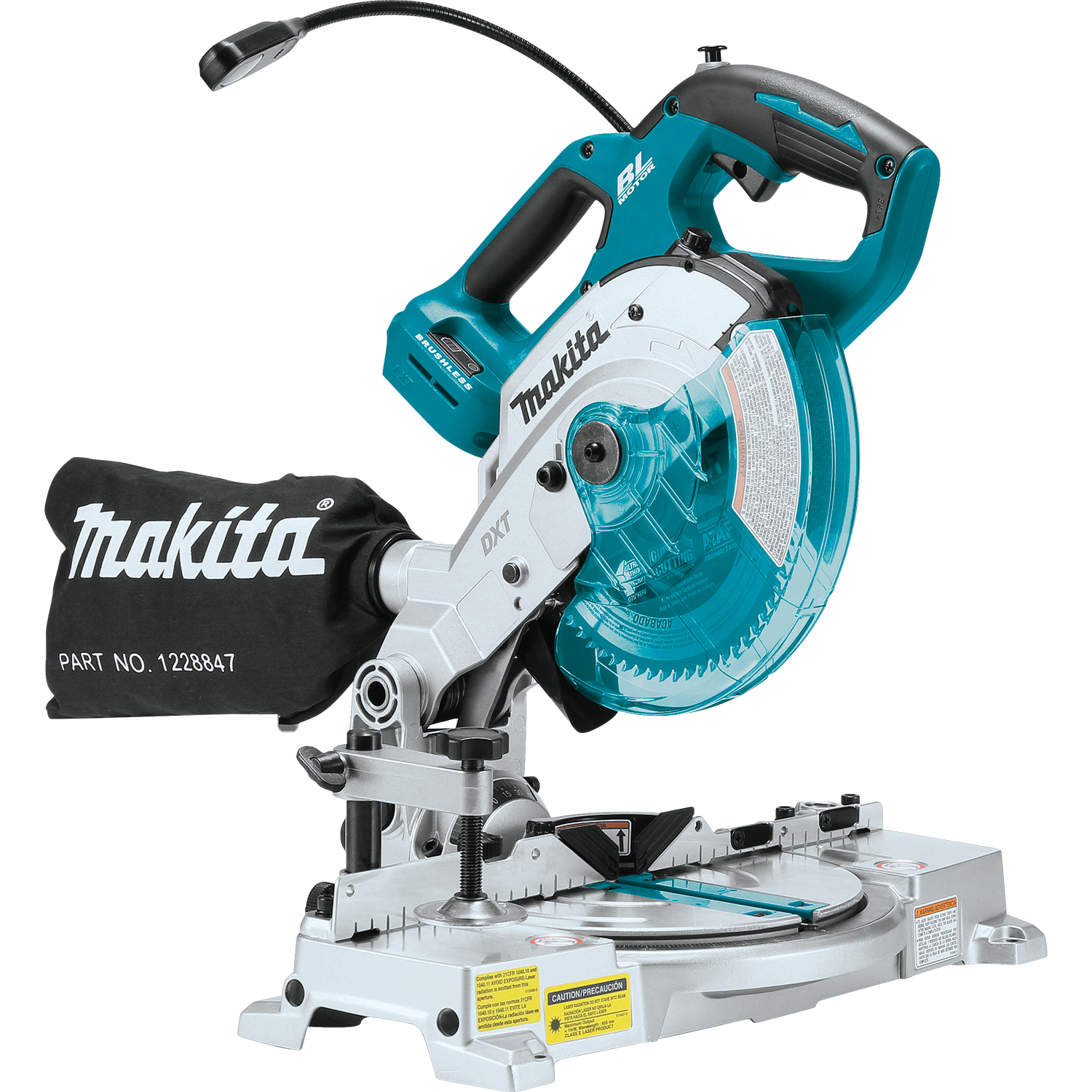
The Makita XSL05 is the more refined saw. It is brushless, spins faster, uses a dual-bevel design, and has a compact direct-drive layout. Those advantages matter when you regularly cut bevels on both sides or already own Makita 18V LXT batteries. For occasional trim installation, however, its smaller 6-1/2-inch blade and higher typical kit cost make it harder to justify.
As an Amazon Associate we earn from qualifying purchases at no extra cost to you.


DeWalt DCS361B vs Makita XSL05: key specifications
| Feature | DeWalt DCS361B | Makita XSL05 |
|---|---|---|
| Blade diameter | 7-1/4 inches | 6-1/2 inches |
| Motor | 20V MAX, brushed | 18V LXT, brushless |
| No-load speed | 3,750 rpm | 5,000 rpm |
| Bevel range | 0–47 degrees left | Up to 48 degrees left and right |
| Crosscut capacity at 90 degrees | About 2 x 8 inches | About 2-5/16 x 6-5/8 inches |
| Drive system | Conventional motor and gearbox | Direct drive |
| Battery platform | DeWalt 20V MAX | Makita 18V LXT |
Published capacity can vary slightly by blade, setup, and the exact material position. Treat these numbers as working limits, not a promise that every thick board will cut cleanly in one pass.
Cutting capacity and trim work
The DeWalt’s larger blade is the practical advantage. It handles a 2 x 8 crosscut at 90 degrees and gives you more room for tall baseboard or wide shelving stock. For typical 3-1/4-inch or 4-1/4-inch casing, both saws have ample capacity. The difference appears with tall baseboard, wide stair parts, or a cut that is slightly out of square and needs a second pass.
The Makita can crosscut common 2 x 4 and 2 x 6 material, but its smaller blade limits depth. That is not a serious problem for finish carpentry if most cuts are molding and trim. It becomes a nuisance when the same saw is expected to cut deck boards, blocking, or wide jamb stock.
Both saws are portable rather than ultralight. Add a battery, blade, and a temporary stand or support table, and either setup becomes tiring to carry through a house all day. The DeWalt is roughly 30 pounds bare, while the Makita is in a similar general class depending on whether the stated weight includes the battery. Neither replaces a genuinely compact saw for ladder work or tight stair landings.
Bevels, adjustments, and accuracy
The Makita wins on bevel convenience. Its dual-bevel head tilts left or right, so you can orient the finished face of a piece without flipping long casing. That saves time when cutting compound angles and reduces the chance of reversing a left- and right-hand piece.
The DeWalt is single bevel, tilting left only. You can still make accurate compound cuts, but the workflow is less convenient. You may need to turn the workpiece around, change the fence setup, or use a miter-and-bevel combination that is less intuitive. For standard door and window casing, this is rarely a deal breaker. For crown molding or repeated angled work, it is a real disadvantage.
Both saws benefit from an aftermarket fine-finish blade. The included general-purpose blade may leave acceptable cuts in construction lumber but can chip painted MDF, PVC trim, or delicate hardwood. A sharp 40- to 60-tooth blade, correct support, and a controlled feed rate matter more than a small difference in motor speed.
Power and battery life
Makita’s brushless direct-drive motor starts smoothly and maintains a clean, high-speed cut. There are no gearbox brushes to wear, and the direct-drive design avoids the gear noise common on many compact saws. Its 5,000-rpm speed is useful with fine-tooth blades, though speed alone does not prevent tear-out.
The DeWalt’s brushed motor is older technology, but it is not automatically a poor performer. It cuts trim cleanly and has enough power for normal crosscuts. Battery life depends heavily on material and blade condition. A compact 2Ah pack keeps the saw lighter for casing work; a 4Ah or 5Ah pack is a better choice for repeated cuts or thicker stock.
Battery compatibility should influence the decision more than small performance differences. If you already own several DeWalt 20V batteries and chargers, the bare DCS361B is often the cheaper purchase. If your shop is built around Makita LXT tools, the XSL05 may be the sensible value even if its shelf price is higher.
Common problems on a mobile trim job
The most common failure is not lack of power. It is poor material support. Long casing can sag away from the fence, producing an angle that looks correct at the saw but opens at the wall. Use a folding stand, roller support, or a temporary level platform. Clamp short, slippery pieces instead of holding them near the blade.
Dust collection is another weak point. Both saws can scatter fine MDF dust, especially indoors. A shop vacuum helps, but the small ports and moving head do not capture everything. Wear eye protection and a suitable dust mask when cutting MDF, PVC, or painted material.
Finally, check the fence and miter scale before trusting production cuts. A portable saw can be knocked out of square during transport. Make a test cut on scrap, verify the angle with a square, and adjust before cutting expensive molding.
Which one should you buy?
Choose the DeWalt DCS361B if you want the better all-around mobile trim saw, need the larger cutting capacity, or already own DeWalt batteries. It is also the better budget choice when the saw will mainly cut baseboard, casing, shoe molding, and occasional dimensional lumber. The cheaper option is entirely adequate for that work.
Choose the Makita XSL05 if dual bevel is important, you frequently cut compound angles, or you already use the Makita LXT platform. Its brushless motor and direct drive are attractive for daily professional use, but the smaller blade means less flexibility outside finish carpentry.
For either saw, budget for a quality blade and a stable portable support system. Those two upgrades usually improve trim results more than moving from one of these saws to the other.