What's inside
As an Amazon Associate I earn from qualifying purchases. This post may contain affiliate links at no extra cost to you.
Our Top Picks
 Klein Tools 935DAG Digital Electronic Level and AngleLevel2.36 x 2.2 x 1.2 inches0.2 PoundsCheck on Amazon
 Klein Tools 935DAGL Digital Level Angle Finder withOne Size4.57 x 2.48 x 1.36 inches0.37 poundsCheck on Amazon

Quick comparison
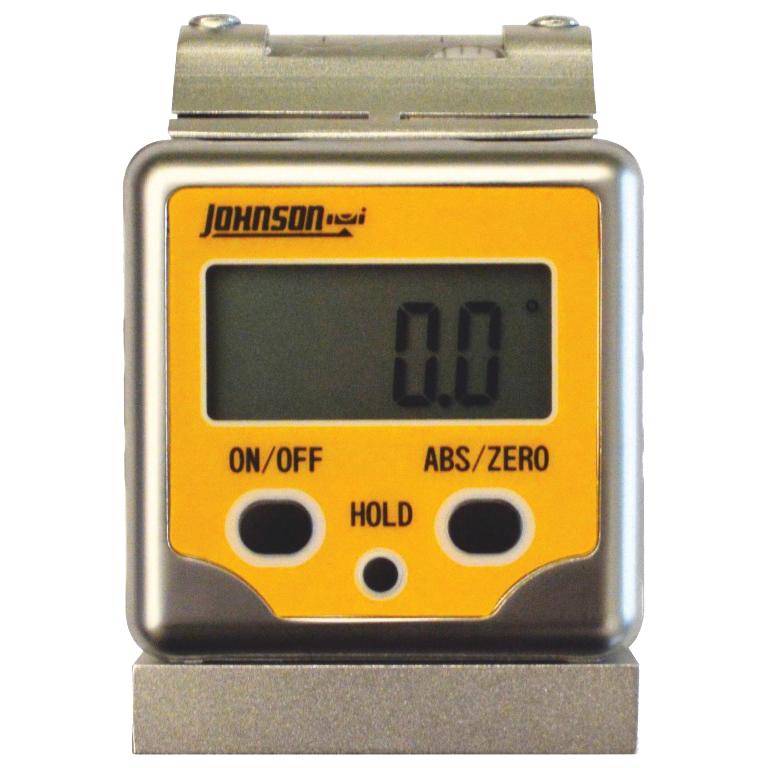
The Empire e950 and Johnson 1886-0400 are digital angle levels for checking and transferring angles, not substitutes for a long spirit level or a precision bevel gauge. Both are aimed at carpenters who want a numerical readout for tasks such as setting a miter saw, checking a roof pitch, or matching an existing angle. The practical choice comes down to the display and controls you prefer, the measurements you need, and whether the tool’s stated accuracy is adequate for your work.
| Feature | Empire e950 | Johnson 1886-0400 |
|---|---|---|
| Tool type | Digital angle level | Digital angle level |
| Typical use | Measuring, checking, and transferring angles | Measuring, checking, and transferring angles |
| What to verify before buying | Current accuracy, range, length, display, and included accessories | Current accuracy, range, length, display, and included accessories |
| Best buying test | Compare the published specifications with the actual job | Compare the published specifications with the actual job |
Specifications and package contents can vary by listing, so check the manufacturer’s current information rather than assuming every seller’s description is complete. In particular, confirm the accuracy, measuring range, physical length, and whether the tool can display or transfer the units you use. Those details matter more than a small difference in branding for most finish carpentry.
As an Amazon Associate we earn from qualifying purchases at no extra cost to you.


What matters for finish carpentry
For trim work, the angle level’s job is usually to measure a real corner or surface and help you reproduce it at the saw. A room corner that looks like 90 degrees may be 88 or 92 degrees. On a small casing return that may be manageable; across a long run of crown molding, the mismatch can show up as an open joint. Measuring the actual angle is more useful than assuming every corner is square.
Look for a display that is easy to read in the position you need to work, buttons you can operate without shifting the tool, and a base that sits securely on the reference surface. A level that rocks on a narrow molding edge can give a misleading result even if its electronics are accurate. Dust, a burr, or dried finish under the base can also change the reading. Wipe the contact faces and take the measurement more than once before committing to a cut.
Angle readings can be reported in different ways, including degrees and pitch formats. Make sure you understand which value the display is showing before transferring it to a saw. A digital reading is not automatically the same thing as the miter-saw setting: a saw’s scale may reference the cut angle differently from the corner angle you measured. Confirm the relationship with a scrap piece and test-fit it.
Empire e950 versus Johnson 1886-0400
These models serve the same basic purpose, so it is sensible to compare the exact versions available at the price you can buy. Don’t assume a more familiar brand name means a better reading, or that a lower price means unusable accuracy. The model’s documented tolerance, construction, and ease of use are what count. If one listing omits the accuracy specification or gives no useful detail on its range, treat that as a reason to check the manufacturer’s documentation before ordering.
The Empire is a reasonable choice when its listed specifications and display suit the job and the price is competitive. The Johnson can be equally sensible if it offers the range, readability, and accuracy you need at a lower cost. For occasional cabinet, baseboard, or casing work, paying more for features you will not use is hard to justify. For repeated fitting where a small error compounds across multiple joints, prioritize a clearly stated tolerance and a repeatable calibration check over a minor price saving.
Neither model can compensate for a poor reference surface. If the tool is longer than the piece you are measuring, it may not sit flat; if it is too short, it may average only a small section of a bowed board. Match the tool’s length to the work, and use a straightedge when you need to distinguish an angled surface from a warped one.
How to use a digital angle level at the saw
First, check the tool on a known reference, such as a verified square surface, and follow its instructions for zeroing or calibration. Place it against the corner or bevel you need to match, keep it still, and record the reading. Repeat the measurement at a second point. If the results differ, the surface may be irregular, the tool may not be seated, or the corner may not have a single consistent angle.
Transfer the measurement to the saw only after confirming how that saw’s scale is referenced. Make a test cut in scrap of the same material and thickness, then fit the pieces in place. A gap at the front or back of a miter can point to a compound-angle issue, a bowed workpiece, or a setup error—not necessarily a defective angle level. For crown molding, also account for the spring angle and whether you are cutting nested or flat; the wall-corner reading alone does not set every saw adjustment.
Which one should you buy?
Choose the Empire e950 or Johnson 1886-0400 that has the clearer published specifications, a readable display for your working conditions, and a base suited to the surfaces you measure. If one is noticeably cheaper but still meets the accuracy and range requirements for occasional trim work, it is the better value. If neither listing makes those basics clear, wait until you can verify them rather than choosing on price alone.
If you only need to check whether a wall or shelf is level, a conventional carpenter’s level is usually simpler and may cost less. If the main task is repeatedly measuring and transferring angles without needing a digital display, a sliding bevel gauge is another practical option. For a digital angle level, buy the one whose verified specifications match your cuts, then validate the setup with scrap before using finished stock.