What's inside
As an Amazon Associate I earn from qualifying purchases. This post may contain affiliate links at no extra cost to you.
Our Top Picks

The short answer
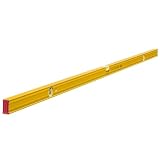
For framing work where a level gets knocked around, rides in a busy tool bag, or needs to stay dependable over years of use, the Stabila Type 80 AS is the safer pick. The Empire e75 Series is a sensible lower-cost choice for general layout and occasional checks, provided you verify its accuracy and handle it with care.
Both are box levels with milled measuring surfaces and easy-to-read vials. The useful difference is less about a dramatic accuracy gap on paper than about protection: Stabila’s reinforced end caps are designed to take impacts, while the e75’s simpler construction asks more of the user. Neither level can compensate for a bad setup or a damaged measuring edge.
As an Amazon Associate we earn from qualifying purchases at no extra cost to you.


At a glance
| Feature | Stabila Type 80 AS | Empire e75 Series |
|---|---|---|
| Construction | Box profile with protective end caps | Box profile with a more basic end treatment |
| Best fit | Regular jobsite use and rough handling | DIY, occasional framing, and careful everyday use |
| Accuracy | Check the specification for the exact length and market version | Check the specification for the exact length and market version |
| Main trade-off | Higher purchase cost | Less impact protection |
| Lengths | Sold in several lengths | Sold in several lengths |
Specifications and included features can vary by length and retailer. Compare the exact versions you are considering; don’t assume a claim for one size applies to every level in the series.
What accuracy means in framing
A level’s stated accuracy is usually expressed as a deviation over a given distance. For example, a specification of 0.5 mm per metre would allow about 1 mm of deviation over 2 m under the stated test conditions. That’s a reference point, not a guarantee that a level will stay accurate after a fall or a year rattling around in a truck.
For framing, you’ll use a box level to plumb studs, check plates, and confirm that a short run is level. A 24-inch level is handy between studs and in tight spaces; a 48-inch level spans more framing and makes small errors easier to see. If you need to check a long wall or a floor, a longer level or a laser may be more useful than either short box level.
Before trusting either brand on a critical layout, do a simple reversal check. Set the level on a reasonably flat surface and note the bubble. Turn it end for end in the same spot. The reading should match. For a plumb check, hold it against a straight surface, note the bubble, then rotate the level 180 degrees while keeping the measuring edge in contact. A changed reading can indicate a bad reference surface, a damaged edge, or a level that needs attention.
Stabila Type 80 AS: better suited to hard use
The Type 80 AS makes the most sense for a carpenter who uses a level daily and can’t afford to discover that it’s out after setting a wall. Its reinforced end caps help protect the profile during ordinary bumps and drops. That protection is useful, but it isn’t armor: a hard strike can still bend the body, damage a vial, or compromise the measuring surface.
The extra cost is easiest to justify when the level gets passed around a crew, stored loose with saws and clamps, or used on multiple jobs every week. If it takes a hit, check it before using it to lay out a long run. The bubble looking intact doesn’t prove the level is still accurate.
For a dedicated framing level, choose the length that matches the work rather than buying the longest option by default. A 48-inch level is a practical general-purpose size; a 24-inch one is easier to use in crowded stud bays and for small assemblies. Browse Stabila Type 80 AS levels by length and check the listed accuracy and vial configuration before ordering.
Empire e75 Series: a practical value option
The e75 Series can be enough for home framing, remodeling, and occasional layout, especially if the level lives in a case or stays on a shelf instead of being tossed into a jobsite pile. A less expensive level that passes a reversal test and is treated carefully can do the same basic checking job as a more costly one.
The trade-off is lower confidence after rough handling. If the level lands on a corner, gets used as a straightedge for prying, or is stored under heavy tools, inspect it rather than assuming it’s fine. Box levels are not pry bars, and using one that way risks bending the frame or damaging the working edge. A small edge defect can make the level rock on lumber and give misleading readings.
For a first framing level or a backup kept at home, the e75 is reasonable if its current specification meets your needs. Look at Empire e75 box levels and compare the exact length and stated accuracy. If you can’t find a clear specification for the version on offer, don’t infer one from a different length in the same series.
Which one should you buy?
Choose the Stabila Type 80 AS if the level will see frequent jobsite use, be shared, or take the occasional bump. Its cost is easier to defend when downtime or rework from a questionable reading would be more expensive than the tool.
Choose the Empire e75 if you’re framing a shed, doing intermittent renovation work, or building a small number of partitions and can store the level carefully. Spending more does not automatically make a framing job straighter. Correct layout, a clean reference surface, and checking the tool matter more than the logo.
If you’re buying only one level, consider whether the job needs a second length. A 48-inch level covers common wall work, while a short level helps where studs, pipes, or finished surfaces restrict access. A carefully checked, suitable-length 48-inch box level is a better buy for a long wall than a short model from a premium line.
Keep either level trustworthy
Wipe the measuring surface before setting it on a plate or stud; sawdust and chips can tilt the level just enough to spoil a reading. Store it so the working edge cannot be dented, and avoid leaving it where it can fall from a ladder or truck bed. Recheck accuracy after a drop, a visible bend, or any unexplained disagreement with a known reference.
For a straight, repeatable framing check, place the level on the same clean surface, read the bubble without pushing on the body, and repeat from the opposite direction. If the readings differ, stop using it for critical layout until you’ve established whether the surface or the level is at fault. That habit matters whichever one you buy.