What's inside
As an Amazon Associate I earn from qualifying purchases. This post may contain affiliate links at no extra cost to you.
Cabinet installation is unforgiving. A case that is only 1/8 inch out of level can make doors appear uneven, create gaps between adjoining boxes, and force you to fight the countertop later. Both torpedo levels and box levels can produce accurate readings, but they are built for different jobs. The more reliable choice depends on whether you are checking a short reference point, spanning between cabinets, or correcting a long run.
As an Amazon Associate we earn from qualifying purchases at no extra cost to you.



Our Top Picks
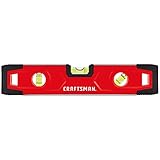
 Klein Tools 935RB Magnetic Billet Torpedo LevelOne Size8 x 1.48 x 0.75 inches0.5 poundsCheck on Amazon

The short answer
For installing cabinetry, a quality 24- to 48-inch box level is the more reliable primary tool. Its longer body averages out small surface variations and gives you a better reference across cabinet runs. A torpedo level is the better secondary tool for tight spaces, checking individual cabinet parts, and working inside narrow openings.
If you can buy only one, choose a rigid box level with a readable vial and a true measurement surface. If you already own a good torpedo level, it is sufficient for small vanity cabinets, wall cabinets, and short sections—as long as you check your work against a longer straightedge or level.
How torpedo and box levels differ
A torpedo level is usually 6 to 12 inches long, with a compact body and commonly three vials: horizontal, vertical, and 45 degrees. Some have magnetic edges, which help when working against steel, but magnets do not provide a benefit on wood cabinets. The short length makes the tool easy to position inside a cabinet or between face frames.
A box level is typically 24 to 48 inches long, with a hollow rectangular body and one or more horizontal and vertical vials. The longer body bridges low and high spots instead of reacting to every small irregularity. That makes it more useful for setting a continuous cabinet line, checking filler strips, and aligning several boxes at once.
| Factor | Torpedo level | Box level |
|---|---|---|
| Typical length | 6–12 inches | 24–48 inches |
| Best cabinetry use | Inside cabinets, tight gaps, short parts | Runs of cabinets, cleats, countertops, long shelves |
| Main strength | Compact and easy to position | Spans irregularities and exposes cumulative error |
| Main weakness | Can show a false sense of accuracy over long runs | May not fit inside narrow cabinet openings |
| Typical price range | About $10–$40 | About $25–$100 or more |
Why length matters during cabinet installation
Suppose two adjoining base cabinets are each 1/16 inch high at one end and low at the other. A 9-inch torpedo level may sit entirely on one cabinet and read level, while the combined run still has a visible slope. A 48-inch box level is more likely to reveal that transition.
Longer is not automatically better. A 48-inch level cannot sit properly inside a 12-inch-deep wall cabinet, and forcing it against a face frame can make the reading unreliable. For that work, a torpedo level or a 24-inch box level is easier to control. The practical solution is to use the long level to establish the reference line, then use the short level to set individual components.
Long levels also need a reasonably straight working surface. If the cabinet edge, shim stack, or wall bows, the level may rock or bridge the wrong points. Check that the tool sits firmly before trusting the vial.
What makes one level more reliable?
Vial accuracy matters more than the label on the body. A cheap level can be accurate, while an expensive one can be damaged or out of calibration. Look for a stated accuracy of roughly 0.029 inch per foot or better for general cabinetry. Professional levels may claim 0.015 inch per foot or better, but that extra specification is only useful if the body remains straight and the vials are protected.
Before using any level, perform a simple reversal test. Set it on a flat surface and note the bubble position. Rotate the level 180 degrees in the same location. If the bubble does not return to the same position, the level is not trustworthy. Repeat the test near both ends. This takes less than a minute and can prevent an entire cabinet run from being installed incorrectly.
Rigid edges, shock-resistant end caps, and clear, high-contrast vials are worthwhile features. A magnetic torpedo level is convenient for metal studs or steel hardware, but avoid dragging its magnet across finished cabinet surfaces if metal debris has collected on it. A level with a milled measuring edge is useful when checking straightness, although it costs more.
The most reliable cabinet-leveling workflow
Start by finding the highest point in the floor for base cabinets. Use a 48-inch box level or a laser level to mark a consistent reference. Do not assume the wall or floor is level; older homes commonly have several inches of variation across a kitchen.
Set the first cabinet, shim it at structural points, and check level from front to back and side to side. Then clamp adjoining cabinets together, align their face frames, and recheck the top edges before driving screws. Use a torpedo level to check the cabinet interior, shelf pins, and narrow rails where the longer level cannot fit.
For wall cabinets, establish a level installation line before lifting the boxes. Once the first cabinet is secured, use the box level across the first and second cabinets rather than checking each one in isolation. That catches a small error before it compounds down the wall.
A magnetic torpedo level is convenient for holding against brackets and cleats, but a magnet should not replace clamping or a temporary support. Keep checking after fastening: screws can pull a cabinet out of alignment, especially when driven near a thin side panel.
Which level should you buy?
Choose a torpedo level if you are installing a single vanity, a few wall cabinets, or working mostly in confined spaces. A good 9-inch model is inexpensive and easy to store. The cheaper option is fine when the job is short and you verify the overall run with a straightedge, long level, or carefully placed chalk line.
Choose a 24-inch box level for general DIY kitchen work if storage and price are concerns. It fits many cabinet openings while providing a meaningful improvement over a torpedo level. For full kitchen runs, a 24-inch box level for cabinet installation is often the best balance.
Choose a 48-inch level when installing several base or wall cabinets, checking long cleats, or working in a room with visibly uneven surfaces. If you want the fastest setup across a large kitchen, a cross-line laser level for cabinet installation can establish reference lines more efficiently, but it still does not replace a physical level for checking individual cabinet parts.
Final verdict
A box level is more reliable for the main task of installing cabinetry because it spans a greater distance and exposes slope between cabinets. A torpedo level is more reliable in tight spaces and is often all you need for a small project. The strongest setup is not either-or: use a long box level to establish the cabinet run, then use a torpedo level to fit, shim, and verify each box. Whatever you buy, test its calibration before trusting it.