What's inside
As an Amazon Associate I earn from qualifying purchases. This post may contain affiliate links at no extra cost to you.
Choosing between SDS-Plus and SDS-Max is mainly a question of hole size, drilling time and how often the tool will be used. SDS-Plus handles most anchor holes and light renovation drilling. SDS-Max is built for larger bits, bigger holes and repeated heavy work—but it costs more, weighs more and is tiring in overhead or tight spaces.
As an Amazon Associate we earn from qualifying purchases at no extra cost to you.


Our Top Picks
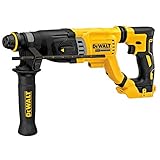
 DEWALT DCH293B 20V Max XR Brushless 1-1/8” L-ShapeOne Size15.3 x 4 x 10.6 inches8.7 poundsCheck on Amazon
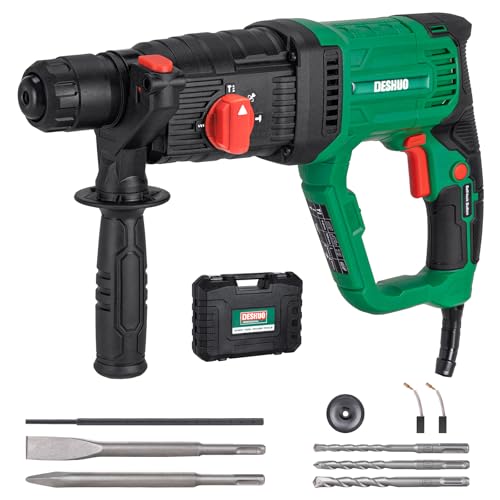 Deshuo 1" SDS-Plus Lightweight Rotary Hammer Drill forSmall15.15 x 8.85 x 3.93 inches7.19 PoundsCheck on Amazon
 VEVOR 1-9/16 Inch SDS-Max Rotary Hammer Drill1-9/16 in18.1 x 4.5 x 10.7 inches16 poundsCheck on Amazon


How the systems differ
SDS describes the bit-shank connection, not a guarantee of a particular drilling speed. SDS-Plus bits have a nominal 10 mm shank; SDS-Max bits have a 18 mm shank. The larger Max connection is made for heavier hammering and larger accessories. The two systems are not interchangeable: an SDS-Plus bit will not lock into an SDS-Max chuck, or vice versa. Avoid relying on an adapter for heavy hammer drilling; it adds length and can become a weak link.
Tool weight and impact energy vary by model, but many SDS-Plus rotary hammers weigh roughly 2–4 kg and deliver around 1–4 joules of impact energy. SDS-Max tools commonly weigh about 5–10 kg and may deliver 5–20 joules or more. These are broad ranges, not a substitute for checking a specific tool’s manual. A heavier hammer hits harder, but the extra mass makes it harder to control and can increase fatigue.
Choose by the work
For holes up to about 16–20 mm in typical concrete, SDS-Plus is usually the practical choice. It suits plastic plugs, modest masonry anchors, pipe clips and many smaller retrofit jobs. Common Plus bits cover roughly 5–20 mm, with some tools and bits handling larger diameters. A contractor drilling dozens of small holes may still prefer Plus because it is easier to carry, position and use for long stretches.
SDS-Max makes sense when the work regularly calls for large-diameter holes, deep drilling, core bits or heavy chiselling. Think of openings for pipework, larger structural fixings, removing thick tile beds, or breaking up a slab. For holes around 25–40 mm and above, a Max tool and suitable bit can be a more sensible setup—especially if the job involves many holes. Check the tool’s stated maximum drilling diameter: the limit depends on the hammer and accessory, not just the shank system.
A single 30 mm hole does not automatically justify buying Max. If large holes are occasional, hiring a suitable tool or paying a concrete-cutting contractor may cost less than owning and maintaining a heavy hammer. For frequent work in the middle ground, compare the maker’s permitted bit range and drilling performance rather than treating 20 mm as a hard boundary.
Quick comparison
| Factor | SDS-Plus | SDS-Max |
|---|---|---|
| Typical job | Small anchor holes, light chiselling and general renovation | Large holes, heavier chiselling and repeated demanding work |
| Shank | 10 mm | 18 mm |
| Typical tool weight | About 2–4 kg | About 5–10 kg |
| Practical advantage | Lower cost, easier handling, broad bit availability | Handles larger accessories and sustained heavy impact better |
| Main drawback | Slower or unsuitable for many large holes and heavy demolition | Higher cost, more fatigue, and less convenient for small precise holes |
Drilling and chiselling trade-offs
For drilling, use a bit diameter and length within the tool’s rated range. A large bit does not make a small hammer a large-hole tool: pushing too hard can bog the motor, overheat the bit and wear the chuck. Let the hammer do the work, clear dust from deep holes as instructed, and pull the bit out periodically to help remove debris. In reinforced concrete, hitting rebar can stall progress or damage a bit. Do not force the bit through steel; stop and reassess the hole location or use an appropriate method for the reinforcement.
For chiselling, SDS-Max gives more capacity for sustained removal, but it is not automatically the better finish tool. Its weight and impact can make it easy to break more concrete than intended, especially near edges, embedded services or fragile masonry. SDS-Plus is more manageable for light tile removal and small channels, though it can become frustrating on thick, hard material. Use the correct chisel, keep both hands on the tool, and wear eye, hearing and respiratory protection. Silica dust from concrete is hazardous; use suitable dust extraction or wet methods where the tool and site allow.
Cost and accessories
The price of the hammer is only part of the decision. SDS-Max bits and chisels generally cost more, take up more storage space and can be harder to find in less common sizes. If the job needs several accessories, check their prices before buying the tool. A well-maintained SDS-Plus kit can be better value than a Max hammer that spends most of its life drilling small holes.
If Plus fits the job, compare SDS-Plus rotary hammers by weight, impact energy, vibration control and whether they include a depth stop or dust-collection option. For repeated large holes or serious chiselling, look at SDS-Max rotary hammers, but check the tool’s maximum bit diameter and accessory compatibility before ordering. Cordless can be convenient for scattered work; corded models avoid battery runtime limits during long demolition sessions.
A practical buying rule
List the hole diameters you expect to drill and how often you will chisel. If most holes are 6–16 mm and demolition is light, buy SDS-Plus. If large holes or heavy chiselling are routine, and you can manage the extra weight, choose SDS-Max. If the work is a one-off—or sits between those patterns—renting is often the cheaper, lower-risk choice. Before drilling renovation concrete, locate pipes, cables and reinforcement, and follow site rules for dust control and structural work.