What's inside
As an Amazon Associate I earn from qualifying purchases. This post may contain affiliate links at no extra cost to you.
For drilling a clean hole in reinforced concrete, the bit matters—but so do the hammer, the hole size and what you do when the tip meets steel. A standard masonry bit can make progress through the concrete and then stall, polish the rebar and overheat. A tougher carbide head may survive that encounter, but no SDS-Plus bit is a guarantee against every bar, aggregate or poorly chosen drill angle.
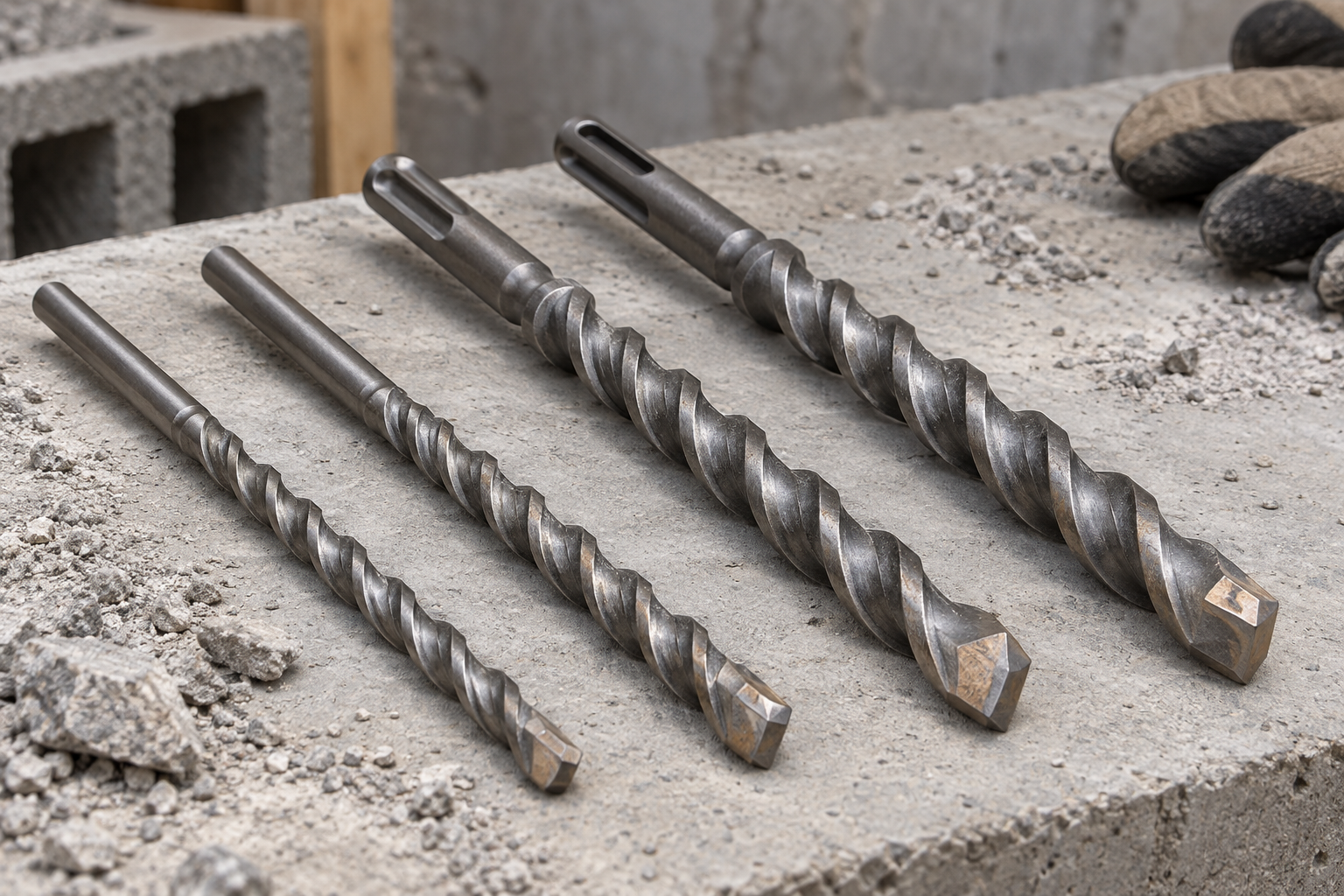
For general-purpose work, the best starting point is a four-cutter, solid-carbide-head SDS-Plus bit from a reputable manufacturer. Its main advantage is durability and steadier cutting if the hole crosses rebar. It costs more than a two-cutter bit, and it still should not be used to deliberately drill structural reinforcement without approval.
As an Amazon Associate we earn from qualifying purchases at no extra cost to you.


Our Top Picks


What “rebar-resistant” actually means
Concrete bits cut aggregate and cement with carbide edges, rather than drilling like a twist bit through soft wood. When a tip reaches steel, the cutting conditions change. The bit may stop advancing, vibrate, or begin making a high-pitched scraping sound. Continuing to hammer can chip the carbide, overheat the steel, damage the bit’s brazed joint or overload the tool.
A four-cutter head has carbide cutting edges arranged around the tip. Compared with a two-cutter head, it is less likely to catch or break an edge when it encounters reinforcement, and it can help produce a rounder hole. “Rebar-resistant” is a useful shorthand for greater tolerance of incidental contact, not a promise that the bit can bore through any reinforcing bar. A bar’s diameter, grade and position all matter.
Bit types compared
| Bit type | Best use | When it meets rebar | Main trade-off |
|---|---|---|---|
| Two-cutter SDS-Plus | Occasional holes in plain concrete or masonry | More vulnerable to edge damage or wandering | Lowest cost; poor choice for repeated reinforced-concrete drilling |
| Four-cutter, solid-carbide head | General anchoring and service holes where reinforcement may be present | More tolerant of incidental contact and less prone to catching | Costs more; still not a steel-drilling bit |
| Dedicated rebar-cutting bit | Approved drilling through reinforcement in a known location | Designed to cut steel as well as concrete, according to its specifications | Specialty purchase; check compatibility, hole diameter and job approval |
Best all-around choice: four-cutter SDS-Plus
For a contractor or homeowner who drills anchors regularly, choose a four-cutter solid-carbide SDS-Plus concrete bit in the required diameter and working length. Look for a stated solid-carbide head, rather than relying only on phrases such as “rebar-ready.” A four-flute body can also move dust out of the hole, but head construction is the key feature for incidental steel contact.
This is the sensible upgrade for repeated holes in reinforced slabs, walls and foundations. It is not automatically worth the premium for a few small holes in a known, unreinforced brick wall. In that case, a basic two-cutter SDS-Plus masonry bit can be adequate. Replace it when it is visibly rounded, chipped or much slower than a fresh bit; forcing a dull bit wastes time and can overheat the hammer.
Match the bit to the tool and hole
SDS-Plus describes the shank, not the bit’s toughness. Confirm that your rotary hammer accepts SDS-Plus; an SDS-Max bit will not fit, and a plain round-shank masonry bit needs a different chuck. Also check the anchor maker’s specified hole diameter. A 10 mm anchor generally calls for its specified 10 mm hole, not a nearby size chosen because the bit is on hand.
Do not confuse overall length with working length. A long bit may reach through thick material, but its exposed length flexes more and is easier to bind. Use the shortest bit that reaches the target depth. For holes near edges, follow the anchor manufacturer’s minimum edge-distance and embedment guidance; a stronger bit cannot prevent concrete from splitting.
How to handle a suspected rebar hit
Use a rebar scanner where practical, especially before drilling a structural slab, beam or column. Avoiding the bar is often safer and faster than cutting it. If the hole suddenly stops advancing, ease off the trigger and withdraw the bit. Clear the dust, inspect the tip and check the location with a scanner. Do not keep pressing hard: that can glaze the tip, heat the bit and enlarge or damage the hole.
If reinforcement is confirmed, stop and check the plans or ask the responsible engineer or site supervisor. Cutting structural rebar without authorization can reduce capacity and may violate project requirements. Where drilling through steel is explicitly permitted, use the specified method—often a dedicated SDS-Plus rebar-cutting bit—and follow its instructions. Do not assume a regular carbide masonry bit is the right tool for that operation.
For normal concrete drilling, hold the hammer square to the surface, use hammer-drill mode and let the bit cut without excessive force. Withdraw it periodically to clear dust, especially in deep holes. Dust trapped at the bottom acts like grit, slows cutting and can leave an anchor hole too shallow. Wear eye, hearing and respiratory protection; concrete dust contains respirable silica, so use on-tool extraction or an appropriate dust-control setup.
What to buy for your job
Choose a four-cutter solid-carbide SDS-Plus bit for routine work in reinforced concrete where occasional rebar contact is possible. Buy the exact diameter and shortest useful length, and treat steel contact as a reason to stop and assess—not as proof that the bit should power through. For occasional holes in plain masonry, a cheaper two-cutter bit is fine. If the job calls for cutting reinforcement, get permission and use a bit specifically intended for that task.