What's inside
As an Amazon Associate I earn from qualifying purchases. This post may contain affiliate links at no extra cost to you.
For cutting nail-embedded wood, a carbide oscillating blade usually lasts longer than a bi-metal blade—but only when it is the right kind of carbide blade and the job involves enough metal to wear out bi-metal teeth. Carbide costs more, cuts more slowly in some wood, and can chip if forced. For one small demolition cut, bi-metal may be the better buy. For repeated cuts through old framing with unknown fasteners, carbide is generally the safer bet for blade life.
As an Amazon Associate we earn from qualifying purchases at no extra cost to you.



Our Top Picks
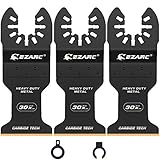
 EZARC Carbide Oscillating Saw Blades for Hardened Metal3-Pack Carbide3.46 x 1.34 x 0.04 inches0 poundsCheck on Amazon


What these blades are made of
Bi-metal blades combine a flexible steel body with hardened steel teeth. They are a general-purpose choice for wood, plastic, and occasional nails. Their teeth can dull or lose sections when they meet screws, hardened fasteners, or repeated metal.
Carbide-tooth blades use hard carbide tips or teeth attached to a steel body. They resist abrasion better, so they can keep cutting through nails and other embedded metal after a bi-metal blade has dulled. “Carbide” is not one uniform product category, though: tooth design and carbide quality vary, and some blades are intended for wood with nails while others target grout, tile, or metal. Check the package for the intended material.
Which lasts longer in nail-embedded wood?
In repeated cuts through wood containing ordinary steel nails, a suitable carbide blade will usually last longer. The advantage grows when the fasteners are frequent, their locations are uncertain, or the wood is dirty and abrasive. A bi-metal blade can still make the cut, but its teeth often dull faster as they strike metal.
There is no reliable universal number of cuts per blade. A few clean cuts through softwood with one or two nails are very different from demolition in old framing with dense nails, grit, and occasional screws. Fastener type matters too: hardened screws can be particularly hard on teeth, and neither blade should be treated as immune to damage.
Blade comparison
| Factor | Carbide-tooth blade | Bi-metal blade |
|---|---|---|
| Life in nail-embedded wood | Usually longer, especially with repeated metal contact | Good for light or occasional contact; teeth wear faster in sustained demolition |
| Purchase cost | Higher | Lower |
| Cutting behavior | Can cut aggressively, but some versions feel slower or rougher in wood | Often a practical, quick general-purpose cut in wood |
| Common failure | Tooth or tip damage from twisting, impact, or unsuitable material | Dull, missing, or damaged teeth after repeated hits on fasteners |
| Best fit | Frequent demolition or unknown nail locations | Small jobs, known light fastener loads, and general use |
Compare cost per job, not just price per blade
A carbide blade can be the cheaper choice over a long demolition job if it replaces several bi-metal blades and saves time spent changing them. But if you need only a handful of cuts, the higher upfront cost may not pay back. For occasional repairs, a bi-metal oscillating blade for wood with nails is a reasonable starting point.
For repeated cuts where nails are unavoidable, look for a carbide oscillating blade rated for wood with nails. Compare the stated application, blade width, and tooth pattern rather than assuming every product labeled carbide is suited to framing demolition.
What shortens blade life
Heat, pressure, and side-loading can ruin either blade. Let the oscillating tool do the work instead of leaning hard into the cut. Excess pressure raises heat and may slow the cut; twisting the tool while the blade is buried can break teeth or damage the blade mount. A wide blade is steadier for a straight cut, while a narrow blade can be easier to steer into a confined area.
Dust and grit also matter. Sand, mortar, and dirt in reclaimed wood add abrasion, and embedded screws or hardened fasteners may be tougher than ordinary nails. If the cut suddenly slows, smells hot, or starts wandering, ease off and inspect the blade. A bi-metal blade with visibly rounded or missing teeth is due for replacement. On carbide, look for chipped or missing tips; a blade that still looks intact can also be worn enough to cut poorly.
Cut safely and reduce wasted blades
Before cutting, remove loose nails where practical and check both sides of the work for hidden wiring, plumbing, and fasteners. Clamp the piece if possible. Wear eye protection, keep hands clear of the blade path, and follow the tool maker’s instructions. Oscillating blades can get hot; let the tool stop before changing blades, and let a hot blade cool rather than grabbing it.
For a long cut through framing, use a blade long enough to reach the material without burying its teeth against a surface behind it. Keep the tool square to the cut and avoid rocking it sideways. If the blade is smoking, cutting slowly despite light pressure, or leaving a ragged path, pause and check for a dull blade or an unexpected fastener instead of pushing harder.
Which one should you buy?
Choose carbide if you expect repeated nail contact, are dismantling old framing, or cannot confidently locate every fastener. Its higher price makes sense when longer service life and fewer blade changes matter. Choose bi-metal for a short repair, occasional cuts through wood with a few known nails, or when you want a less expensive general-purpose blade and can replace it if needed.
If you are unsure, buy one blade suited to the material rather than a large multipack before testing the job. Make a short cut in a representative section, watch how quickly the blade heats and slows, and inspect the teeth. That test gives a more useful answer than the label alone—especially in reclaimed wood, where one hidden screw can change the job.