What's inside
As an Amazon Associate I earn from qualifying purchases. This post may contain affiliate links at no extra cost to you.
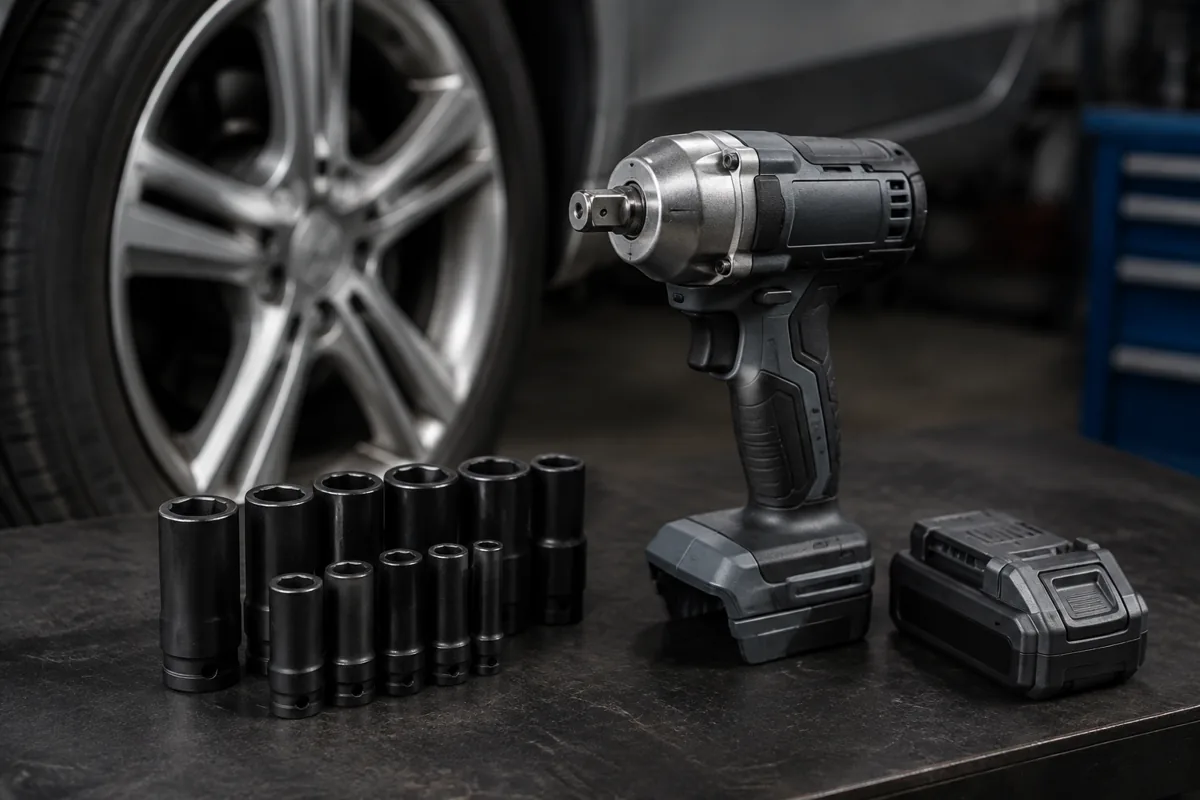
For routine wheel service, both the Ryobi P262K and Craftsman CMCF921 sit in the useful middle ground between light-duty compact impacts and bulky high-torque guns. They can remove many lug nuts, but they are not substitutes for a calibrated torque wrench or a heavy-duty impact when dealing with rusted truck hardware.
As an Amazon Associate we earn from qualifying purchases at no extra cost to you.


Our Top Picks
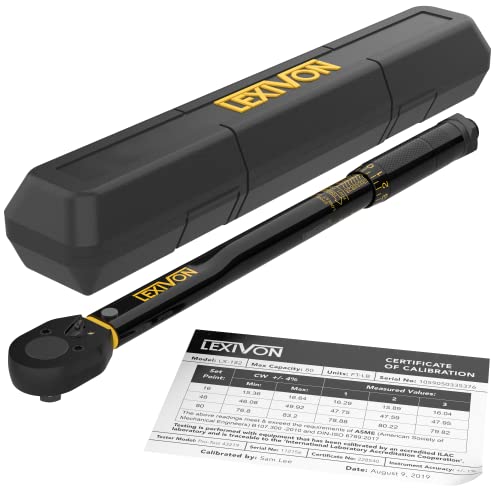 LEXIVON 3/8-Inch Drive Click Torque Wrench 10~80 Ft-Lb/13.6~108.53/8"DR. 10-80 FT-LB2.5 x 3 x 14 inches2.3 PoundsCheck on Amazon
 LEXIVON Torque Wrench 1/2-Inch Drive Click 10~150 Ft-Lb/13.6~203.51/2"DR. 10-150 FT-LB2.5 x 3 x 18 inches3 PoundsCheck on Amazon
 EPAuto 1/2-inch Drive Click Torque Wrench1/2 Inch Drive (10-150 ft.-lb.)17.4 x 3.3 x 2.6 inches3.5 poundsCheck on Amazon
 VEVOR 1/2" Drive Impact Socket Set 65 Piece1/2" 65 PCS21.06 x 16.85 x 2.68 inches31.99 PoundsCheck on Amazon
Quick verdict
The Ryobi P262K is the stronger choice if you want more reserve power, a larger battery in the kit, and better odds of removing stubborn lug nuts. Its published output is up to 600 ft-lb of breakaway torque and 450 ft-lb of fastening torque.
The Craftsman CMCF921 is a sensible buy for ordinary car and crossover wheel work. It is rated at up to 350 ft-lb of breakaway torque and 250 ft-lb of fastening torque. That is enough for many correctly installed lug nuts, while its smaller body can be easier to handle in a driveway.
If both are close in price, the Ryobi offers more capability. If you already own Craftsman V20 batteries and mainly rotate tires on passenger vehicles, the CMCF921 is the cheaper and more practical path.
Ryobi P262K vs Craftsman CMCF921 specifications
| Feature | Ryobi P262K | Craftsman CMCF921 |
|---|---|---|
| Drive size | 1/2 inch | 1/2 inch |
| Battery platform | Ryobi 18V ONE+ | Craftsman V20 |
| Maximum fastening torque | 450 ft-lb | 250 ft-lb |
| Maximum breakaway torque | 600 ft-lb | 350 ft-lb |
| Speed control | Four modes | Three speed settings |
| Typical kit contents | Tool, battery and charger | Tool-only versions are common |
Published torque figures are useful for comparing models, but they are not a guarantee. Battery charge, socket condition, fastener corrosion, thread damage, impact duration, and the accuracy of the manufacturer’s test method all affect real-world performance.
Performance on lug nuts
For a normal passenger car, lug nuts are commonly torqued somewhere around 75 to 100 ft-lb. Crossovers and light trucks often fall closer to 100 to 150 ft-lb, though the vehicle manufacturer’s specification is the authority. Either tool has enough power to install lug nuts quickly and remove properly torqued ones.
The difference appears when a lug nut has been over-tightened, exposed to road salt, or installed with an impact without torque control. The CMCF921 may remove these fasteners, but it can also stall after several seconds. The P262K has substantially more breakaway capacity, so it is less likely to leave you reaching for a breaker bar.
Neither tool should be used to force a stuck nut indefinitely. A dead battery, overheated motor, rounded lug nut, or damaged stud can turn a simple wheel change into a repair. If the nut does not move after a few short impact bursts, use penetrating oil where appropriate, a six-point socket, and a breaker bar. On badly rusted hardware, heat may be necessary, but heat around a tire requires care.
Control, speed, and handling
The Ryobi’s four-mode control is useful for wheel work because maximum power is not always desirable. Start in a lower mode for loosening delicate hardware or snugging lug nuts. The tool’s higher settings are better reserved for removal, not final tightening. The Craftsman’s three speed settings provide similar basic control, although the Ryobi gives you more power at the top end.
Both are 1/2-inch impacts intended for larger sockets rather than small fasteners. Use impact-rated sockets, not chrome hand-tool sockets. A standard chrome socket can crack under repeated impact loading and may eject fragments. A short socket is usually best for lug nuts; deep sockets add reach but can flex more and make access awkward.
Size and weight matter during a tire rotation. You may hold the wrench at shoulder height or work around a wheel well for several minutes. The Craftsman’s lower output can be an advantage here: it is less tempting to use excessive power on every fastener. The Ryobi’s extra capability is more valuable on trucks, trailers, and neglected vehicles, but it also demands better control.
Battery platforms and kit value
The P262K is generally sold as a kit with a battery and charger, making it a better starting point if you are not already invested in Ryobi ONE+. Ryobi’s platform also has a very broad range of compatible outdoor, workshop, and household tools.
Craftsman frequently sells the CMCF921 as a bare tool. That is a poor value for a first cordless tool if you must buy a battery and charger separately, but a good deal for someone who already owns V20 equipment. Before comparing sticker prices, check whether each listing includes a battery, its amp-hour rating, and a charger.
For either tool, a 4.0Ah battery is a useful minimum for repeated wheel work. A small 2.0Ah pack can run an impact wrench, but voltage sag and shorter runtime become more noticeable when removing stubborn fasteners. Keep a charged spare if the vehicle is used far from an outlet.
How to use either wrench safely
Break lug nuts loose with the vehicle on the ground, then lift it using the vehicle’s specified jack points and support it with appropriately rated jack stands. Never rely on the floor jack alone. Once the wheel is off, inspect the studs, nuts, wheel seat, and brake components.
When reinstalling, run each lug nut down only until the wheel is seated. Use the impact’s low setting or your fingers to avoid cross-threading. Do not use the impact to final-tighten the nuts. Finish with a 1/2-inch drive click torque wrench set to the vehicle’s specification, tightening in a star pattern.
After driving roughly 25 to 50 miles, recheck the lug torque if the vehicle or wheel manufacturer recommends it, especially after aftermarket wheel installation. Over-tightening can stretch studs, distort brake rotors, damage wheel threads, and make roadside removal difficult. Under-tightening can allow the wheel to loosen.
Which one should you buy?
Choose the Ryobi P262K if you service light trucks, trailers, older vehicles, or wheels that regularly suffer from corrosion. Its extra breakaway torque creates useful margin, and the included battery improves the value for new buyers. Pair it with 1/2-inch impact socket set covering the sizes used by your vehicles.
Choose the Craftsman CMCF921 if your work is limited to normal car and crossover maintenance, you already own V20 batteries, or the tool is meaningfully cheaper. Its 350 ft-lb breakaway rating is not weak for routine wheel service; it simply leaves less reserve when a fastener is seized.
Whichever wrench you choose, budget for a torque wrench and proper impact sockets. Those accessories matter more to wheel safety than a difference of a few seconds in removal time.