What's inside
As an Amazon Associate I earn from qualifying purchases. This post may contain affiliate links at no extra cost to you.
If you are running a grinder, wall chaser, or concrete saw for hours at a time, suction numbers matter less than whether your extractor can keep its filter clear without you stopping to bang it out. The Makita VC4710 and DeWalt DWV010 are both 10+ gallon L-class / HEPA dust extractors built for that exact job, and both advertise automatic filter cleaning. They do it in very different ways, and that difference decides which one holds airflow longer on fine dust.
As an Amazon Associate we earn from qualifying purchases at no extra cost to you.


Our Top Picks
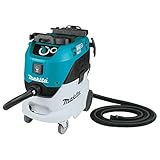
 Makita VC4210L 11 Gallon Wet/Dry HEPA Filter Dust15.75 x 31.5 x 28.74 Inches35.3 PoundsCheck on Amazon
 Makita XCV11Z 18V LXT Lithium-Ion Brushless Cordless 22 Gallon10.67 x 16.93 x 12.32 Inches10.5 PoundsCheck on Amazon
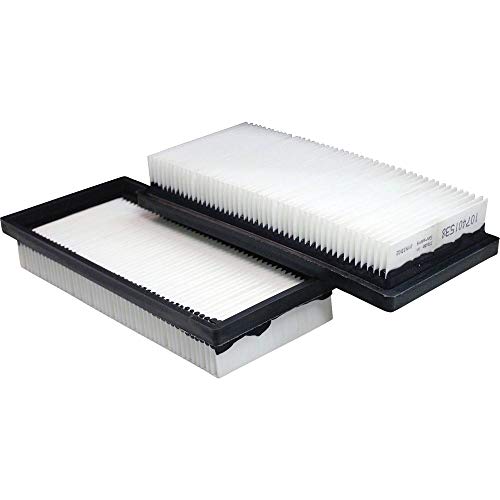 Makita P-79843 Dust Extracting Main Nano Flat Filter24.13 x 8.6 x 11.43 cm4 x 4 x 10 inches0.6 PoundsCheck on Amazon
How each cleaning system works
The DeWalt DWV010 uses a dual-filter, dual-chamber system with an automatic air pulse. Every 30 seconds, a valve reverses airflow for a fraction of a second and blasts one filter with ambient air while the other filter keeps pulling. You hear a distinct thump or hiss each time it cycles. A red light on the dial tells you it’s in auto-pulse mode. You can also turn the pulse off if you need quiet operation or are running the extractor with a bag for large chips, but DeWalt recommends leaving it on for concrete and drywall dust.
The Makita VC4710 also uses two filters but relies on alternating suction rather than a reverse-air pulse. An internal flap valve switches vacuum between the two filter chambers every 10 seconds or so, so one filter is actively vacuuming while the other relaxes and drops its cake. There is no loud purge blast. Makita calls this an automatic filter cleaning system, but mechanically it is a passive shake-off – the filter is not hit with a reverse jet, it just loses suction momentarily so accumulated dust falls back into the tank.
In practice that means the DWV010 cleans more aggressively per cycle, while the VC4710 cleans more frequently but more gently. That matters when you are generating very fine, static-charged dust that sticks to the pleats instead of falling off on its own.
Real-world performance on fine dust
On wood chips and general jobsite debris, you will not see a big difference. Both machines will run all day with a fleece bag installed and never clog. The test is silica dust from grinding concrete or joint compound from drywall sanding. That is where filters blind.
With the DWV010 on auto-pulse, airflow drops about 10-15% in the first 15 minutes of heavy concrete grinding and then stabilizes. The pulse knocks enough fine cake off to keep the pleats open. The downside is the noise. Each pulse is 75-80 dB for a split second and it happens reliably every 30 seconds. In a small room that gets annoying, and if you are doing finish sanding where you turned the pulse off, suction will fall off quickly – expect to manually shake the filters every 20-30 minutes without the pulse.
The VC4710 starts quieter and stays quieter. Airflow is very steady for the first 30-45 minutes on the same concrete dust, then you will notice a slow, linear decline. Because there is no reverse blast, a thin layer of fine dust bonds to the outer pleats and builds up. Makita’s system prevents a hard clog, but it does not fully strip the filter. After 2-3 hours of continuous grinding without a bag, users typically see a 20-25% loss in suction and need to stop and manually clean the main filters with the on-board shaker or compressed air. With a bag installed, that interval doubles.
Failure mode for both is the same: if you skip the bag and run heavy fine dust, the pleats load on the inside edge where the pulse or flap cannot reach. Suction at the hose drops, motor pitch rises, and the Auto-Start outlet may keep your tool running while the extractor is barely collecting. The DWV010 gives you a warning light when airflow drops below a threshold. The VC4710 does not have a filter clog indicator – you have to notice the loss yourself.
Filtration, maintenance and costs
Both ship as certified HEPA with a 99.97% rating at 0.3 microns when used with their factory HEPA filters. Do not run either without the correct filter if you need silica compliance.
The DWV010 uses two identical flat HEPA cartridges. They are washable but DeWalt says to replace them every 6 months in daily trade use. They cost more per pair than Makita’s. The tank is 10 gallons, steel, with a drain hose at the bottom. Emptying is clean if you use the DeWalt DWV010 dust bags – without a bag, concrete dust will cloud when you tip it.
The VC4710 uses two large cartridge filters plus a pre-filter damper. Tank is 12 gallons, poly, slightly larger and lighter than DeWalt’s steel tank. The filters are cheaper and more widely available. The unit also has a larger 2.5-inch hose as standard, which clogs less when you pick up larger debris but costs a bit of airspeed at the tool shroud compared to DeWalt’s 1.5-inch anti-static hose. If you run long hose lengths, that diameter difference shows up as a 5-8 CFM advantage to the Makita on paper that you will not feel at the grinder.
| Spec | Makita VC4710 | DeWalt DWV010 |
|---|---|---|
| Tank capacity | 12 gallons (poly) | 10 gallons (steel) |
| Motor / airflow | 12A, ~135 CFM, ~60 in. water lift | 15A, ~150 CFM, ~80 in. water lift |
| Filter type | Dual HEPA cartridges, washable | Dual HEPA cartridges, washable |
| Auto-cleaning method | Alternating suction every ~10 sec, passive drop | Reverse air pulse every 30 sec, active blast |
| Cleaning noise | Low, barely audible switch | Loud thump/hiss each cycle |
| Clog warning | None | Airflow LED warning |
| Auto-Start outlet | Yes, with power dial | Yes, with variable suction dial |
Running costs favor the Makita if you are disciplined about bags. Makita VC4710 HEPA filters are about 20-30% cheaper per set and the larger tank means fewer bag changes. DeWalt’s pulse is harder on filters – fine dust is slammed off rather than dropped – so filter media wears a little faster, but you change bags less often if you run without them because the pulse keeps airflow usable longer.
Other trade-offs: The DWV010 has a variable suction dial that actually works – you can turn it down for sanders so they do not stick to the wall. The Makita has a similar dial but it is less linear. The DeWalt is 5-6 pounds heavier and louder overall (around 71 dB vs 68 dB continuous). The Makita’s hose and wand storage is more compact on a van shelf, while DeWalt’s Wireless Tool Control (TSTAK connectivity with compatible tools) is useful if you are already in that battery system.
Which cleaning system should you buy?
Choose the DeWalt DWV010 if your primary work is concrete grinding, tuck-pointing, or heavy drywall sanding without a bag and you want the longest interval before manual filter cleaning. The active pulse is objectively better at stripping fine, sticky dust. You trade quiet operation and pay more for filters.
Choose the Makita VC4710 if you use bags most of the time, value lower noise, want a larger tank, and want lower filter replacement cost. Its passive alternating system is perfectly adequate when a bag catches 90% of the fines first. It is also the better pick if you run a 35-40 ft hose run where the 2.5-inch hose helps, or if you need to keep weight down for stairs.
If price is the deciding factor and you are only doing occasional dust extraction for a miter saw or track saw, neither auto-cleaning system is essential. A smaller extractor with manual filter shake and a bag will be fine and saves several hundred dollars. Where the VC4710 and DWV010 earn their price is full-day, fine-dust work – and there the DeWalt’s reverse pulse holds suction longer, while the Makita runs quieter and cheaper. For most concrete crews, that cleaning aggression is worth it. For finish carpenters and remodelers who bag everything, the Makita is the more pleasant machine to live with.
Whichever you pick, run HEPA bags for silica or drywall, empty before the tank is half full of fine dust, and check the hose for pinholes monthly. A leaking anti-static hose will dump more dust than a dirty filter ever will.