What's inside
As an Amazon Associate I earn from qualifying purchases. This post may contain affiliate links at no extra cost to you.
Our Top Picks
 LEXIVON Torque Wrench 1/2-Inch Drive Click 10~150 Ft-Lb/13.6~203.51/2"DR. 10-150 FT-LB2.5 x 3 x 18 inches3 PoundsCheck on Amazon
Control matters more than peak torque
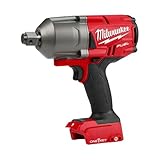
The Milwaukee 2864-20 and Ingersoll Rand W7150 are both high-torque, 1/2-inch cordless impact wrenches. Either has enough output for stubborn automotive fasteners, but they approach control differently.
The Milwaukee is the easier tool to limit and repeat. Its four electronic modes, trigger response, and ONE-KEY adjustments let you set a lower ceiling before you start. The Ingersoll Rand is simpler and has an excellent mechanical power regulator, but its strongest settings can deliver a lot of torque quickly. It rewards an experienced operator who already knows when to stop.
As an Amazon Associate we earn from qualifying purchases at no extra cost to you.


Neither wrench should be used as a final torque tool. Use an impact to run a fastener down, then finish with a calibrated 1/2-inch torque wrench. An impact can over-tighten a wheel nut in seconds, especially on aluminum wheels or smaller studs.
Milwaukee 2864-20 vs. W7150: key differences
| Feature | Milwaukee 2864-20 | Ingersoll Rand W7150 |
|---|---|---|
| Drive size | 1/2 inch | 1/2 inch |
| Claimed fastening torque | Up to 1,400 ft-lb | Up to about 1,000 ft-lb |
| Claimed breakaway torque | Up to 1,900 ft-lb | Up to about 1,500 ft-lb |
| Output control | Four modes, with ONE-KEY customization | Four forward power settings, mechanical regulator |
| Best control advantage | Repeatable electronic limits | Fast, simple adjustment at the tool |
| Battery platform | Milwaukee M18 | Ingersoll Rand IQV20 |
Published torque figures are not directly comparable across brands. Test fixtures, battery condition, sockets, fastener size, and run time all affect results. Treat the numbers as an indication of capability, not as a promise that one tool will remove every seized bolt faster.
Why the Milwaukee is easier to limit
The 2864-20 gives you four standard modes. Lower modes reduce the chance of immediately stretching a small fastener or crushing a soft mounting surface. That is useful when moving between wheel nuts, suspension hardware, brackets, and large frame bolts without changing tools.
Its ONE-KEY system is the bigger advantage for controlled work. The app can adjust output behavior and create settings for particular jobs. A shop could make one profile for wheel installation and another for heavy removal. That does not make the wrench a torque wrench, but it can make the tool’s behavior more predictable from one operator to the next.
The Milwaukee also has a progressive variable-speed trigger. You can feather the trigger to start a nut slowly, check that the threads are aligned, and then increase speed. In practice, this helps prevent cross-threading more than a headline torque rating does.
There are trade-offs. You need to understand which mode is active, and ONE-KEY features depend on using the app correctly. A worker who leaves the wrench in the highest mode can still over-tighten a fastener. The 2864-20 is also a substantial tool, so it can be tiring in awkward positions even though its control is good.
Where the Ingersoll Rand makes sense
The W7150 uses a four-position power regulator that is quick to operate and easy to see. It does not require a phone. That is valuable in a repair bay, fleet yard, or roadside situation where you want to grab the wrench, select a setting, and work.
Its lower settings are suitable for lighter assembly, while the higher settings provide strong removal performance. The regulator is a practical form of control, but it is less configurable than Milwaukee’s electronic system. Depending on the fastener and battery charge, the same setting can still run a nut tighter or longer than expected.
The W7150’s trigger is controllable, but the tool feels more direct and forceful at higher output. That is helpful when breaking loose rusty suspension bolts. It is less forgiving when installing wheel nuts or small hardware. If you tend to hold the trigger until the impact sound changes, the Milwaukee gives you more ways to prevent that habit from causing damage.
Do not confuse “lower power setting” with a measured torque value. Neither the W7150’s regulator nor Milwaukee’s numbered modes should be treated as a substitute for torque verification. Friction, thread lubricant, rust, and the condition of the nut can change clamping force dramatically.
How they behave on common jobs
Wheel installation: Milwaukee has the edge. Put it in a low mode, run the nuts down without hammering, and torque them manually. The Ingersoll Rand can do the same job, but you need a lighter touch on the trigger and should avoid its higher settings.
Suspension and rusted fasteners: Both are capable. The W7150’s simple power selector is convenient when you need maximum removal power repeatedly. Milwaukee’s higher breakaway rating gives it an advantage on paper, but a six-point impact socket, penetrating oil, heat, and a breaker bar may matter more than the difference between the tools.
Production or fleet work: Milwaukee is easier to standardize if several people use the tool. A preset can reduce operator variation, although the final tightening step still needs a torque wrench or a documented torque-control system.
Occasional home repair: The Ingersoll Rand is fine if its price is lower and you do not need app-based settings. Buying an expensive high-torque wrench for occasional lug nuts is unnecessary; a mid-torque cordless mid-torque impact wrench is usually easier to handle and less likely to damage smaller hardware.
Mistakes these tools can expose
The most common failure is over-tightening. A wheel stud can stretch, a lug nut can seize, and an aluminum wheel can be damaged without obvious marks. Another is using a six-point socket that is worn or too shallow; high impact force can round a damaged fastener or crack a non-impact socket.
Battery choice also affects control. A fresh high-capacity battery can sustain output longer than a small or partially discharged pack. If the tool sounds slower near the end of a charge, do not assume the fastener is receiving a safe, consistent torque. Swap batteries for removal work, and use a torque wrench for the final setting.
Which one should you buy?
Choose the Milwaukee 2864-20 if control is your priority, especially if you work on mixed-size fasteners, share tools with other people, or will use ONE-KEY presets. It offers the better system for limiting and repeating behavior, not merely the higher advertised torque.
Choose the Ingersoll Rand W7150 if you want a powerful, straightforward wrench with a tool-mounted selector and no app. It is the sensible choice when the price is meaningfully lower or you already own IQV20 batteries. For heavy removal and occasional assembly, its simpler controls are entirely adequate.
For most home mechanics, the cheaper option is fine if you already have a torque wrench and can resist using maximum power for installation. If you regularly need controlled assembly, the Milwaukee’s adjustability justifies its extra complexity.