What's inside
As an Amazon Associate I earn from qualifying purchases. This post may contain affiliate links at no extra cost to you.
Heavy fastening exposes the limits of ordinary driver bits. Long structural screws, ledger screws, concrete screws, and lag screws can deliver far more shock than a standard hex bit is designed to handle. The choice usually comes down to two setups: a one-piece impact bit, or a short insert bit used inside a separate impact-rated holder.
Both can work well, but they suit different priorities. A one-piece bit has fewer parts and less play. An insert bit with a holder is usually cheaper to replace and more flexible when you need several drive sizes. The right choice depends on access, fastening volume, bit length, and how costly a failure would be.
As an Amazon Associate we earn from qualifying purchases at no extra cost to you.



Our Top Picks
 DEWALT DWA2NGFT40IR Impact Ready Flextorq 40-Piece Steel Screwdriver8.75 x 1.74 x 8.75 inches8.75 x 1.74 x 8.75 inches1 poundsCheck on Amazon


How the Two Setups Differ
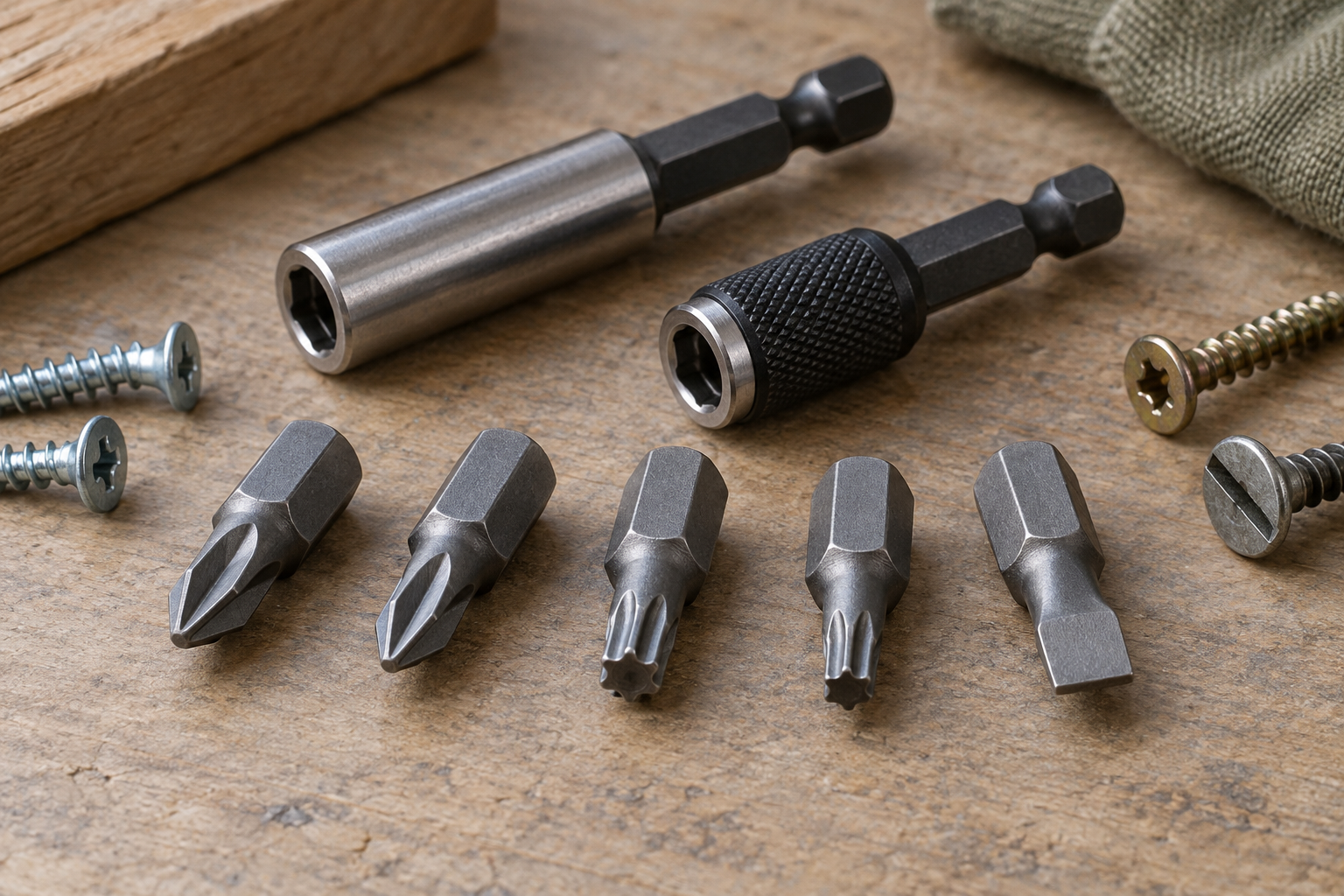
A one-piece impact bit has the hex shank and drive tip formed as one tool. The bit goes directly into the impact driver’s chuck, so there is no intermediate connection between the driver and the fastener.
An insert bit is short, commonly about 25 mm (1 inch), and fits into a magnetic or mechanical bit holder. The holder has a 1/4-inch hex shank for the impact driver. Some holders have a locking collar or retaining sleeve; others rely mainly on a magnet and the chuck’s retention.
For heavy fastening, use only bits and holders specifically marked for impact use. A regular chrome-vanadium screwdriver bit can twist, chip, or snap under repeated impact blows. The same warning applies to cheap, non-impact holders. An impact driver’s compact size does not mean its load is gentle.
One-Piece Bit vs Insert Bit and Holder
| Factor | One-piece impact bit | Insert bit with impact holder |
|---|---|---|
| Connection count | One continuous tool | Bit-to-holder and holder-to-driver connections |
| Strength under shock | Usually the best choice for severe, repeated impact | Good with a quality locking holder; more dependent on fit |
| Bit changes | Replace the whole bit | Swap inexpensive inserts in the same holder |
| Reach and access | Available in short and extended lengths | Holder adds roughly 50–75 mm to a short insert setup |
| Side play | Generally lower | Can be noticeable, especially with worn magnets or loose tolerances |
| Cost per replacement | Higher | Usually lower for common Phillips, Torx, and square-drive inserts |
| Best use | High-volume structural work and maximum control | General construction, maintenance, and mixed drive sizes |
Where One-Piece Impact Bits Win
The main advantage is reduced flex and fewer failure points. When a long screw starts hardening into a dense stud or a lag screw reaches the bottom of a pilot hole, the bit sees abrupt torque reversals. A one-piece bit does not have a holder sleeve, magnet, or insert pocket between the driver and the fastener.
That matters when driving hundreds of structural screws. Less wobble helps the bit stay fully seated in a Torx or square recess, reducing the chance of rounding the recess or camming out. It is also useful when working overhead, where a loose insert can drop from the holder.
One-piece bits are often the better option for extended reach. A 6-inch or 12-inch impact-rated bit can reach recessed framing or fasteners behind brackets without stacking a long holder onto a short insert. The trade-off is price: losing a long bit is more painful than losing a common insert.
For high-volume framing, structural screws, or large lag screws, consider a one-piece impact bit set in the drive profile you use most. Buy a smaller quantity of uncommon sizes rather than a large mixed kit with poorly matched tips.
Where Insert Bits and Holders Win
Insert systems make economic sense when you use several drive types or expect to wear out tips quickly. A holder may cost more initially, but replacement inserts are commonly inexpensive. If a Phillips tip strips after a day of cabinet or deck work, replacing a single insert is less wasteful than replacing a long one-piece bit.
They are also convenient for routine fastening that is heavy but not abusive. Cabinet screws, exterior trim screws, smaller construction screws, and general repair work rarely justify a premium one-piece bit for every size. A good impact-rated holder with a fresh insert handles these jobs reliably.
A locking holder is preferable to a simple magnetic holder for overhead work or fasteners that need significant pressure to stay engaged. Magnets can attract and retain the screw, but they do not prevent the insert from backing out if the holder’s retention is poor. A collar that mechanically locks the insert adds security, though it also makes one-handed bit changes slower.
For a flexible setup, a locking impact bit holder paired with a small set of insert bits is usually the sensible starting point.
Failure Modes to Watch
The most common problem is not the holder exploding; it is poor engagement. A bit that does not fully fill the screw recess will rock under impact and quickly round the fastener. Stop when the tip starts riding out. Do not compensate by leaning harder on a worn bit.
Insert holders can develop side play after repeated high-torque use. A few degrees of visible movement may be harmless for rough work, but noticeable wobble at the tip is a reason to replace the holder. It makes precise fastening difficult and increases damage to the screw head.
Bits also fail from heat and fatigue. A tip that has turned shiny, lost its sharp edges, or shows a twist near the working end is already compromised. Impact-rated does not mean indestructible. Driving a 6-inch structural screw into hardwood can destroy a bit far sooner than driving the same screw into softwood.
Which Should You Buy?
Choose one-piece impact bits when you drive large or long fasteners daily, need maximum alignment, work overhead, or use extended reach. They are also the safer choice when a damaged screw or dropped bit would create a costly rework problem.
Choose inserts and a holder when you are a homeowner, use several drive profiles, or do moderate construction and repair work. The cheaper option is entirely adequate when the holder is impact-rated, the insert fits tightly, and you are not repeatedly driving near the tool’s maximum torque.
A practical compromise is one quality locking holder for everyday work, plus one-piece bits in the size and profile used for your hardest fastening. That avoids paying for a complete premium set while preserving the extra control where it actually matters.