What's inside
As an Amazon Associate I earn from qualifying purchases. This post may contain affiliate links at no extra cost to you.
Our Top Picks


Short answer
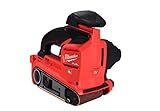
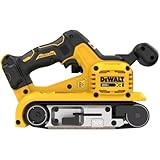
The Milwaukee M18 FUEL and DeWalt 20V XR cordless belt sanders are closely matched for removing stock, but they do not feel identical in use. Milwaukee has the stronger case for controlled, repeatable sanding because its speed control is easy to adjust and its tracking behavior is predictable. DeWalt is a very good choice when you already own 20V batteries, especially for flattening rough boards and cleaning up framing lumber.
For most users, the best choice is the battery platform already in the shop. These are high-draw tools, and the cost of batteries and a charger can outweigh small differences in sanding performance. If you are starting from zero and consistency matters more than initial price, Milwaukee gets a narrow edge. If the tool will see occasional heavy cleanup work, DeWalt is usually the better value.
As an Amazon Associate we earn from qualifying purchases at no extra cost to you.


What the tools have in common
Both sanders use a 3-by-18-inch belt, variable-speed control, tool-free belt changes, and brushless motors. Both are designed for aggressive material removal rather than fine finish sanding. With a coarse belt, either tool can remove a visible amount of wood in one pass, but both can also dig trenches quickly if you stop moving.
The rated belt-speed ranges are broadly similar, depending on the exact kit and production version. In practical terms, you can run near the low end for softer wood, edge work, or better control, and near the high end for rapid stock removal. A 36- or 40-grit belt cuts much faster than an 80-grit belt, but it also magnifies every mistake.
Neither machine is light in the way a small random-orbit sander is light. Expect roughly 9 to 11 pounds once a large battery and dust bag are installed. That weight helps keep the belt engaged, but it becomes tiring during overhead work or when sanding vertical panels.
Stock removal and consistency
On flat, rough lumber, the two sanders remove material at nearly the same practical rate. The limiting factors are usually belt grit, battery condition, dust buildup, and operator pressure—not the badge on the tool. A fresh 40-grit ceramic belt will make either sander feel substantially more powerful than a loaded 60-grit aluminum-oxide belt.
Milwaukee’s advantage appears when the job requires several controlled passes. Its variable-speed trigger and dial make it straightforward to slow the belt down before entering a corner or crossing a soft section. The tool tracks well when the base is kept flat, so it is easier to maintain a consistent removal pattern without constantly correcting the belt.
DeWalt is equally capable in broad, straight passes. It can feel slightly more forceful when pushed into rough stock, but that is not always an advantage. More aggressive contact increases the chance of a low spot, especially on narrow boards or when the front of the sander is lifted at the end of a pass. The operator has to keep a steady pace and avoid leaning harder when the belt begins to slow.
| Feature | Milwaukee M18 FUEL | DeWalt 20V XR |
|---|---|---|
| Belt size | 3 x 18 inches | 3 x 18 inches |
| Best use | Controlled removal and repeatable passes | Fast cleanup of rough stock |
| Speed control | Variable speed with easy adjustment | Variable speed with broad working range |
| Dust collection | Bag and shop-vac options | Bag and shop-vac options |
| Main drawback | Tool and battery cost | Can reward excessive pressure with uneven cuts |
Tracking and edge control
Belt tracking is where a cordless belt sander can become frustrating. If the belt walks toward one side, it can rub the housing, shred its edge, or leave an uneven sanding line. Both tools have tracking adjustment, and neither should require constant correction when the belt is installed correctly. Still, tracking changes as belts wear, collect pitch, or become slightly distorted.
Milwaukee is the easier tool to keep settled during long passes. That does not make it immune to tracking problems. A belt installed backward, a damaged belt seam, or a pulley clogged with dust can send it off line quickly. Check tracking with the tool lifted clear of the work, then make small adjustments rather than turning the knob through a large range.
DeWalt tracks reliably when the base is kept level, but aggressive side pressure can make the belt drift. This is more noticeable when sanding close to an edge. Neither sander should be used as an edge-shaping tool by allowing the belt to hang over the work; that technique wears the belt unevenly and makes it harder to flatten a surface.
Battery runtime and heat
Use a high-capacity battery for production sanding. Compact packs keep the tool lighter, but they run down quickly under sustained load and may reduce peak performance as their charge falls. A 5.0Ah pack is a reasonable minimum for serious work; larger packs extend runtime but add weight.
Runtime varies too much to promise a useful number of minutes. Grit, wood species, pressure, and whether the belt is clogged make a bigger difference than the nominal voltage label. A loaded belt forces the motor to work harder and produces more heat. If the housing becomes very hot or the tool begins cutting out, stop and inspect the belt instead of pressing harder.
Milwaukee M18 and DeWalt 20V Max batteries are not interchangeable. If you own neither platform, compare the price of a tool kit, two suitable batteries, and a rapid charger—not just bare-tool prices. These Milwaukee cordless belt sander options and DeWalt cordless belt sander options are often sold in different configurations, so check whether the listing includes a battery.
Dust collection and belt choice
The included dust bags are useful for coarse cleanup but are not a substitute for a vacuum. Fine dust escapes, and the bag adds rear weight. A shop vacuum connected to the sander gives better visibility and reduces dust settling on the tracking parts. Use a dust extractor rated for fine wood dust when sanding indoors.
For removing stock, start with a quality 40- or 60-grit belt. Use ceramic abrasive belts on hardwood or when flattening substantial high spots; they stay aggressive longer than inexpensive aluminum-oxide belts. Move to 80 or 100 grit only after the surface is flat. A belt sander is a poor final-finishing tool because its linear scratches are difficult to remove completely.
Which one should you buy?
Choose the Milwaukee if you regularly flatten slabs, level glued-up panels, or need predictable control across several passes. It is also the better fit for users who are careful about surface quality and willing to pay more for a refined cordless tool.
Choose the DeWalt if you already use 20V batteries or mainly need a fast way to remove old finish, level rough boards, or clean up construction lumber. It removes stock effectively, and its lower total ownership cost can make it the sensible purchase. The cheaper option is completely adequate when the work will be followed by planing, routing, or a random-orbit sander.
Whichever model you choose, use two hands, keep the base flat, start the belt before contacting the work, and keep moving. For a 3-by-18-inch ceramic belt assortment, match the grit to the job and replace belts before they become glazed. Consistent technique will do more for a flat surface than a small difference between these two sanders.