What's inside
As an Amazon Associate I earn from qualifying purchases. This post may contain affiliate links at no extra cost to you.
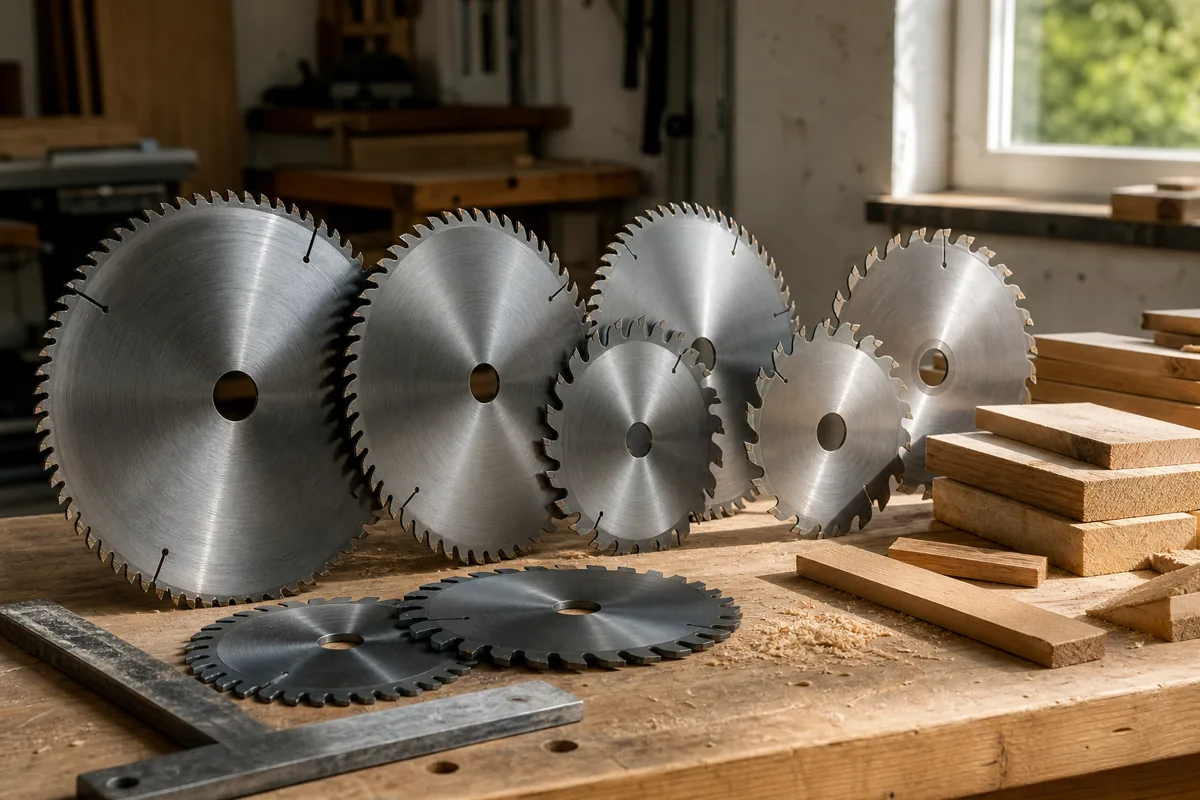
Dense hardwood exposes the weak points in a table-saw setup quickly: a dull blade, a slow feed, poor alignment or a blade with too many teeth can all leave burn marks along a rip. For most shops, the best starting point is a sharp 10-inch, 24-tooth carbide ripping blade with a flat-top grind. It clears chips efficiently and needs less power per tooth than a fine-tooth crosscut blade. A combination blade can be a reasonable choice if you also want one blade for general work, but it is less efficient for repeated, long rips.
As an Amazon Associate we earn from qualifying purchases at no extra cost to you.


Our Top Picks
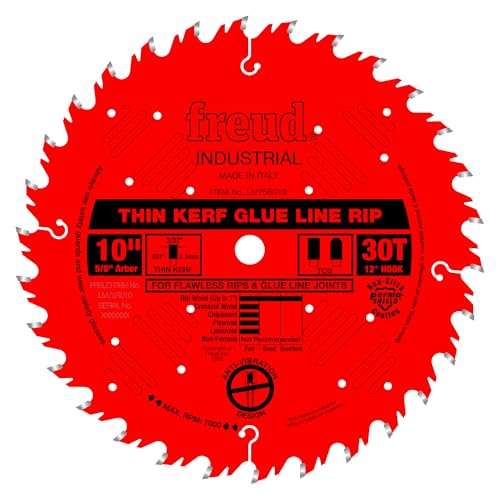 Freud LM75R010: 10" Industrial Thin Kerf Glue LinePack of 110 x 10 x 0 inches1 poundsCheck on Amazon
 DEWALT 10 in. 24 Tooth General Purpose Saw10" / 24 Teeth13.4 x 11.5 x 0.5 inches0.8 poundsCheck on Amazon


Quick picks by use
| Use | Blade to consider | Main trade-off |
|---|---|---|
| Frequent ripping in thick, dense stock | 10-inch, 24-tooth ripping blade; flat-top grind | Rougher edge than a high-tooth-count blade |
| Ripping and crosscutting with fewer blade changes | 10-inch, 40- to 50-tooth combination blade | Slower chip removal on long rips |
| Occasional ripping on a modest budget | Sharp, general-purpose 10-inch blade with about 24 to 40 teeth | Less specialized; results depend heavily on feed and setup |
What matters in a ripping blade
Tooth count is the first useful filter. A 24-tooth blade has large gullets between teeth, which carry sawdust out of the kerf. That helps when ripping thick stock, where each tooth removes more material and heat builds quickly. A 40- to 50-tooth combination blade cuts more cleanly across the grain and can rip acceptably, but its smaller gullets may struggle with long, heavy cuts in hard maple, white oak, or similar dense woods.
For a dedicated rip blade, look for a flat-top grind (FTG), or a design described as a ripping grind. FTG teeth leave a relatively flat-bottomed kerf and are made to remove material quickly. A combination blade often uses alternating tooth geometries to handle both ripping and crosscutting. It is more convenient, but convenience is not the same as the best finish or fastest feed for every job.
Check the blade diameter and arbor hole against your saw’s manual; 10 inches is common, but not universal. A thin-kerf blade can take less power to push through dense stock, which may help on a small contractor saw. It also needs to be compatible with the saw’s riving knife and stable enough for the job. Do not assume thin kerf automatically means a better cut.
What to buy
If you rip hardwood regularly, choose a quality carbide 24-tooth rip blade from an established blade maker and keep it sharp. A dedicated blade is the practical pick for repeated dimensioning, especially when you will finish the edge with a jointer or planer. Compare 10-inch, 24-tooth ripping blades by kerf, arbor size and tooth grind rather than relying on a “hardwood” label alone.
If you make occasional rips and also crosscut panels or trim, a decent combination blade is often the better value. You may need to feed more deliberately on a long cut, but there is little reason to buy a dedicated rip blade for a handful of boards a year. See 10-inch combination blades if fewer blade changes matter more than maximum ripping speed.
Why hardwood burns
Burning usually means the wood is rubbing against the blade for too long, but the cause is not always the blade itself. A dull or resin-coated blade increases friction. A fence that is not parallel to the blade can pinch the work or force it sideways. A warped board, internal stress, or a cut that closes behind the blade can also create heat. On a long rip, feeding too slowly can leave the teeth rubbing instead of cutting; feeding too fast can bog down the saw or produce a rough, deflected cut.
Before buying a new blade, clean the one you have and inspect its carbide teeth for chips or missing corners. Check that the blade is aligned with the miter slot and that the fence does not toe inward toward the blade. Use a splitter or riving knife, a push stick, and proper support for long stock. If the saw motor labors or the blade slows audibly, reduce the feed rate and investigate rather than forcing the cut.
Setup and feed rate
Set blade height so the gullets clear the top of the workpiece; a common starting point is to have the tooth tips roughly 1/8 to 1/4 inch above the board. Make a test cut in offcut material. Feed at a steady rate: fast enough to keep the teeth cutting, slow enough that the motor does not bog down. There is no reliable inches-per-second figure for every saw and species, so use the sound of the motor and the cut surface as feedback.
If the burn appears on one edge, check fence alignment and board straightness before changing blades. If both edges darken and the saw strains, suspect a dull blade, an overly slow feed, or a blade that is poorly matched to the saw. If burning shows up near the end of the cut, stress may be closing the kerf; a riving knife helps keep the material from trapping the blade.
Trade-offs before you buy
A low-cost blade can be fine for rough construction lumber, occasional cuts, or stock that will be planed afterward. It is a poor bargain if it burns expensive hardwood, wanders under load, or needs frequent replacement. A premium blade costs more upfront, but carbide quality and sharpening potential matter when you make repeated cuts. Confirm that the blade can be resharpened and that a local service handles its tooth geometry.
For the cleanest rip edge, a 24-tooth blade is not always the last step: a jointer or planer may still be needed before glue-up. If you need a smoother edge straight from the saw and your saw has enough power, try a sharp combination blade and accept a slower feed. The right choice is the blade that matches the work you do most—not simply the one with the highest tooth count or the most aggressive marketing.