What's inside
As an Amazon Associate I earn from qualifying purchases. This post may contain affiliate links at no extra cost to you.
Our Top Picks



Best Miller Aluminum Welders: Choose by Process and Job
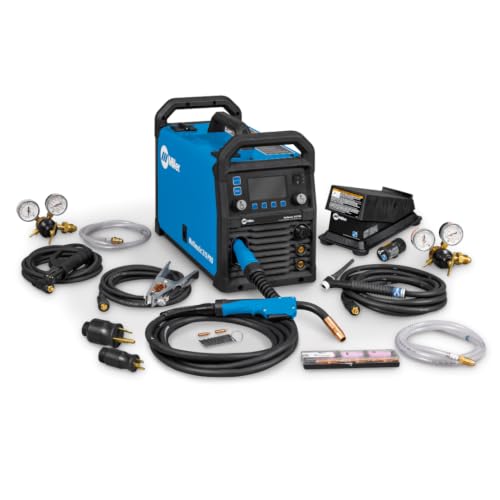
The best Miller aluminum welder depends on the joint: choose an AC TIG machine for precise, clean work on thin sheet and visible welds, or a Miller MIG welder with a compatible spool gun for faster work on thicker parts and longer seams.
For most buyers, the practical shortlist is the Miller Syncrowave 210 for AC TIG, the Multimatic 220 AC/DC for a portable TIG-and-MIG combination, and the Millermatic 252 with a compatible spool gun for shop production. These machines suit different jobs; they are not interchangeable just because each can be configured for aluminum.
As an Amazon Associate we earn from qualifying purchases at no extra cost to you.


Quick comparison
| Machine | Aluminum process | Output and input | Best fit | Key setup consideration |
|---|---|---|---|---|
| Miller Syncrowave 210 | AC TIG | 210 A maximum; 120/240 V input | Precise repair, thin-to-medium material, and occasional TIG work | Requires an AC TIG torch, argon, suitable tungsten, and filler rod |
| Miller Multimatic 220 AC/DC | AC TIG; MIG with a compatible aluminum spool gun | 220 A maximum; 120/240 V input | Mixed-material shops needing one portable multiprocess machine | Check the exact spool-gun and lead compatibility before purchase |
| Miller Millermatic 252 | MIG with a compatible spool gun | 30–300 A; 200/230 V input | Frequent MIG work and longer aluminum seams in a shop | Needs appropriate input power and a compatible gun; it is not an AC TIG machine |
Specifications can vary by machine revision and package. Confirm the nameplate, included accessories, and Miller’s current compatibility information before ordering; a machine’s maximum output alone does not tell you its useful minimum for thin aluminum.
Choose the process before the model
Pick AC TIG for control and finish
Aluminum forms a tenacious oxide layer. AC TIG alternates polarity to help disrupt that oxide while allowing the operator to control the arc and add filler separately. That makes it a strong choice for small parts, thin sheet, short welds, and work where bead placement and appearance matter.
The tradeoff is pace and setup. TIG calls for clean material, a torch and consumables, shielding gas, filler rod, and practice coordinating the torch and filler. A foot pedal or other amperage control is useful, especially on thin parts where heat builds quickly. A welder with AC output is essential for conventional aluminum TIG; DC-only TIG models are not the right substitute.
Pick MIG with a spool gun for speed
MIG feeds filler wire continuously, making it easier to maintain a steady bead over longer seams. Aluminum wire is soft and can buckle or tangle when pushed through a long conventional gun liner. A spool gun keeps a small wire spool close to the torch, reducing the distance the wire must travel. That makes a compatible Miller spool-gun setup a practical choice for repairs, frames, and repeated production work.
Spool-gun support does not mean every Miller MIG welder accepts every gun. Check the machine’s compatibility, control connection, and required adapter or package. You will also need the correct drive rolls and contact tips for the wire, shielding gas, and clean aluminum. MIG is generally less forgiving of poor fit-up and contamination than its quick setup might suggest.
Match the machine to your job
| Your situation | Better starting point | Why |
|---|---|---|
| Occasional aluminum repairs; limited shop space | Multimatic 220 AC/DC | Offers AC TIG and MIG capability in one portable unit; verify the spool-gun package for your intended MIG work. |
| Thin parts, visible welds, or precise repair | Syncrowave 210 | AC TIG control suits careful work better than choosing a machine mainly for maximum MIG output. |
| Frequent, longer aluminum MIG seams | Millermatic 252 plus compatible spool gun | A dedicated shop MIG setup is better suited to repeated wire-feed work than a TIG-first purchase. |
| Mostly steel, with occasional aluminum TIG | Multimatic 220 AC/DC | One machine can cover multiple processes, though accessories and setup changes still take time. |
| Very thin sheet and little welding experience | AC TIG machine, with practice on scrap | Start with conservative heat and short welds; machine capacity does not prevent burn-through. |
Think in material thickness, not just amps
Amperage ratings are useful for comparing machines, but they are not a reliable thickness guarantee by themselves. Joint type, alloy, fit-up, position, travel speed, and duty cycle all affect what a welder can handle. As a broad planning guide, aluminum sheet around 1/16 inch (1.6 mm) needs careful heat control; material around 1/8 inch (3.2 mm) is a common range for general-purpose TIG or MIG work; and heavier sections may require more output, preparation, or multiple passes. Treat these as starting points, not promises.
For thin stock, prioritize a stable low end and operator control over a high maximum-amp figure. For thicker plate or frequent long beads, check the machine’s rated output at the voltage available in your shop and its duty cycle at that output. A 120 V circuit may limit performance compared with a suitable 240 V circuit; verify the installation requirements rather than assuming a plug adapter will solve a power limitation.
Setup details that make or break aluminum welds
- Clean immediately before welding. Remove oil and coatings with an appropriate cleaner, then use a dedicated stainless-steel brush for aluminum. A brush used on steel can transfer contamination.
- Use the right shielding gas. Pure argon is a common choice for aluminum TIG and many MIG applications. Match the flow and setup to the torch, joint, and conditions; excessive flow can create turbulence and pull air into the shielding zone.
- Prepare the joint. Aluminum conducts heat quickly and expands substantially. Clean edges, close fit-up, and suitable fixturing help prevent gaps and distortion.
- Match consumables to the process. Select filler alloy for the base metal and application. For TIG, choose a suitable tungsten and electrode preparation for the machine and technique. For MIG, use aluminum-compatible drive rolls, liner, and contact tips.
- Practice on offcuts. Make test welds of the same alloy and thickness, then adjust heat and travel speed. A bead that looks acceptable on a different thickness may not transfer to the actual part.
Ownership costs and common frustrations
The machine is only part of the purchase. Budget for the torch or spool gun if it is not included, gas cylinder and regulator, suitable cables, consumables, and electrical work if your shop lacks the required supply. TIG setups also consume tungsten and filler rod; MIG setups use wire, contact tips, and gun-related consumables. For low-volume use, a multiprocess machine can reduce the number of machines to store, but it does not eliminate the cost or time of changing processes.
On a spool gun, inspect the drive system and contact tip when feed becomes inconsistent, and keep aluminum wire clean and protected from dust. On TIG equipment, keep the torch parts clean and replace worn cups, collets, and tungsten as needed. Across either process, the most common avoidable failures are welding over oxide or oil, using contaminated brushes, selecting unsuitable filler, and trying to compensate for poor fit-up with excessive heat.
Bottom line
Choose the Syncrowave 210 if your priority is controlled AC TIG; choose the Multimatic 220 AC/DC if you want a portable machine for varied work and are willing to verify the accessories needed for aluminum MIG; choose the Millermatic 252 with a compatible spool gun if you expect frequent, longer MIG seams and have suitable shop power. The right Miller welder for aluminum is the one whose process, low-end control, accessories, and input power match the parts you actually plan to join.