What's inside
As an Amazon Associate I earn from qualifying purchases. This post may contain affiliate links at no extra cost to you.
For upholstery, both tools can drive the same kind of staple, but they feel very different over a long job. A manual stapler is inexpensive, portable, and easy to control. An electric stapler takes less hand force and can speed up repetitive work, but it costs more and still needs careful setup. For occasional repairs and short runs, manual is usually enough. For repeated stapling into firm wood, electric can save effort—provided it drives your chosen staples reliably.
Our Top Picks

How the two types drive staples
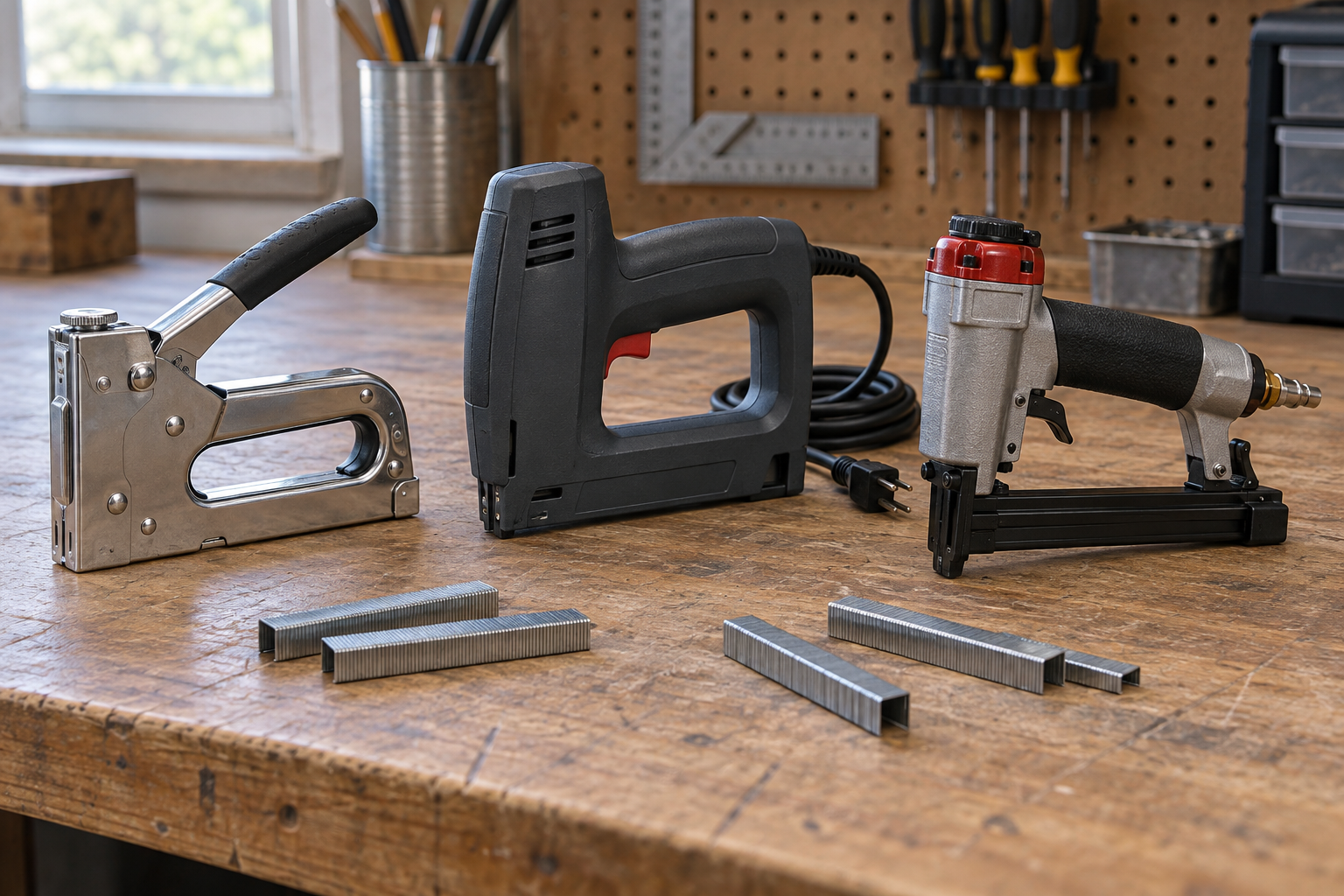
A manual upholstery stapler uses a lever and your hand to drive each staple. Results depend on your grip, the tool’s mechanism, and how firmly you press it against the work. A staple that stops proud of the surface may need a hammer tap, especially in dense hardwood or when fastening several layers of fabric.
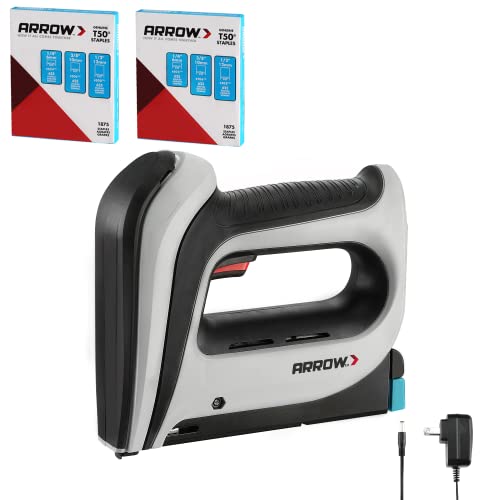
An electric stapler uses a motor and trigger to drive staples. Corded models need an outlet; cordless models need a charged battery. Electric does not automatically mean more power: some compact tools are intended for light fabric and softwood, not dense framing lumber. Check the tool’s stated staple range and test it on scrap before committing to a project.
Manual vs. electric at a glance
| Factor | Manual stapler | Electric stapler |
|---|---|---|
| Best fit | Repairs, occasional upholstery, trim and short runs | Repeated stapling, larger upholstery jobs and users who want less hand strain |
| Effort | Requires a firm squeeze for every staple | Lower trigger effort, though the tool still needs steady contact |
| Speed | Limited by hand motion and fatigue | Faster on repetitive runs; placement still takes time |
| Portability | Works anywhere and needs no power | Corded tools need an outlet; cordless tools add battery weight |
| Common drawback | Hand fatigue and partially driven staples | Higher cost, bulk, jams or inconsistent depth on unsuitable material |
| Typical upkeep | Keep the staple channel clear and inspect the driver | Also manage the cord or battery, and clear jams as directed |
Which is better for upholstery?
For one dining chair or a small stool, a manual stapler is often the sensible choice. The job may take dozens or a few hundred staples, but the tool is inexpensive, needs no setup, and gives you control near corners. Look for a model that accepts the staple length and crown specified for your fabric and wood. A common upholstery staple length is around 3/8 inch, but the right size depends on the fabric layers and the thickness and hardness of the frame.
For several chairs, a sofa, or recurring upholstery work, an electric stapler can reduce hand fatigue and keep a steadier pace. That matters when you are pulling fabric taut and placing staples every inch or two along a rail. It does not remove the need to tension the fabric evenly: uneven pulling can leave wrinkles or distort a cushion cover no matter how fast the tool fires.
Before buying, test a few staples through your actual fabric layers into a scrap from the frame, or a similar piece of wood. Check that the crown holds without cutting the fabric and that the legs seat fully without splitting the wood. If a staple is too long, it may protrude through a thin rail; too short, and tension can pull the fabric free. For frequent upholstery, compare electric upholstery staplers against manual options based on staple compatibility, not just firing speed.
What about shop projects?
For attaching dust-collection hose straps, fixing a thin backing panel, or securing fabric and light trim, either type may work. A manual stapler is convenient when the work is scattered around a shop or you only need a few fasteners. An electric one is more appealing for a batch of similar assemblies, where repeated squeezing would wear out your hand.
Neither type is a substitute for a brad nailer or a heavier-duty fastening tool when the joint must carry a load. Staples are useful for holding sheet goods, fabric, or thin material in place, but they are not a dependable structural connection. If staples repeatedly stop short in plywood or hardwood, do not compensate by forcing the tool at an angle; choose a tool rated for that material and fastening job.
What to check before choosing
First, confirm the fastener type. “Staple gun” can mean tools that use different crown widths, leg lengths, or staple families. A box of staples that fits one tool may not fit another. If you already have fasteners, take the package details with you when shopping.
Second, consider volume and comfort. A manual tool can be fine for 20 staples and unpleasant for 500, especially if you have limited grip strength. Electric tools reduce trigger effort, but they are heavier and can be awkward in tight corners. Cordless models avoid a cord snagging fabric, while corded models avoid charging and battery replacement.
Third, plan for imperfect shots. Staples can jam, bend, sit proud, or emerge through the far side of thin stock. Keep a staple remover and pliers nearby, and unplug a corded tool or remove the battery before clearing a jam. Wear eye protection and keep fingers clear of the nose; never test-fire toward your hand or a person.
A practical buying decision
Choose a manual stapler for occasional upholstery, quick repairs, or light shop work where low cost and portability matter more than speed. It is the better value if you can comfortably squeeze it and your test staples seat cleanly. Choose an electric stapler when you regularly drive many staples, hand fatigue slows the job, or consistent firing matters more than compact size. A manual upholstery stapler is a reasonable starting point for a single chair; for repeated batches, compare cordless electric staplers and verify their staple range before buying.
Whichever you pick, the scrap test is the deciding step. If the tool seats the right staple flush without damaging the fabric or splitting the frame, it is suitable for that job. If it does not, a faster trigger will not fix the mismatch.