What's inside
As an Amazon Associate I earn from qualifying purchases. This post may contain affiliate links at no extra cost to you.
Our Top Picks
 DEWALT DWA2NGFT40IR Impact Ready Flextorq 40-Piece Steel Screwdriver8.75 x 1.74 x 8.75 inches8.75 x 1.74 x 8.75 inches1 poundsCheck on Amazon


What we are comparing
Milwaukee Shockwave and DeWalt FlexTorq are families of impact-rated driver bits, not single bits with one fixed lifespan. Both use a torsion zone designed to flex under impact-driver pulses instead of sending all that shock to the bit tip. Actual life depends heavily on the fastener, material, driver settings, alignment and bit fit. A Phillips bit driven straight into softwood is an easy job; a small bit used to run long structural screws into dense lumber is not.
For a typical homeowner or tradesperson, the practical question is less which logo lasts longer in every test and more which set offers the right tips, sizes and replacement cost for the work. Neither line makes a bit immune to cam-out, worn tips or snapping under sustained overload.
As an Amazon Associate we earn from qualifying purchases at no extra cost to you.



How impact bits wear out
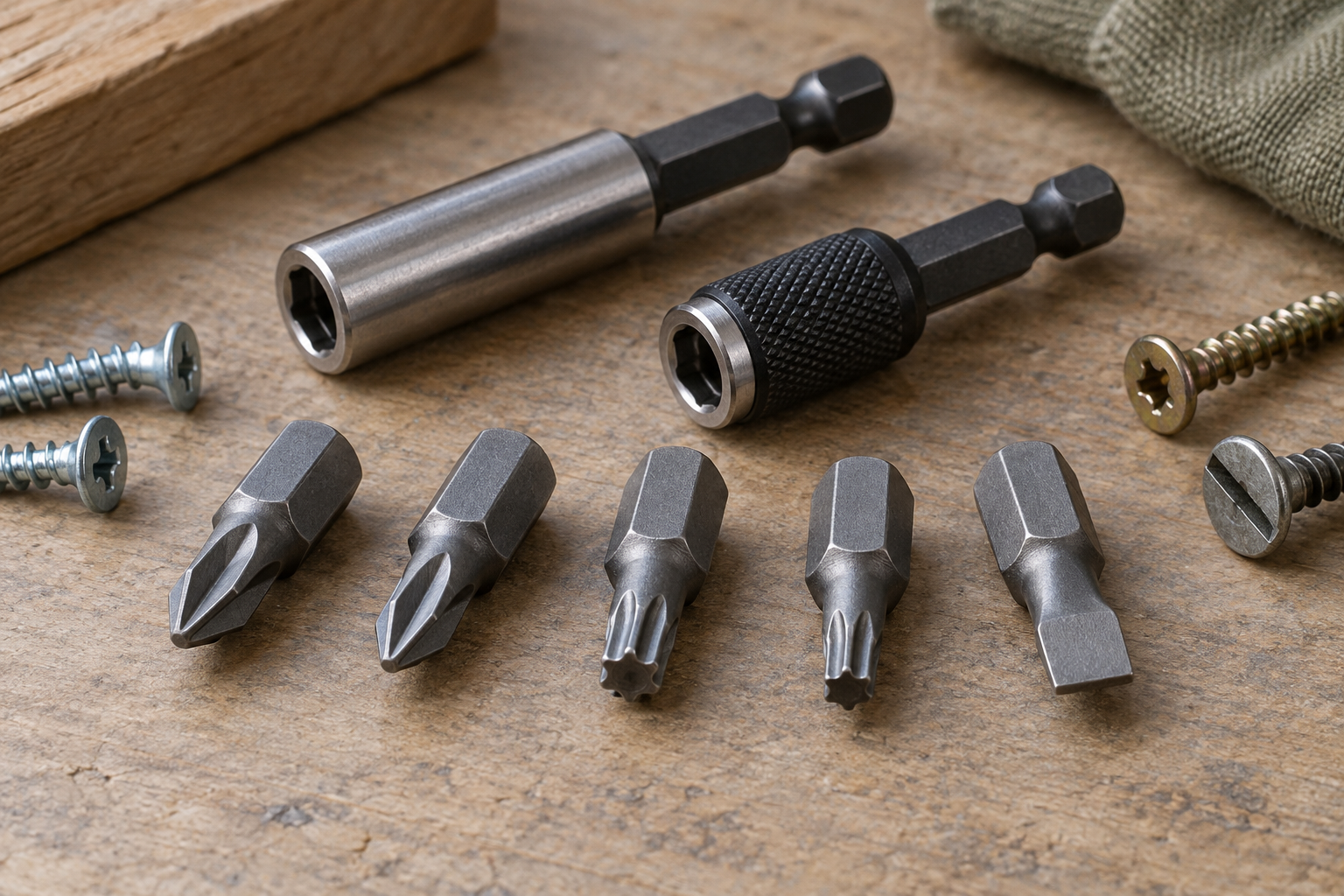
Most driver-bit failures fall into three patterns. The tip rounds or wears until it no longer grips the screw recess; the bit cams out, damaging both the screw and the bit; or the shaft twists and eventually breaks under heavy torque. Phillips and small Torx sizes are particularly sensitive to poor engagement. A bit that is slightly undersized, worn or held at an angle can fail quickly even if it is marketed as impact-rated.
Impact drivers deliver repeated rotational blows. A torsion section can absorb some of that shock, but it cannot make a bit last indefinitely when the screw binds, the driver is run at full speed, or the user keeps driving after the fastener stops. For longer life, seat the bit fully, keep the tool in line with the screw and ease off as the head seats. If a screw is badly stuck, a fresh bit and a controlled setting are usually smarter than leaning harder on a worn one.
Shockwave vs FlexTorq at a glance
| Factor | Milwaukee Shockwave | DeWalt FlexTorq |
|---|---|---|
| Intended use | Impact-driver bit system for fastening and drilling accessories | Impact-rated bit system with a torsion section for fastening |
| Bit-life advantage | Designed to handle impact loads; results depend on tip fit and job | Designed to flex under torque; results depend on tip fit and job |
| Best buying reason | Useful if the preferred set has the sizes and bit types you use | Useful if the preferred set has the sizes and bit types you use |
| Common failure | Worn or chipped tip, cam-out, or shaft failure under overload | Worn or chipped tip, cam-out, or shaft failure under overload |
| Good fit for occasional work? | Yes; choose a small set with common sizes | Yes; choose a small set with common sizes |
There is no reliable universal claim that one brand will last a fixed number of screws longer. Screw type and installation conditions vary too much for that number to mean much. If you want to compare them fairly, use the same driver, screw size, material and settings, and count only fasteners driven without cam-out or visible tip damage. A short test on your own screws is more useful than a result from a different application.
Which set should you buy?
For frequent work, pick the set that includes several copies of the sizes you wear out, rather than paying for a large assortment of bits you rarely use. Many users go through common Phillips, square and Torx tips far faster than less common sizes. Sets vary, so check the contents before buying rather than assuming a bigger package means more useful spares.
If you use Milwaukee tools or want its assortment, consider Milwaukee Shockwave impact driver bits. If you prefer DeWalt or find a set with the sizes you need at a better price, DeWalt FlexTorq impact driver bits are a sensible alternative. For occasional assembly, furniture repairs or a few deck screws a year, the cheaper set is usually fine. Replace individual worn bits instead of discarding a whole assortment.
When comparing prices, divide the cost by the number of bits you will actually use, not the total piece count. A mixed set padded with nut setters or drill bits may be less valuable than a compact pack of repeat-use driver tips. Also check whether the package includes a holder; it can be convenient, but it does not improve bit life.
How to get more life from either brand
Use the right bit profile and size for the screw. A Torx bit that fits deeply and snugly is less likely to cam out than a near-match. With Phillips screws, keep steady pressure on the tool and stop if the bit begins climbing out of the recess. Repeatedly forcing a slipping bit rounds the screw head and quickly damages the tip.
Match the driver setting to the task. On small screws, lower speed or a gentler mode gives you more control; for long screws, a suitable pilot hole can reduce binding, especially near board ends or in dense wood. If a bit becomes hot, visibly twisted or chipped, retire it. A damaged tip wastes time and can ruin fasteners.
Use impact-rated bits in an impact driver. Standard screwdriver bits may fit the chuck, but they are not necessarily built for repeated impact loads and can break sooner. Even with impact-rated bits, do not use the driver to loosen a fastener that is seized beyond the tool’s capacity; switch to a hand tool or a suitable extractor when control matters more than speed.
The practical choice
For ordinary fastening, Shockwave and FlexTorq are both reasonable impact-bit choices. Buy based on the right tip sizes, useful spare quantities and current price, not an expectation that one line will survive every hard job. The more demanding the work, the more value there is in keeping fresh bits on hand and using the correct fit. For light, occasional use, a budget-friendly set can do the job; for daily fastening, replaceable common tips and a well-stocked kit matter more than brand loyalty.