What's inside
As an Amazon Associate I earn from qualifying purchases. This post may contain affiliate links at no extra cost to you.
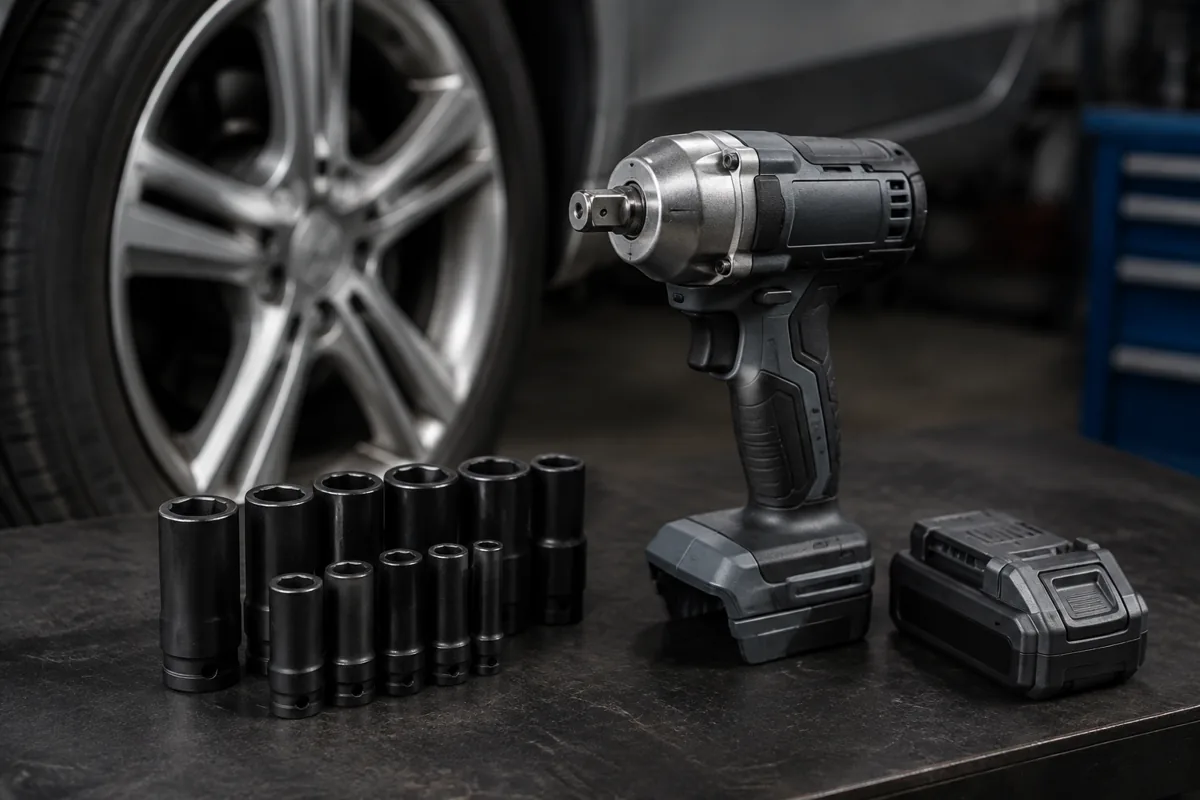
Corroded suspension fasteners are a tough test for an impact socket. A loose fit, shallow engagement or soft socket can round a nut before the bolt moves. For most DIY suspension work, the best buy is a 6-point, impact-rated set with the sizes and drive you actually need—not the largest assortment on the shelf.
As an Amazon Associate we earn from qualifying purchases at no extra cost to you.


Our Top Picks


What matters on suspension fasteners
Choose 6-point sockets. They contact the flats of a hex fastener rather than its corners, reducing the chance of rounding a seized nut. A 12-point socket is easier to position in tight quarters, but its extra contact points make it a poor first choice for badly corroded hardware.
Use sockets marked for impact service. They are typically made from tougher, more ductile steel and have thicker walls than chrome hand sockets. Do not put a chrome socket on an impact wrench: it can crack or shatter under repeated blows. Impact sockets are usually black, but check the packaging or markings rather than relying on color alone.
Suspension hardware varies by vehicle. Common sizes include 15, 18, 19, 21 and 22 mm, but that is not a fitment guarantee; some vehicles use larger fasteners or SAE sizes. Check the service information or measure the fastener before buying. A socket that is too small will not seat, and forcing it can damage both the socket and the nut.
Compare the main set types
| Set type | Best for | Trade-off |
|---|---|---|
| Metric 6-point, standard depth | Most exposed nuts and bolts; good first set for a known vehicle | May not reach a nut on a long exposed stud |
| Metric 6-point, deep | Studs, recessed nuts and fasteners with extra thread showing | Takes more room around the suspension and may not fit every tight access point |
| Metric and SAE combination | Mixed vehicle and equipment work | More pieces and cost; many DIY users will rarely need the SAE sizes |
| Impact-rated lug-nut set | Wheel service and a small number of common large sizes | Too limited to serve as a general suspension set |
Best all-around choice
For work on a known vehicle, start with a metric 6-point impact socket set in 3/8-inch drive if its coverage includes your fasteners. This drive size is a practical balance for many common suspension jobs: the tools are easier to maneuver than a larger drive, and a compact set can cover a useful range of metric sizes.
That does not mean 3/8-inch drive is always enough. Large, heavily corroded fasteners may call for a 1/2-inch impact wrench and matching sockets. Do not use a reducer to make a small socket do heavy work; adapters can become the weak link, and a smaller drive may not have enough strength for repeated high-load impacts. If your wrench is 1/2-inch drive, buying 1/2-inch impact sockets is generally the straightforward choice.
When to buy deep sockets
A deep socket is useful when the nut sits on a long stud or the threads extend far past it. If the socket bottoms on the stud before reaching the nut, it cannot grip properly. A deep set is also longer and bulkier, though, so it may not fit between a control arm, strut or chassis. For a single job, one correctly sized deep socket can be a better purchase than a large second set.
Check the range before buying. Sets often skip sizes or offer a wide range that includes sockets you do not need while omitting the one your vehicle uses. A compact set covering several sizes around the measured fastener can be better value than a large assortment. A metric deep 6-point impact set makes sense when you regularly work with studs or recessed hardware, not just because it contains more pieces.
Is a cheaper set good enough?
Often, yes. A modestly priced set can be fine for occasional DIY use if it is impact-rated, 6-point, and accurately sized. For one suspension repair, a single socket or a small set matched to the job may be more sensible than paying for a premium case full of rarely used sizes.
Pay more when the set will see frequent shop use, when size markings and fit are inconsistent, or when the case needs to survive regular transport. Poorly fitting sockets can wobble on the fastener; thin walls can be inconvenient in tight areas; and weak retention clips can leave sockets loose in the case. Avoid buying on piece count alone. Compare the actual size range, drive size and standard-versus-deep coverage.
Use the socket without making the job worse
Clean rust and dirt from the fastener enough to seat the socket fully. Push it on square and confirm that it reaches the flats, not just the corroded edge. If the socket rocks or stops short, clean the fastener again or try another size—do not hammer on an oversized socket and hope it holds.
Corrosion can defeat a good socket. Apply penetrating oil where it can reach the joint and give it time to work; one spray and an immediate impact is rarely a reliable plan. Use eye protection, keep hands clear, and support the vehicle on rated stands on firm ground. Never rely on a jack while working under a vehicle.
If the fastener rounds, stop using the same socket. A dedicated extractor socket may grip damaged flats better, but it can be difficult to remove afterward and may damage the nut. Heat can help in some repairs, yet nearby rubber bushings, brake hoses, fuel lines and undercoating make it risky. When those parts are close, or the fastener is safety-critical and badly seized, a professional repair may cost less than collateral damage.