What's inside
As an Amazon Associate I earn from qualifying purchases. This post may contain affiliate links at no extra cost to you.
Our Top Picks
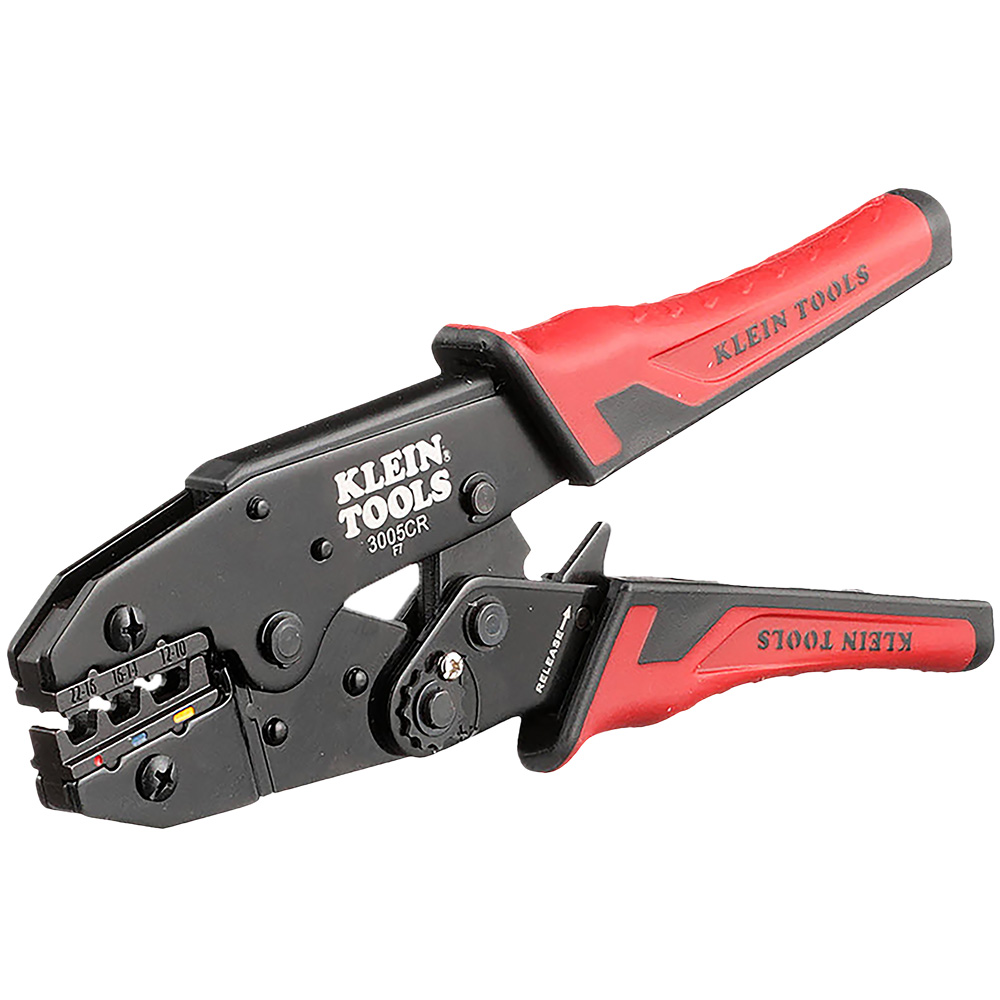
 Klein Tools 3006CR Crimping Tool for Non-Insulated TerminalsPack of 18.93 x 3.04 x 0.1 Inches1.19 poundsCheck on Amazon


Short answer: match the crimper to the terminal
Neither Knipex nor Klein makes a crimper that is best for every job. Knipex offers several styles of crimping pliers, and Klein sells ratcheting crimpers for particular connector types. Their results depend on the die shape, wire size, and terminal the tool is designed to handle—not just the brand.
For repeat work with compatible insulated terminals, a ratcheting crimper is often easier to use consistently: its mechanism completes the cycle before releasing. For occasional repairs, or when you need a particular die profile in a compact hand tool, a Knipex model may be the better fit. Check the tool’s stated wire and terminal range before comparing prices; two tools that both claim to crimp terminals may not make interchangeable crimps.
As an Amazon Associate we earn from qualifying purchases at no extra cost to you.


What “consistent” means at the terminal
A good crimp holds the conductor securely without cutting strands, and leaves the insulation supported when the terminal is designed for insulation support. The correct finished shape varies by terminal: an insulated butt connector, a ferrule, and an uninsulated ring terminal do not call for the same die profile.
Common failures are easy to spot. A wire that pulls out during a firm hand tug was not adequately secured. A barrel flattened too far, split, or visibly cutting into the wire may indicate the wrong die or an unsuitable setting. If insulation is trapped in the conductor barrel, the electrical connection can be poor even if the terminal looks tidy. Follow the terminal maker’s instructions and, for critical work, use a pull-test specification rather than relying on appearance alone.
How the tools differ
“Knipex crimping pliers” describes a range, not one universal design. Some models use fixed dies and manual leverage; others are made for particular connector formats. A fixed tool is straightforward, but the user controls the full squeeze and may get more variation with fatigue, awkward access, or a rushed job.
A Klein ratcheting crimper keeps the jaws from reopening until the handle reaches its release point. That helps prevent an incomplete squeeze, especially for someone making a batch of the same kind of termination. It does not guarantee a correct crimp: the wrong connector, wire gauge, or die can still produce a bad result, and a ratchet adds bulk and moving parts.
Side-by-side comparison
| Factor | Knipex crimping pliers | Klein ratcheting crimper |
|---|---|---|
| Best fit | Depends on the specific model and die; useful when its profile matches the terminal | Repeat crimps within the tool’s stated connector and wire range |
| Cycle control | Usually depends more on the operator’s squeeze and technique | Ratcheting cycle helps ensure the handles complete a full crimp |
| Access and handling | Some designs are simpler or more compact | Ratcheting mechanism can make the tool larger and slower to reposition |
| Learning curve | Requires practice to apply consistent pressure | More forgiving on cycle completion, but still requires the right die and setup |
| Good reason to choose | You need a specific Knipex die profile or value a simple hand tool | You make repeated compatible crimps and want a built-in full-cycle check |
Which one should you buy?
Choose a ratcheting crimper if you regularly install the same kind of insulated terminals and want more repeatable handle cycles. It is particularly useful for a home mechanic, installer, or maintenance worker doing several connections in a session. Start by checking the connector packaging for supported wire gauges and the required crimp style, then compare it with the tool specification. A Klein ratcheting crimper search is a sensible place to compare the available types, but verify the exact range before ordering.
Choose a Knipex tool when a particular model’s die matches your terminals, or when you prefer a simpler tool for occasional work. It can be a perfectly reasonable purchase for a few repairs a year; the ratchet is not worth paying extra for if you rarely crimp and can verify your work. Compare the tool’s listed connector types rather than buying on the brand name alone. You can browse Knipex crimping pliers and narrow the choice by die profile and wire range.
A repeatable crimping routine
Strip only the length specified for the terminal. Too little exposed conductor can leave the barrel gripping insulation; too much can leave bare wire beyond the terminal. Use a wire stripper that fits the conductor, and avoid nicking strands. Insert the wire fully, place the terminal in the matching die position, and crimp at the location recommended by the terminal maker.
Then inspect the result: look for a fully formed barrel, no split metal, and no loose strands. Give the wire a firm pull by hand. For a new combination of tool and terminal, test a sample first; if the connection is important, use the applicable pull-test method. A ratchet can make it easier to finish each cycle, but it cannot compensate for a mismatched die or poor stripping.
The practical choice
For repeated, compatible terminals, the Klein ratcheting design has the edge in cycle-to-cycle consistency because it resists partial squeezes. For occasional jobs, a correctly matched Knipex crimper can be just as suitable, and may be simpler to handle. The deciding factor is not the badge: it is whether the tool’s die and range match the terminal, followed by a basic inspection and pull check. If you work with several connector styles, one crimper may not cover them all; buy for the terminals you actually use.