What's inside
As an Amazon Associate I earn from qualifying purchases. This post may contain affiliate links at no extra cost to you.
Our Top Picks


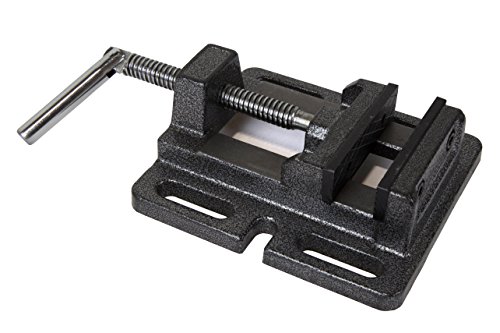
Best Drill Press Vise for Holding Small Metal Parts Square
For drilling small metal parts square, the best drill press vise is usually a fixed, precision-style vise with machined jaws, a flat base, and enough adjustment to align the work without forcing it. A cheap cast-iron vise can hold a part, but it may not hold it square to the drill bit. That matters when drilling mounting holes, tapping threads, or making several parts that must match.
My first choice for most users is a precision drill press vise with machined jaws. It is more accurate than a general-purpose utility vise without the cost and bulk of a true toolmaker’s vise. If you need to move the hole location in two directions, a cross-slide vise is more versatile, but it is also easier to introduce play and misalignment.
As an Amazon Associate we earn from qualifying purchases at no extra cost to you.



What Makes a Drill Press Vise Hold Parts Square?
Look for four features: machined jaw faces, a machined bottom, a rigid body, and a way to bolt the vise to the drill press table. The jaw faces should meet evenly when closed. If one corner touches while the other has a visible gap, the vise can tilt a small part as you tighten it.
A machined base is important because the vise sits directly on the table. Rough castings can rock or hold chips underneath. Even a 0.010-inch chip under one side can noticeably change the angle on a short workpiece. The vise does not need to be laboratory-grade, but the bottom should be flat enough that it sits solidly without rocking.
Jaws around 2 to 3 inches wide are a useful range for small brackets, tabs, plates, and blocks. A 4-inch vise gives more capacity, but it can be unnecessarily large on a benchtop drill press. Check the jaw opening as well as width; a vise with 2-inch jaws may still open only 1.5 inches.
Best Vise Types Compared
| Vise type | Best use | Advantages | Weaknesses |
|---|---|---|---|
| Precision fixed vise | Accurate holes in small parts | Rigid, compact, easier to align | Limited adjustment after mounting |
| Cross-slide vise | Moving parts between holes | Two-axis positioning without unclamping | More backlash, taller, less rigid |
| Tilting vise | Angled drilling | Handles compound setups | Harder to set square and easy to misread |
| Basic cast-iron utility vise | Occasional rough drilling | Cheap and widely available | Jaw and base accuracy can be inconsistent |
Best Overall: A Fixed Precision Drill Press Vise
A fixed precision vise is the safest choice when the main requirement is holding a part square. Choose one with jaws that are replaceable or at least clearly machined, a base with mounting slots, and a screw with minimal side-to-side movement. A fixed vise has fewer moving parts than a cross-slide model, so it resists twisting when the drill enters the work.
This style works especially well for parts less than about 3 inches wide and for drills from roughly 1/16 to 1/2 inch. It is also the easiest type to tram or align. Put a small square against the fixed jaw, loosen the mounting bolts, and tap the vise until the jaw is parallel with the drill press column or table reference. Tighten the bolts gradually while checking again.
For regular metalworking, it is worth paying for a 2-inch precision machine vise rather than the least expensive cast vise. The additional cost generally buys better jaw alignment and less rocking, not just a smoother finish.
When a Cross-Slide Vise Makes Sense
A cross-slide vise is useful when you need to drill a sequence of holes or shift a part left and right without unclamping it. The lower slide moves along one axis and the upper slide moves along the other. This can save time on small plates and brackets.
It is not automatically more accurate. Budget cross-slide vises often have several thousandths of an inch of backlash, and the slides may lift slightly as the screws change direction. If you position a hole by turning the handle forward, always approach the final location from the same direction. Otherwise the screw clearance can move the part when drilling pressure is applied.
For a small cross-slide drill press vise, keep the work close to the table and avoid using it as a milling vise. Drilling side loads are modest; milling cutters create forces that can shift slides, damage the screw, or pull the vise out of alignment.
When the Cheaper Vise Is Fine
A basic utility vise is adequate for wood, plastic, large rough holes, and metal parts where a few degrees of angular error do not matter. It can also be a good starting point if you will improve it yourself. Deburr the jaws, clean the bottom, remove casting flash, and check the jaws with a square before trusting it.
Do not rely on a cheap vise for close-fitting hinge holes, matched parts, or tapping small holes unless you verify it first. A part that is held at an angle may cause a drill to wander, break a small bit, or produce a hole that is oval at the exit. Thin sheet metal is especially prone to lifting when the drill breaks through.
Setup Tips for Square Drilling
First, bolt the vise down. Hand pressure is not enough, and a spinning vise is a serious hazard. Use both mounting slots when possible and leave enough clearance to tighten the nuts with the vise in position.
Clean the table, vise bottom, and workpiece. Clamp the part low in the jaws, with only the necessary amount exposed. A tall, narrow part can lean under drilling pressure even when the vise itself is square. For thin stock, use a sacrificial backing plate or a step block to support the work.
Finally, use cutting fluid suited to the material and moderate feed pressure. If the bit grabs at breakthrough, it can lift the part or rotate it in the jaws. A vise that holds square cannot compensate for a loose setup, excessive stick-out, or a dull drill.