What's inside
As an Amazon Associate I earn from qualifying purchases. This post may contain affiliate links at no extra cost to you.
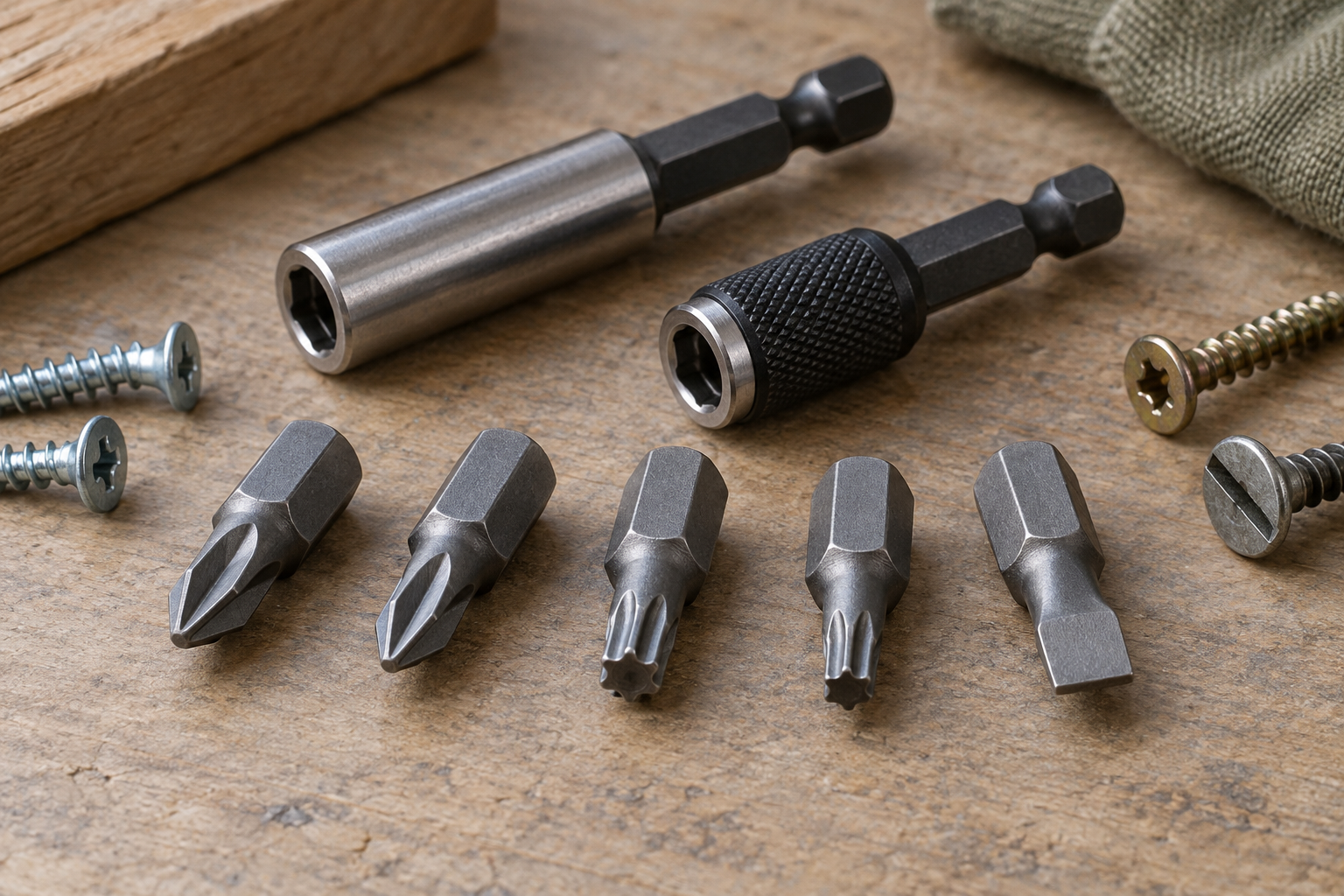
Impact-rated driver bits are built to survive the repeated twisting pulses of an impact driver. Standard bits are generally intended for drills and screwdrivers, where torque is applied more smoothly. That difference can reduce breakage in the right tool and job—but it does not make impact bits unbreakable, and it does not automatically make them the better choice for every screw.
As an Amazon Associate we earn from qualifying purchases at no extra cost to you.


Our Top Picks
 Amazon Basics 42-Piece Impact Screwdriver Bit Set withOne Size5.9 x 3.75 x 1.6 inches0.84 poundsCheck on Amazon


What “impact-rated” means
An impact driver delivers torque in rapid bursts. Those bursts help drive long or large fasteners, but they also load a bit sharply, especially when a screw binds or the bit slips. Impact-rated bits typically use a tougher steel and a torsion zone—a narrower or specially shaped section designed to flex slightly and absorb some of that shock.
Standard bits are often harder and less designed to flex. In a drill, that can be perfectly suitable: the load is steadier, and a hard bit can resist wear at the tip. Put one in an impact driver, though, and repeated shock can make it snap or chip, particularly during heavy driving.
“Impact-rated” is not a promise that a bit will last forever. Tip shape, fit, screw quality, technique, and the force required all matter. A worn or poorly fitting impact bit can still cam out, chew up a screw head, or fail.
Impact-rated vs. standard bits at a glance
| Factor | Impact-rated bit | Standard bit |
|---|---|---|
| Best match | Impact drivers; repeated or demanding screw driving | Drills, manual drivers, and light screw driving |
| Construction | Usually tougher steel with some capacity to flex under shock | Often optimized for steady rotation and tip hardness |
| Typical failure | Wear, rounding, or eventual torsion-zone breakage | Snapping or chipping under repeated impact pulses |
| Cost | Usually more per bit, though sets vary | Often the cheaper option |
| Practical advantage | Lower risk of breakage in an impact driver | Good value for occasional, low-load work with a drill |
When impact bits reduce breakage
The clearest case is frequent use in an impact driver: deck screws, framing screws, structural fasteners, or other jobs where the tool repeatedly hits resistance. A standard bit may work for a few screws, then fracture at the shank or chip at the tip. An impact-rated bit is less likely to fail that way because it is made to tolerate those pulses.
There is no reliable screw count at which a standard bit will break. A short screw in soft pine may put little stress on a bit; a long fastener driven into dense lumber can load it hard. If you are building a deck or driving dozens of long screws, a set of impact-rated driver bits is a sensible choice. Keep spares of the sizes you use most: even the right bit can wear out.
Impact-rated bits can also be useful when you are unsure how much resistance a fastener will meet. They add a margin against sudden loading, not a guarantee against it. If a screw is badly misaligned, the bit is undersized, or the driver is allowed to hammer after the screw is fully seated, breakage remains possible.
When standard bits are fine
For occasional assembly, small screws, and light-duty work with a drill or manual screwdriver, standard bits are usually adequate. There is little benefit in paying extra for impact resistance if the tool is not delivering impact pulses and the fasteners are easy to drive.
Standard bits can also be convenient in a drill chuck, where their usual shape fits directly. Many impact-rated bits have a 1/4-inch hex shank, which fits impact drivers and many quick-change holders. Check your tool’s chuck or holder before buying rather than assuming every bit will fit.
If you already own a standard bit set, there is no need to replace it just because it is not labeled for impact use. Use those bits in a drill for light work. Avoid putting them through a full day of heavy impact driving, where the added chance of snapping can cost more time than a sturdier replacement. A standard driver bit set remains a reasonable buy for a home kit used mostly with a drill.
Fit and technique still matter
Many apparent “bit strength” problems start with poor fit. A Phillips bit that is the wrong size, a worn tip, or a screw head with debris in it is more likely to slip. Slipping damages both the bit and the fastener, and can make the driver’s impact action harsher. Match the bit to the head exactly, press firmly in line with the screw, and replace a tip once its edges are visibly rounded.
For tough driving, use a pilot hole when the material and fastener call for one. A pilot hole can reduce the torque needed, particularly near board ends or in dense wood. Set the tool’s speed or torque appropriately, and stop once the head is seated; prolonged impacts against a fully seated screw can damage the bit, screw, or workpiece.
Magnetic holders and extensions add convenience, but they introduce another connection that can wear or loosen. If a bit keeps slipping despite the correct size, inspect the holder and screw head as well as the bit. A fresh bit cannot compensate for a badly damaged fastener.
What to buy
Choose impact-rated bits if you use an impact driver regularly, drive long fasteners, or want one set that can handle occasional hard jobs. Buy the sizes and tip styles you actually use rather than the largest assortment you can find. For heavier use, replacement bits are often more practical than treating any bit as permanent.
Choose standard bits if most of your work is light-duty and done with a drill or hand driver. They can save money without sacrificing useful performance in those conditions. If you own both tools, keep standard bits for routine drilling and assembly, and reserve impact-rated bits for the impact driver. That split is a straightforward way to limit breakage without paying a premium for every bit in the toolbox.